
The US dollar keeps its edge despite oil prices dropping below key levels. Analysts say Federal Reserve policy is still the main force in currency markets, while the euro struggles as central bank paths diverge.
Oil got cheaper this week, but that did not give Europe the currency boost many hoped for. Brent crude fell below $100 a barrel, settling at $99.25 on 22 September 2026, down 1.09%. Even so, investors stuck with the US dollar. The main reason: markets still expect the Federal Reserve to keep tightening. That view outweighed any relief from lower energy costs. The drop in oil came after Saudi Arabia increased crude flows, restarted the East-West pipeline, and resumed shipping through the Strait of Hormuz. That strait handles about 20% of global oil supply, according to Reuters, and had seen recent disruptions.
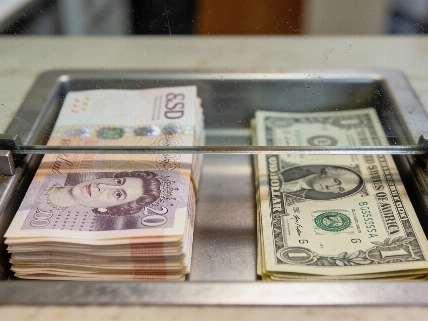
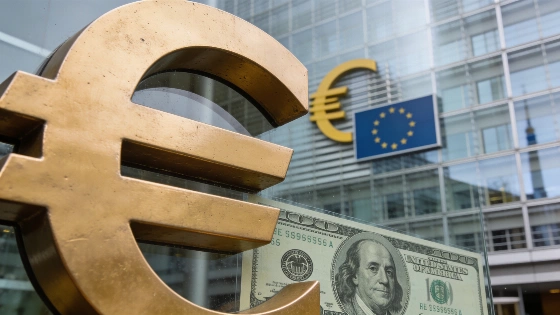
The dollar did not weaken. Instead, it climbed to a two-month high on 23 September 2026. Brent crude briefly touched $98.30 per barrel, but the dollar still gained 0.12% against the euro, reaching $1.1448. It held steady against the yen at 157.37. Markets kept their focus on US monetary policy. Analysts at ING and MUFG said the dollar is unlikely to lose ground unless oil prices stay lower for a long stretch.
Central bank expectations steer currencies
ING analysts pointed out that the dollar's strength comes from the belief that the Federal Reserve will keep a hawkish stance. That belief got a boost from S&P Global's flash US Composite PMI, which jumped to 58.4 in September 2026 from 56.0 in August. That is the strongest private-sector growth since July 2021. Both services and manufacturing improved. The input-prices gauge hit 66.4, the highest since October 2022, showing inflation pressures are still strong. The Federal Reserve's policy outlook, not swings in commodity prices, is what drives FX markets now, as a recent Reuters analysis confirmed.
This has left the euro exposed. ING flagged a key risk: when oil prices drop, markets are quicker to cut back on European Central Bank (ECB) tightening bets than on the Fed. So, even if Europe's energy bill improves, it can lose interest-rate support. The euro's struggle to gain from cheaper oil shows how much central bank policy differences matter for exchange rates. The ECB's more cautious approach, compared to the Fed, has left the euro open to more losses.
Data and policy outlooks
Recent US data has only made the dollar's case stronger. The sharp rise in the US composite PMI pushed up the odds of a Federal Reserve rate hike by at least 25 basis points at the October 2026 meeting to about 70%. That is up from roughly 53% before the data came out. Global investors are watching this shift closely. It is a big reason the dollar keeps its strength. The Federal Reserve's monetary policy is still at the center of market pricing. Analysts warn that a small drop in oil prices-like Brent moving between $90 and $100 a barrel-will not be enough to make the Fed change course.
Exchange Rates UK Research uses live market data, official economic releases, and bank research to track these moves. As reported earlier, even strong bets on more Fed rate hikes have not always made the dollar weaker. Mixed policy signals and global repricing keep shaping the outlook. The Bank for International Settlements (BIS) and International Monetary Fund (IMF) have also pointed out the impact of policy differences on global currency flows in recent reports.
Euro faces structural headwinds
The euro's failure to benefit from lower energy costs points to a deeper problem. When oil prices fall, Europe's trade balance may get a short-term boost. But markets often cut ECB tightening bets faster than they do for the Fed. That can wipe out the euro's yield advantage, leaving it weak even when trade terms improve. Investors will keep a close eye on the ECB's policy statements and meeting minutes for any sign of a shift.
This week, Brent crude's dip below $100 a barrel did not last. Prices bounced back above $105 by Thursday. The US dollar stayed strong against the euro and other major currencies. Markets are watching central bank policy differences, not just commodity prices. The euro's lack of support from cheaper oil shows that currency moves depend as much on expectations as on economic facts.
Central bank policy expectations are still the main driver. The US dollar's strength, even as oil falls, shows that investors care more about the chance of more Fed tightening than about short-term changes in inflation or energy costs. Unless oil drops sharply and stays low long enough to force a real change in central bank outlooks, the dollar will likely keep its edge over the euro and other big currencies.
Policy differences between central banks keep shaping currency markets. When two big economies face the same shock-like a drop in oil prices-the currency that wins is usually the one whose central bank is expected to act more forcefully. Right now, the Federal Reserve's willingness to tighten policy keeps the US dollar in demand. The European Central Bank's cautious stance leaves the euro struggling. This helps explain why exchange rates sometimes move in ways that do not match up with trade balances or commodity prices alone.