
The British Pound has broken through key support against the US Dollar. Lloyds says a real recovery will take more than a short-term bounce, as bets on more Federal Reserve tightening grow.
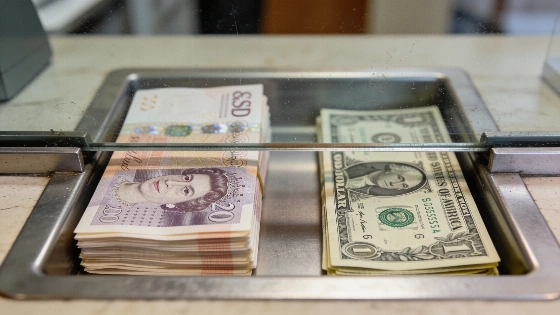
The British Pound has dropped again against the US Dollar, falling through important support levels. This puts the Pound at risk of more losses and dims hopes for a quick rebound. Lloyds points out that GBP/USD has not only slipped below 1.3300, but also failed to hold at 1.3274. Now, the next technical support sits near 1.3140. The move matches what's happening in the wider market. Reuters showed GBP/USD trading around 1.328 on September 23, 2026. That marked the third day in a row of losses and brought the pair close to a seven-week low according to Reuters pricing.
On Thursday, Pound Sterling traded at 1.3215, down 0.17% for the day. That followed a sharper 0.79% drop on Wednesday. This slide goes beyond the downside risks Lloyds warned about in late September. Back then, the bank called the daily trend "Lower" and said a break below 1.3474/83 would open the door to deeper losses. Now, the price is just 75 pips, or 0.6%, above the lows seen in March and June. Lloyds sees those as the next possible floor. Other market notes confirm the pressure on GBP/USD, with the pair dipping into the 1.3292-1.3385 range during mid-September trading.
Dollar demand intensifies
The latest drop in GBP/USD comes as traders expect the Federal Reserve to tighten policy even more. On Wednesday, the US flash composite PMI jumped to 58.4 from 56.0. That's the fastest growth since July 2021 and points to rising cost pressures. S&P Global says this data "sends a hawkish signal for interest rates," which backs the case for a stronger Dollar and makes it harder for the Pound to recover. The US dollar index climbed to 101.06, close to a two-month high after hitting 101.23, its highest since July 29, as reported by Reuters. This jump in the dollar index shows strong demand for the greenback as global policy expectations shift.
Lloyds says a rebound is possible, but the bank sets a tough standard for any recovery to last. The first resistance is now at 1.3434/36. Lloyds warns that just bouncing back to this level is not enough to prove a real turnaround. The higher pivot at 1.3474-1.3483 is still far off, especially after the last recovery attempt failed there. The Federal Reserve's recent policy moves have shaped these trends. At its last meeting, the Fed raised its main rate to a 3.75%-4.00% range. Sixteen out of eighteen officials signaled at least one more hike before the end of the year, according to the FOMC policy statement.
Technical barriers and market sentiment
For the Pound to start clawing back losses, analysts at Exchange Rates UK say it needs to recover through the 1.3274-1.3300 area. Only then would the first technical damage be repaired, but more resistance lies ahead. Until that happens, the risk of testing the 1.3140 support stays in play. There's no set timeline for when that level might be reached. The Bank of England's policy outlook still matters, but right now, US economic strength and the Fed's hawkish stance are in control. After the strong PMI release, market-implied odds of an October Fed rate hike jumped to about 70%, up from 53% before the data, based on LSEG figures cited by Reuters.
Recent reports on Sterling's weakness have also pointed to changing expectations around central bank policy. As reported earlier, weak UK payroll numbers and fading rate hike bets have already dragged on the Pound. The latest US data adds more pressure. Federal Reserve Vice Chair for Supervision Michael Barr has said more rate hikes will likely be needed to bring inflation back to the 2% target. This shows the Fed is ready to tighten further if needed.
Key figures and market context
On Thursday, GBP/USD traded at 1.3215, down 0.17% for the day after a 0.79% drop the day before. The pair has now broken both the 1.3300 and 1.3274 support levels. The next technical reference is at 1.3140, about 0.6% below the current price. The US flash composite PMI's jump to 58.4, the highest since July 2021, has boosted expectations for more Fed tightening and helped the Dollar. The Bank of England and the Federal Reserve remain central to the GBP/USD outlook, with policy differences and economic data driving swings in the currency pair.
What technical support means for currency pairs
Technical support in currency trading is a price level where buyers are expected to step in, which can stop or reverse a fall. When a pair like GBP/USD drops below support, it usually means sellers are still in charge and more losses are possible unless new buyers appear. But support levels are not guarantees. They can be tested several times or break down if bigger economic or policy changes hit. Right now, strong US data and expectations of higher rates have made it harder for the Pound to find a stable floor against the Dollar.