BCA Research signals a shift away from the US dollar, highlighting weakening real yields and reduced foreign investment as reasons to favor the South Korean won, Japanese yen, Taiwan dollar, Singapore dollar, and euro
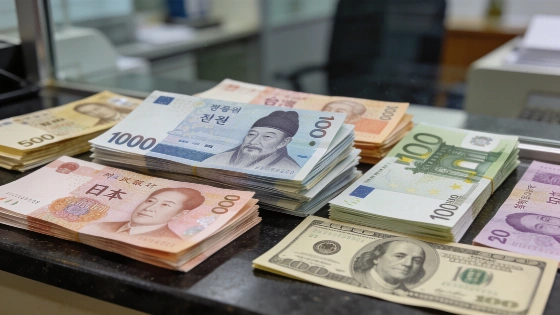
The US dollar is coming under renewed pressure as BCA Research advises investors to reduce exposure to the greenback in favor of several Asian and European currencies. According to a recent report from BCA Research, the South Korean won, Japanese yen, Taiwan dollar, Singapore dollar, and euro are all positioned to benefit from a combination of declining US real interest rates and a slowdown in foreign portfolio inflows into American assets.
BCA Research maintains long positions in the won, yen, and Taiwan dollar against the US dollar, and uses the Hungarian forint as a proxy for euro exposure. The firm argues that these currencies are supported by current-account surpluses, which may help cushion them as international investors scale back their holdings of US securities. The Chinese yuan is also expected to appreciate against the dollar, though BCA anticipates that Chinese authorities will intervene to limit the extent of any gains, potentially leaving the yuan weaker relative to other surplus currencies.
Real Yields and Portfolio Flows
The outlook from BCA Research is shaped by its expectation that US "core real yields"-defined as inflation-protected Treasury yields excluding the bond term premium-will decline in the coming period. While US yields have risen recently, BCA attributes much of this move to higher fiscal and inflation-related term premiums, rather than to stronger growth prospects. Rising term premiums tend to weaken the dollar, while higher core real yields typically provide support. As a result, the firm sees the dollar as increasingly vulnerable if real yields fall and foreign demand for US assets wanes.
Foreign purchases of US equities, particularly those linked to enthusiasm for artificial intelligence and technology stocks, have played a key role in financing America's wide current-account deficit and supporting the dollar. However, BCA expects these inflows to slow if valuations in the US technology sector come under pressure. Should this occur, the dollar could become more sensitive to global growth trends and may weaken alongside US equities.
Currency Preferences and Risks
BCA's preferred currencies-the South Korean won, Japanese yen, Taiwan dollar, Singapore dollar, and euro-are all backed by current-account surpluses, which can provide a buffer during periods of shifting capital flows. The firm also holds the Hungarian forint as a stand-in for euro exposure, reflecting its view that European currencies may act more defensively as investors reduce the amount of their surpluses recycled into US securities. In contrast, BCA expects the Brazilian real, Indonesian rupiah, and Philippine peso to underperform, making them less attractive alternatives to the dollar.
Recent data shows that the US dollar index, which measures the dollar against a basket of major currencies, has retreated from its 2024 highs. For example, the US dollar weakened by more than 3% against the Japanese yen between late April and early June 2026, while the South Korean won and Taiwan dollar also posted gains against the greenback over the same period. These moves reflect a broader shift in sentiment as investors reassess the outlook for US yields and global capital flows. A related development was seen when the US Treasury Department expanded buybacks of long-term bonds, which contributed to a sharp drop in the dollar, as covered in our earlier analysis of recent US dollar declines.
Implications for Assets and Policy
BCA Research also expects US equities to underperform global markets, recommending an underweight position in US stocks, neutral exposure to emerging markets, a modest overweight in Europe, and a substantial overweight in Japan. A weaker dollar, in BCA's view, should support gold and gold-mining shares, while non-US government bonds may become more attractive after any near-term selloff. The firm's outlook underscores the importance of monitoring both real yields and cross-border investment flows when assessing currency risk and opportunity.
Understanding the distinction between term premiums and real yields is crucial for interpreting currency movements. The term premium reflects the extra compensation investors demand for holding longer-term bonds, often rising during periods of fiscal uncertainty or inflation risk. In contrast, real yields measure the inflation-adjusted return on government debt, excluding the term premium. When term premiums rise without a corresponding increase in real yields, the dollar can weaken even if nominal yields are higher. This dynamic highlights why shifts in the composition of US yields-and not just their headline level-can have significant consequences for global currency markets.
- Currency Outlooks and Scenarios
- Brazil
- China
- Hungary
- Indonesia
- Japan
- Philippines
- Singapore
- South Korea
- Taiwan
- United States
- Brazilian real (BRL)
- Renminbi (CNY)
- Euro (EUR)
- Hungarian forint (HUF)
- Indonesian rupiah (IDR)
- Japanese yen (JPY)
- South Korean won (KRW)
- Philippine peso (PHP)
- Singapore dollar (SGD)
- New Taiwan dollar (TWD)
- Currency Appreciation
- Currency Depreciation