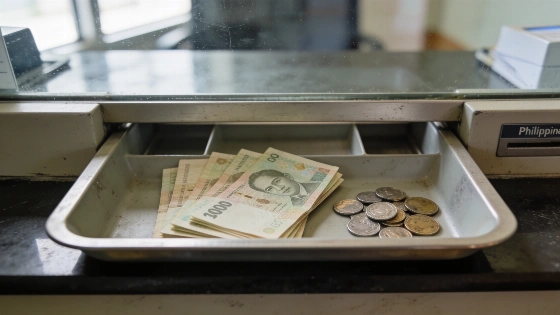
BSP figures show fewer banknotes needing replacement as polymer notes last longer and more deposited cash returns to circulation. Digital payments reached 64.7% of retail payment volume in 2025, but cash remains an important fallback.
The 100-peso note's withdrawal rate fell from 43.5% in 2024 to 25.3% in 2025. That sharp drop reflects more than a change in how people pay.
New polymer banknotes last longer, so fewer worn notes need replacing. More cash deposited at banks is also fit to circulate again. Together, those shifts are slowing the central bank's demand for fresh currency.
The figures matter beyond the Philippines. Payment disruptions and policy moves in Europe have prompted governments to reconsider how much cash people should be able to use when electronic systems are unavailable or unwanted. Banknote replacement data must also be kept separate from the consumer price index. They do not, by themselves, show whether inflation is rising or whether the peso is gaining or losing value.
Replacement needs ease
Bangko Sentral ng Pilipinas, or BSP, manages the supply of Philippine banknotes and coins, including the removal of damaged or worn currency. Its recent figures show that banknote withdrawals slowed in 2025. The value of notes taken out of circulation also fell. The pattern suggests the central bank needs fewer replacements as notes last longer and more deposited notes remain fit for use.
The 100-peso note is worth roughly $1.60 at the approximate conversion used in the original report. That dollar equivalent is illustrative, not a live foreign-exchange quote, because the peso's value against the dollar fluctuates. One factor is the introduction of newer notes made from polymer rather than enhanced paper. Polymer notes accounted for 46.4% of banknote deposits in 2025. The reported figures link the newer material with lower replacement demand, but do not quantify how much of the decline comes from durability alone.
Coins are also seeing weaker replacement demand. Demand for the 20-peso coin fell by 21.1% over the period. BSP figures show that the face value of damaged or worn coins withdrawn from circulation declined by 14.4% in 2025. In 2024, the decline was 3.4%.
Digital use is only part of it
More deposited cash was fit to circulate again. The share of banknotes judged suitable for another round rose from 4.6% in 2024 to 32.3% in 2025. The 1,000-peso note led that measure, with 35.2% of deposits eligible to return to circulation. Reuse cuts the need to print replacements even when customers keep using cash.
BSP Deputy Governor Mamerto Tangonan has cited digital payments as one explanation for lower cash withdrawals, particularly for larger sums. The central bank has also pointed to moderating economic conditions. Lower inflation can reduce pressure to issue extra currency as prices rise, but the figures do not establish a single cause for the decline. Banknote replacement data are not a substitute for the consumer price index or a measure of exchange-rate pressure.
Digital adoption is substantial. BSP data reported by GMA News Online show digital payments made up 64.7% of retail payment volume in 2025. That is a share of payment transactions, not proof of an equivalent fall in cash use or cash demand. More than 2.1 billion contactless card transactions were processed in the country in 2025, about three times the 2023 total, according to DOPAY. BSP infrastructure supports that growth, including fast-transfer systems and a national QR-payment standard designed to help banks and e-wallets work together.
As of September 2026, seven licensed digital banks were operating in the Philippines. They included Maya Bank and Overseas Filipino Bank. Tonik and GoTyme were also on the roster. UNOBank and UnionDigital operated alongside MariBank. Meanwhile, the BSP continued in-person services for exchanging unfit notes, including outreach in Tagbilaran. The central bank also maintained a moratorium on new virtual-asset service provider licences from September 2025, reflecting a more cautious approach to digital financial products. Digital expansion is proceeding alongside support for physical currency.
The central bank described its currency operations as stable and responsive while pursuing supply resilience and operational modernization. Those measures concern how cash is managed. They do not establish that the Philippines is moving toward a cashless system. For households and businesses, the practical question is whether cash remains available alongside digital payments. The BSP's official website provides central-bank information, but the payment-share and replacement figures cited here are not real-time monetary-policy or exchange-rate indicators.
Cash as a backup
Recent events elsewhere show why physical money still matters where digital payments are common. A Financial Times report dated March 21 described people in Iran queuing at cash machines amid fears that electronic systems could fail during the war between the United States and Iran. Bank Sepah's building was hit by a missile on March 11, adding to concerns about access. The bank later said card access for shop purchases and ATMs had been restored. It expected online banking to resume.
Sweden, once a leading adopter of cash-free payments, has urged residents to keep banknotes for emergencies. It has also moved to require grocery stores and pharmacies to accept cash. The report says the law was passed on July 1, without specifying a year. In March, Switzerland joined Hungary and Slovakia in measures to guarantee cash acceptance. Slovenia was also among the countries covered by those measures. A total of 73.4% of Swiss voters supported the measure. Austria is considering a similar step, not implementing one.
These actions do not show that digital payments are failing in ordinary conditions. They show that people can lose access when payment systems depend on electronic services that are disrupted. Cash also offers privacy and direct control. The International Currency Association's Director General, Frane Maroević, has argued that people should retain the choice to use cash. He has linked cash to inclusion and resilience, and has also pointed to its privacy benefits.
Falling replacement demand in the Philippines is not proof that cash has become unnecessary. The figures point to more durable notes, more reuse and a shift toward digital payments, but they do not measure whether every person can reliably access or use an electronic alternative. Nor do they establish a direction for the peso or a change in inflation. They also say nothing about central-bank foreign-exchange intervention. Modernizing cash operations does not require removing cash as a practical option.
Withdrawing worn notes is different from withdrawing cash from public use. A central bank can print fewer replacements while keeping physical money available through circulation and reuse. Digital payments can make larger transactions easier. Banknotes and coins remain a separate fallback when electronic access is interrupted or privacy matters. The Philippine data show that more deposited banknotes were fit to return to circulation in 2025, reaching 32.3%.