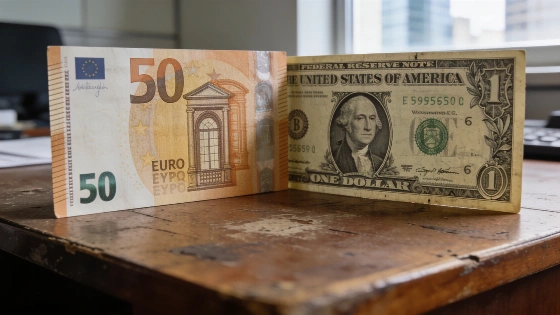
Rabobank now sees the euro dropping to 1.14 against the US dollar within a month. The bank points to steady Fed rate hike bets and ongoing geopolitical risks, but says a rebound to 1.16 is possible if US tightening slows.
The euro has lost ground against the US dollar. Rabobank has lowered its one-month forecast for EUR/USD to 1.14. The move comes as the dollar stays strong, with markets expecting more Federal Reserve rate hikes and investors rattled by global tensions. On 23-24 September 2026, EUR/USD traded in a tight band near 1.1376-1.1389. That is just above the euro's lowest point this year, showing how much pressure the currency is under after the dollar's latest rally, according to Reuters and Marketscreener data.
Rabobank's new forecast is a shift from its earlier short-term target of 1.16. The bank now doubts the euro can recover while the Iran war keeps investors on edge. Rabobank still sees a chance for a rebound to 1.16 in three months, but only if the market starts to expect less US monetary tightening. This cautious view is echoed by TMGM and Reuters, who note that Rabobank is wary of outside risks weighing on the euro.
Dollar strength and market moves
The dollar has shown staying power in recent trading. On Thursday, EUR/USD hovered near 1.1377, down 0.04% for the day after a sharper 0.58% drop the day before. The euro sits just above its yearly low of 1.1325. Rabobank's new one-month target is still a bit above where the pair trades now. Since its 2026 high, the euro has dropped about 6% to its recent low. Reuters points to both diverging monetary policy and rising geopolitical risk as the main drivers.
Europe's economy has shown some steadiness. The S&P Global Flash Euro Zone Composite PMI rose to 53.1 in September from 52.0 in August, beating the Reuters consensus of 51.7. But this has not been enough to offset stronger US survey results or the market's focus on US rate hikes. The Federal Reserve raised its target rate by 25 basis points to 3.75%-4.00% on 16 September 2026. This was the Fed's first hike since 2023 and helped push the dollar higher. More details on recent rate moves are on the Federal Reserve policy page.
Fed hike bets and rival forecasts
Rabobank says markets now put the odds of another 25 basis point Fed hike at the 27-28 October 2026 meeting at about 70%. That is up from 53-55% before the latest data. The market is reacting to both economic numbers and what Fed officials say. Several Fed policymakers, including Vice Chair Barr, have said more hikes may be needed to keep inflation in check. This has kept the market expecting a hawkish Fed. The European Central Bank has been more cautious. Investors are watching for any sign the ECB might break from the Fed's path. For official euro area policy updates, see the ECB monetary policy overview.
ING's year-end target for EUR/USD is 1.160, in line with Rabobank's three-month view. Goldman Sachs is more bearish, seeing 1.14 in three months and 1.12 at six and twelve months. For Rabobank's scenario to play out, the euro would need to climb about 2% from current levels. The bank warns that political events, like next year's French Presidential election, could make it even harder for the euro to bounce back.
Geopolitics and investor caution
Energy security is still a worry for European markets. This makes outside shocks hit harder and keeps investors from adding to euro positions. The Iran war is a key drag. Rabobank links its lower forecast directly to the conflict. The bank says it will keep reviewing its EUR/USD outlook as events unfold. Reuters notes that the dollar's recent gains have come alongside fresh worries about global tensions and a tougher Fed stance. Both have hurt demand for European currencies.
Other banks are also wary. As reported earlier, Bank of America sees little room for the dollar to rise further, even with strong rate hike bets. This shows how hard it is to predict currency moves when policy and politics are both in flux.
Data snapshot and outlook
On Thursday, EUR/USD traded near 1.1377, just above its 2026 low of 1.1325. Rabobank's new one-month forecast of 1.14 is above spot, while the three-month target of 1.16 would mean the euro has to recover recent losses. The bank says this depends on Fed hike bets fading and geopolitical risks easing-both still up in the air. The Federal Reserve and European Central Bank remain key players, with their rate decisions and policy signals shaping currency moves.
Rabobank's forecast is not out of line with others, but it shows how much currency calls depend on shifting policy and global events. The euro's short-term outlook is capped by outside risks. Any rebound will need a clear change in how the market sees US policy. For now, the euro stays under pressure. Investors are watching central banks and world events for any sign of a turnaround.
Exchange-rate forecasts are always uncertain, especially when both policy and geopolitics are in play. Rabobank's call reflects not just economic data but also what global investors expect and how much risk they are willing to take. Central banks like the Fed and ECB move currencies with their rate decisions, but market mood can shift fast on new data or political news. For everyday users, the rates for travel, payments, or transfers may not match the mid-market rates in forecasts. The real cost of currency exchange will also depend on provider fees and margins.