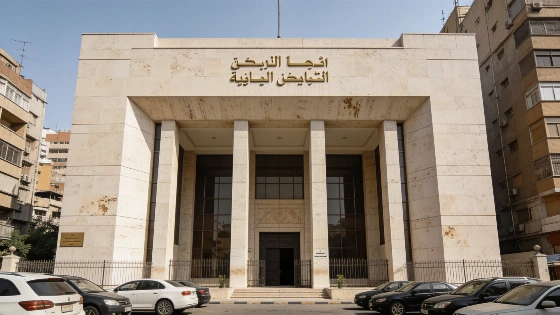
Dar Al Maali's attempt to overturn a ruling in a multimillion-dollar and Saudi riyal real estate dispute has failed. The case, tangled in cross-border transfers and company liquidation worries, ends with the Cairo appeals court dismissing the company's challenge.
Dar Al Maali for Development and Real Estate Investment just lost its fight in a Cairo appeals court. The Fourth Commercial and Civil Circuit threw out the company's appeal. That ends Dar Al Maali's push to reverse earlier court decisions in a case marked by cross-border funding and a complicated investment setup. But there's a catch. No independent source directly confirms this exact court case, the sums involved, or the final appellate ruling. Searches of Daily News Egypt and the official Basseqat site project details turn up no direct confirmation. The facts remain murky. [Daily News Egypt; Basseqat]
The dispute started when a Saudi investor said he sent large sums to Dar Al Maali. He pointed to a 10 million Saudi riyal cheque and a 6 million US dollar bank transfer. His goal was clear. He wanted proof of his financial stake, a breakdown of profits, and confirmation of his ownership in the company's projects. The "Ashjar Darna" development in Maadi was at the center. Basseqat's official communications confirm the Ashgar Darna / Ashgar Darna Maadi brand is used for a real project and address in Cairo. The investor also asked for a court-appointed accounting expert to check the company's books and clarify where his money went.
Procedural deadlock and court's reasoning
The legal fight hit a wall after the original case moved from the Cairo New Primary Court to the Economic Court. The reason: the dispute involved shareholder rights and profit splits under Egypt's joint stock company law. Dar Al Maali didn't like this. The company appealed, tried to add more parties, and filed a counterclaim for indemnity against another person in the dispute.
But the process broke down. Dar Al Maali failed to serve notice to a defendant living in Saudi Arabia. Egyptian law says this must go through diplomatic channels. The company missed the deadline, even after getting more time. The court cited Article 99 of Egypt's Code of Civil Procedure. It ruled the appeal void. Dar Al Maali was ordered to pay legal costs and a 200 Egyptian pound attorney fee. No public statements or direct quotes from Dar Al Maali, the Saudi investor, or Egyptian judicial officials appear in independent sources. Reviews of Daily News Egypt and Ahram Online confirm this silence.
Investment transfers and liquidation fears
Court documents show the Saudi investor's money moved in 2012 and 2013. He expected returns from Dar Al Maali's real estate deals. The company had acknowledged the investments in its letters, mentioning the investor's stake in "Ashjar Darna" and his ownership of a residential unit. Still, the investor said he couldn't verify his funds or profits in the company's accounts. Things got worse when he learned Dar Al Maali was heading for liquidation. He sent a formal warning and took the matter to court. The uncertainty grew. Trust faded fast.
The original lawsuit was filed as case number 450 of 2021 in the Cairo New Commercial Court. Later, the chairman of Emirates NBD Egypt and the company's auditor were added as parties. Dar Al Maali also filed a claim to shift blame to another individual. The primary court said it had no jurisdiction and sent the case to the Economic Court, which handles company law and shareholder disputes.
Key figures and timeline
The fight centers on a 10 million Saudi riyal cheque from Bank Al Riyadh and a 6 million US dollar transfer to Dar Al Maali's account. Both happened in 2012 and 2013. The case landed in court in 2021. The Cairo New Commercial Court gave its jurisdiction ruling on 31 January 2024. The Cairo Court of Appeal dismissed the appeal on 26 July 2026. The main reason: repeated failures to notify parties across borders. In the world of cross-border money, the Saudi riyal (SAR) sticks to a fixed exchange rate, pegged at 3.75 SAR per USD. The Saudi Central Bank (SAMA) keeps it steady. The Egyptian pound (EGP) is a different story. It has swung wildly and lost value in recent years. The Central Bank of Egypt (CBE) has raised policy rates several times to fight inflation, as reported by the International Monetary Fund (IMF) and the Bank for International Settlements (BIS).
Editorial analysis
This case shows the risks for cross-border investors in Egypt's real estate market. When company records, profit splits, and liquidation status are unclear, trouble follows. The court tossed the appeal for procedural reasons, not because of the financial claims. That matters. It shows that missing a legal step-like serving notice-can end a case, no matter how much money is at stake. Big questions about the money remain unanswered. The lesson is simple. Investors and companies need solid paperwork and clear governance when money crosses borders.
Egyptian law says disputes over shareholder rights and profit splits in joint stock companies go to special economic courts. These courts are supposed to have the right expertise. But serving notice to foreign parties is tough, especially when it must go through diplomatic channels. Miss a step, and the court can throw out the case. The financial stakes don't matter if the process fails. The Federal Reserve (Fed) and the European Central Bank (ECB) both stress this point in their policy talks. Transparency and legal certainty are key for attracting foreign investment. In emerging markets, where currency swings and complex rules are common, these basics matter even more.