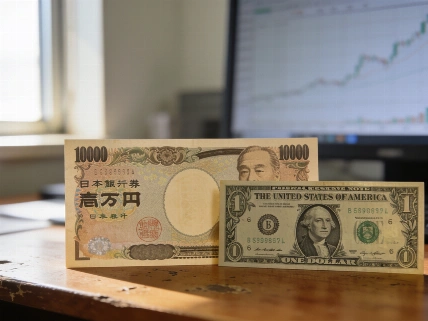

Citi expects the Japanese yen's long period of weakness to reverse as improved capital flows and renewed overseas investment in Japanese equities shift the balance of supply and demand, with implications for the USD/JPY exchange rate outlook
The Japanese yen, after years of steady depreciation against the United States dollar, may be approaching a turning point. According to Citi, underlying capital flows have shifted in favor of the yen, suggesting that the currency's long-term trend could move from weakness to gradual appreciation. This change is being driven by a combination of improved balance of payments data and a resurgence of overseas investment in Japanese equities.
Japan's balance of payments for the second quarter of 2026 showed the most significant improvement in net yen demand since 2019, based on Citi's analysis. The bank notes that net purchases of yen have been sustained since late 2025, largely due to foreign investors increasing their exposure to Japanese stocks. While there was a temporary dip in yen buying during the first quarter of 2026-attributed to position adjustments around Japan's fiscal year-end in March-inbound equity investment rebounded in the following quarter. Outbound portfolio investment by Japanese investors, meanwhile, has remained subdued, further supporting the yen's position.
Capital Flows and Exchange Rate Dynamics
Citi's report highlights that the underlying supply and demand for yen has clearly improved, even as the headline USD/JPY exchange rate has remained elevated. In 2026, the USD/JPY pair has been pushed higher by two main factors: foreign investors hedging their yen exposure as Japanese stock prices rise, and Japanese small and medium-sized enterprises engaging in long-term dollar buying to manage their own currency risks. Despite these pressures, Citi expects the improved capital flow environment to eventually support a stronger yen over the longer term.
For context, the USD/JPY exchange rate has traded in a wide range in recent years, reflecting both domestic monetary policy and global risk sentiment. Citi forecasts that the pair could remain between ¥155 and ¥160 toward the end of 2026, but sees the balance of risks shifting toward yen appreciation as capital inflows persist. This outlook stands in contrast to the persistent yen weakness observed since 2021, when ultra-loose monetary policy and outbound investment flows weighed on the currency.
Comparisons and Broader Implications
Japan's experience with shifting capital flows and currency dynamics is not unique. Other countries have also adjusted policies to influence capital movement and support their domestic economies. For example, Argentina recently eased restrictions on dollar lending to businesses in an effort to stimulate credit and economic activity, as detailed in this report on Argentina's new approach to business credit and currency policy. Such measures highlight the complex interplay between capital controls, investment flows, and exchange rates in shaping currency outcomes.
According to data from Japan's Ministry of Finance, the country's current account surplus widened in the first half of 2026, reflecting both stronger export earnings and increased foreign investment in Japanese assets. The USD/JPY spot rate, which began the year near ¥150, reached as high as ¥160 in early Q2 before stabilizing. These figures underscore the importance of capital flows in determining the yen's external value, especially when domestic monetary policy remains accommodative.
Understanding Currency Appreciation and Capital Flows
Currency appreciation occurs when a currency strengthens in value relative to another, often as a result of increased demand or reduced supply in the foreign exchange market. In Japan's case, a sustained increase in foreign investment-particularly in equities-can boost demand for yen, while subdued outbound investment limits additional supply. However, the impact of capital flows on exchange rates can be offset or delayed by hedging activity, monetary policy, and global risk sentiment. For the yen, the interplay between these factors will continue to shape its trajectory, with the potential for appreciation increasing as capital inflows persist and domestic investors remain cautious about overseas exposure.