Japan, Kazakhstan, and the Netherlands have each released new commemorative coins celebrating national milestones, from the Showa Era to the centenary of a Dutch department store and the founding of the CIS.
Fresh coins have landed in Japan, Kazakhstan, and the Netherlands. Each one tells a story. These aren't just shiny souvenirs. They're official statements about what matters to a country. Central banks and national mints keep a close eye on these releases. Every new coin reflects both monetary policy and a nation's sense of identity.
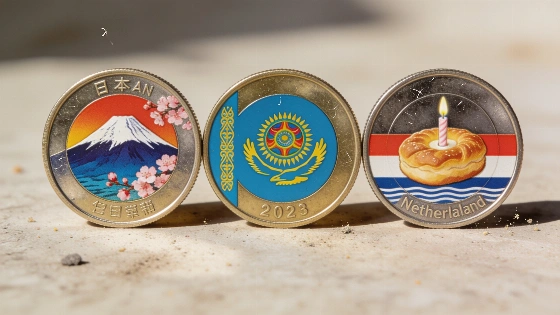
Japan's new 1,000-yen silver coin comes from the Japan Mint. It marks 100 years since the start of the Showa Era. The reverse side bursts with color, showing Japan's postwar recovery and growth. On the front, Mt. Fuji and cherry blossoms stand out. These images echo Japan's very first commemorative coin. This isn't just nostalgia. It's a clear reminder of a period that shaped modern Japan. The Bank of Japan has a long record of supporting these special issues. They often appear for big anniversaries or policy changes. Past examples include coins for the 150th anniversary of Japanese railways, as seen in numismatic archives.
Kazakhstan has its own story. The National Bank released a 1,000 tenge silver proof coin in the "Outstanding Events and People" series. This coin is said to honor the anniversary of the Commonwealth of Independent States (CIS), the group formed after the Soviet Union broke up in 1991. The front shows a color CIS emblem. It points to Kazakhstan's role in the post-Soviet era and the value of regional ties. But as of September 30, 2026, official records from the National Bank of Kazakhstan only confirm other commemorative coins-like those for the Constitution of Kazakhstan and for Қозы Көрпеш - Баян Сұлу. There's no independent confirmation yet of a CIS anniversary coin in primary regulatory disclosures. The National Bank stresses that all collectible coins are announced through official press releases. That means collectors should always check primary sources. For reference, the National Bank of Kazakhstan lists the current exchange rate as 1 JPY = 2.79 KZT. This helps collectors compare the 1,000 tenge coin's value to international standards. For the latest rates and policy updates, see the National Bank of Kazakhstan.
Timing matters. The Showa Era coin lands exactly a century after that era began. Kazakhstan's coin comes more than 30 years after the CIS was formed. Both coins show how money can record political and economic change. Central banks like the Bank of Japan and the National Bank of Kazakhstan shape the story and trust behind these releases.
The Netherlands took a different route. The Royal Dutch Mint teamed up with the department store HEMA. Together, they made a coincard with a 1-euro coin and a special medal. The medal's front shows a tompouce pastry with a candle. Around it, the words read "100 years of love for everyday life." The back is packed with the HEMA logo and images of the store's products. This marks HEMA's 100th birthday. It's a nod to how retail, design, and daily life mix in Dutch culture. Market listings confirm the coincard format. It's not a standard commemorative coin. These are sold through both coin dealers and retail partners, as shown by Dutch coin dealers and the Royal Dutch Mint's product news.
Don't expect to spend these coins at the corner shop. They're not for daily use. Most are limited editions, often in proof or colorized finishes. Collectors, museums, and people with a personal link to the event snap them up. As reported earlier, the market for these coins can get fierce. Rare or themed coins can fetch high prices at auction. The European Central Bank (ECB) keeps an eye on euro commemorative coins. It makes sure these releases fit with monetary policy and legal tender rules.
Let's look at the facts. The Japan Mint's 1,000-yen silver coin marks 100 years since the Showa Era began in 1926. Kazakhstan's 1,000 tenge silver proof coin is reported to honor the CIS, founded in 1991, but collectors should check official National Bank releases for proof. The Royal Dutch Mint's coincard celebrates HEMA's 100th year, pairing a 1-euro coin with a custom medal. Each coin comes from its national authority and features unique color or theme designs. Exchange rates, like 1 JPY = 2.79 KZT, help collectors judge value across borders.
Commemorative coins sit in a special spot in the world of money. They aren't made for daily spending. Instead, they capture a moment, an anniversary, or a cultural event. Their worth often goes beyond the number stamped on them. It's about the art and the story. National mints use these coins to keep memories alive, celebrate big moments, and sometimes support causes. Collectors love the craft and the history. Each coin tells a story. Central banks and regulators-like the Bank of Japan, the National Bank of Kazakhstan, and the ECB-make sure these coins keep both financial and cultural value intact.