When Egypt sold off King Farouk's legendary coin collection in 1954, thousands of rare coins hit the market at once. The sale set new standards for value, provenance, and showed the risks of forced liquidation in times of upheaval.
In 1954, Egypt's government put King Farouk's coin collection up for auction. The numismatic world changed overnight. Over just eleven days, more than 8,500 coins and medals-many unique or never seen before-were sold in nine sessions at Cairo's Royal Palace of Koubbeh. The scale and speed of the sale, along with Egypt's political turmoil, meant rare coins were scattered worldwide. Many sold for far less than they were worth. This happened as the Egyptian pound was under pressure after the 1952 revolution and the nationalization of royal assets, a process tracked by the Central Bank of Egypt and in official records.
Farouk I became king at 16 and spent years building a collection that matched any private or museum holding of his time. His rule was marked by lavish spending and a love of luxury. In 1952, a military coup forced him into exile. The new government seized his assets, including the Palace Collections of Egypt, and moved fast to sell them off. The goal was simple: turn treasures into cash, no matter what it meant for collectors or Egypt's cultural history. This was more than a sale-it was part of a wider push to redistribute wealth, as noted in the Encyclopaedia Britannica and reflected in the economic policies of the time.
The auction that changed provenance
The 1954 sale broke records for both size and importance. In just eleven days, 2,798 lots went under the hammer. The rushed schedule and Egypt's unrest kept many buyers away. Those who did show up-like John J. Pittman, Ambassador Henry Webb, and dealers Abe Kosoff and Hans Schulman-often stretched their finances to the limit. Some remortgaged homes or took out loans to buy as much as they could. Schulman, who had supplied Farouk with coins for years, even got a government loan to cover the $300,000 the king still owed him when he was overthrown.
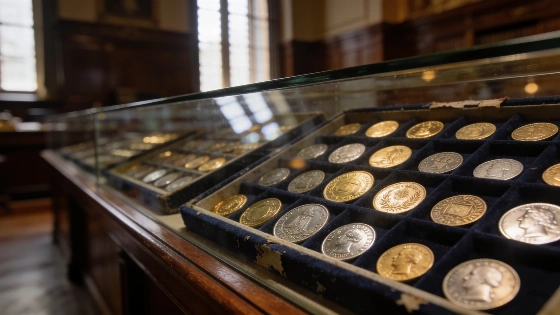
Most coins dated from the 1800s and 1900s, with a strong focus on gold. There were 164 platinum coins, a large group of bank notes, and many pattern coins-test pieces often made in precious metals at Farouk's request. The auction catalog was rushed and gave only brief descriptions. Many lots mixed rare and common coins, making it hard for buyers to target specific pieces. Numismatic books and auction records note that after the Farouk sale, thousands of lots entered the market. For rare coins, a Farouk provenance became a selling point on its own, often pushing prices higher at major auction houses like Sotheby's, Stack's Bowers, and Heritage Auctions.
Legendary rarities and global dispersal
One of the most famous coins was the 1933 Double Eagle, a $20 gold piece pulled from the sale at the last minute after the U.S. government said it had left the Mint illegally. The coin disappeared for decades, then resurfaced at auction in 1996 and again in 2021, when it sold for $18.9 million at Sotheby's, making it the most expensive coin ever sold at public auction (Sotheby's / Reuters). Farouk's collection also included the only full set of Double Eagles with Augustus Saint Gaudens' design ever offered at auction, and at different times, two of the five known 1913 Liberty Head nickels.
The sale reached far beyond the U.S. There were 179 lots of Central and South American gold coins, including a unique 1887 Mexican 5 pesos and nearly all known gold ingots from Brazil's Emperor Pedro II. The "jewel of Cuban numismatics," a 1916 20-peso gold coin, appeared in brilliant proof-one of only ten ever made. European rarities included French gold écu piedforts, an 1810 Dutch 20-gulden with King Louis Napoleon, and a Japanese 20-yen gold coin from the 1870s, the highest denomination of its time. Ancient coins, Roman gold ingots, and a record group of platinum coins rounded out the sale. As these rarities spread into private and museum collections worldwide, a Farouk provenance became a key part of marketing and value. Auction and museum records often highlight this origin as a mark of distinction.
With so many lots and so little time, many treasures sold cheap. The auction's location and Egypt's unrest meant only the most determined collectors and dealers could take part. This spread Farouk's coins into major private and institutional collections around the world. Today, provenance from the Palace Collections of Egypt is seen as a mark of distinction. Professional numismatic catalogs and auction archives regularly mention the Farouk provenance as a value booster.
Financial impact and market legacy
The numbers from the 1954 auction are still striking. Over 8,500 coins and medals sold in nine sessions between February 24 and March 6, 1954, grouped into 2,798 lots. The collection included 164 platinum coins, 18 Brazilian gold ingots, and tens of thousands of bank notes. Some pieces, like the 1933 Double Eagle and the 1916 Cuban 20-peso, have since set world records at auction. Experts now estimate the collection's total value would top $150 million, though the real number is impossible to pin down because so many items are scattered. The auction happened during a time of global currency shifts. The U.S. dollar held its postwar strength under Bretton Woods, while the Egyptian pound faced devaluation. Central banks, including the Federal Reserve and the International Monetary Fund (IMF), watched these big asset sales closely for their impact on foreign exchange reserves and cross-border capital flows.
For collectors, the Farouk auction is still a turning point. The forced sale, poor cataloging, and political chaos created both risks and chances that have shaped the rare coin market ever since. A coin from the Palace Collections of Egypt can fetch a premium, but it also shows how quickly national treasures can be scattered by political change. As a previous investigation showed, the fate of historic coins often depends as much on their journey as on their rarity. The Bank for International Settlements (BIS) has since stressed the need for clear provenance and cross-border asset tracking in its policy advice for collectibles and alternative investments.
Farouk's collecting, backed by nearly unlimited funds and a network of international dealers, left a lasting mark on numismatics. He often paid above-market prices for whole collections, forcing sellers to deal with new export rules and state approvals, especially as Egypt's finances worsened. The 1954 auction's legacy is not just in the coins, but in how it changed the relationship between collectors, governments, and the global rare coin market.
Forced liquidation and its risks in numismatics
When major collections are sold off quickly under political or economic pressure, the effects on value and provenance can be unpredictable. Governments or institutions selling assets in a rush may group rare coins with common ones, give poor catalog details, or sell to buyers who can't inspect the items. This can lower prices, hide historical context, and make future authentication harder. The Farouk auction is a textbook case of how political turmoil and urgency can change the fate of cultural and monetary heritage, with effects that still echo in the numismatic world decades later.