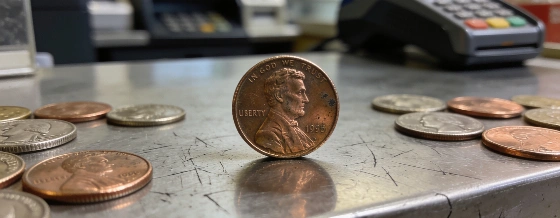
The US House has approved a bill to end production of circulating pennies and introduce nationwide cash rounding, while keeping the penny legal for payments and collectors. The measure now awaits Senate action and presidential approval.
The penny is close to disappearing from everyday American transactions. The US House of Representatives has passed the Common Cents Act (H.R. 10167), which would permanently stop the production of circulating one cent coins and require cash transactions to be rounded to the nearest five cents. If enacted, the penny will shift from a daily staple to a collector's item. According to Congress.gov, the bill was sent to the House Committee on Financial Services in September 2026, after earlier steps in both chambers (Congress.gov).
Permanent end to circulating pennies
If the law passes, the US Mint's November 2025 halt to penny production will become permanent. The last batch of circulating cents was made in Philadelphia, ending a 232-year run. The Mint reports it now costs 3.69 cents to make each penny, turning the coin into a steady money-loser. Ending production is expected to save about $56 million a year. This move fits into the Federal Reserve's ongoing review of how currency is produced and distributed to keep the payment system efficient.
The most immediate change for consumers will be mandatory cash rounding. When pennies aren't available, cash totals will be rounded to the nearest five cents: amounts ending in 1, 2, 6, or 7 cents round down, while 3, 4, 8, or 9 cents round up. Card and digital payments will still be calculated to the exact cent, so the change mainly affects cash users. Businesses can still give exact change if they have pennies, and the roughly 300 billion pennies already in circulation will remain legal tender (Washington Examiner).
Collector status and legal tender
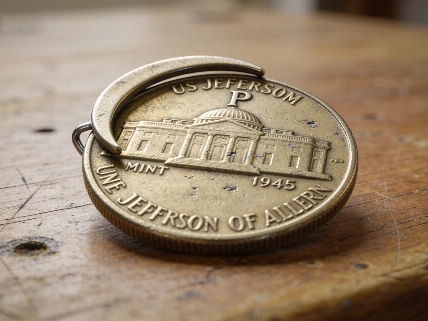
The penny is not being demonetized. The Common Cents Act allows the Mint to keep making one cent coins for collectors and numismatic sets. The transition has already started, with the Mint issuing a special 1776-2026 Lincoln cent for the Semiquincentennial, available only in annual collector sets. The Federal Reserve will continue to recognize the penny as legal tender, but its role in daily cash transactions will shrink as inventories run down and rounding becomes standard.
All existing pennies remain legal tender and can still be spent, deposited, or exchanged. There is no deadline for redeeming or using them. The change is operational, not legal: the penny will leave daily transactions but not the monetary system. This approach is similar to what other countries have done, such as the European Central Bank, which has withdrawn low-value coins while keeping them legal tender for a transition period.
Nickel composition and broader coin policy
The bill also addresses the nickel, another coin that now costs more to make than its face value. The Treasury Department would be allowed to change the nickel's metal composition if tests show a cheaper alloy won't disrupt vending machines or coin-operated devices. The Mint's 2025 data shows both pennies and nickels are produced at a loss. While the Mint has reported these losses for years, Congress is now moving to address the issue nationwide.
Other countries, including the UK and Canada, have made similar changes in response to rising production costs and changing payment habits. The International Monetary Fund has noted that removing low-value coins can be managed with clear rounding rules and public communication, with little effect on inflation.
Legislative hurdles and next steps
The House approved H.R. 10167 by voice vote, but it is not yet law. The Senate must pass the bill in the same form, and the president must sign it before anything changes. Until then, the penny's legal status and use remain the same. The bill had broad support in the House, but final passage depends on the Senate and the president. The Merchant Advisory Group notes the Senate has already advanced its own version, and both chambers must now agree on the final text.
Coin collectors are already adjusting. The penny's move from daily currency to a collector's item follows a pattern seen in other countries that have withdrawn low-value coins. As recent coverage shows, the decline of small change is part of a broader shift in how people use and value physical money.
What cash rounding means for payments
Cash rounding is common in other countries. Canada, Australia, and New Zealand have already dropped their lowest-value coins and use rounding for cash payments. In these systems, the total is rounded up or down to the nearest available coin, but electronic payments are not affected. The US plan follows this model, aiming to reduce costs with minimal disruption. Canada withdrew its penny in 2013, and the transition was managed with clear public guidance and little impact on prices.
For most people, the change will be minor, especially as cash use keeps falling in favor of cards and digital wallets. The biggest impact will be in cash-heavy settings like small shops, vending machines, and some service businesses. The law allows for exact change when pennies are available, but as the coin disappears, rounding will become the norm. Federal Reserve data shows cash now makes up less than 20% of US consumer transactions, and that share is still dropping.
The US is not the first to face the cost of low-value coins, but the scale is unique: over 300 billion pennies minted and still legal tender. The Common Cents Act does not erase the penny, but it ends its use as a practical payment tool. Congress's decision to act on this long-standing inefficiency is a rare example of fiscal pragmatism in currency policy.
While many Americans still feel sentimental about the penny, the numbers are clear: making a coin at nearly four times its value cannot continue. The House's move to end penny production and introduce cash rounding is overdue, and keeping the penny for collectors is a practical compromise. If the Senate and president agree, the US will join other countries that have let economic sense outweigh tradition.
The difference between legal tender and practical use is key to understanding the penny's future. Legal tender means a coin must be accepted for debts and payments, but it does not mean every business will use it in daily transactions. As coins leave circulation, they often remain legal tender for years, but their use fades as they become scarce. The US approach keeps the penny's legal status but removes it from routine payments, balancing history with efficiency.