A single US gold coin sold for over $2.5 million as Heritage Auctions' ANA event in Pittsburgh saw five coins each fetch seven figures, highlighting the intense demand for rare American numismatic pieces.
The 1879 Liberty Head "Quintuple" Stella made headlines at Heritage Auctions' ANA World's Fair of Money® in Pittsburgh, selling for $2,562,000 and setting a new record for a US pattern coin. This sale kicked off a week where collectors drove total auction proceeds to $67,184,066 across three major sales, showing that demand for rare American coins remains strong. The surge in high-end coin sales comes as the Federal Reserve keeps its benchmark rate steady, supporting alternative asset markets, according to the FOMC policy statement.
Heritage's US Coins Signature® Auction alone brought in nearly $40 million, with five gold coins each selling for over $1 million. The top lots included the Quintuple Stella and several other rare gold patterns, each with its own backstory. The willingness of buyers to pay record prices for these coins reflects a shift in how collectors and investors view American numismatic history. The auction also took place during a period of stable US Treasury yields, a factor that has often encouraged investment in tangible assets like rare coins, as tracked by the US Department of the Treasury and noted in recent IMF reports.
Five Coins Top $1 Million
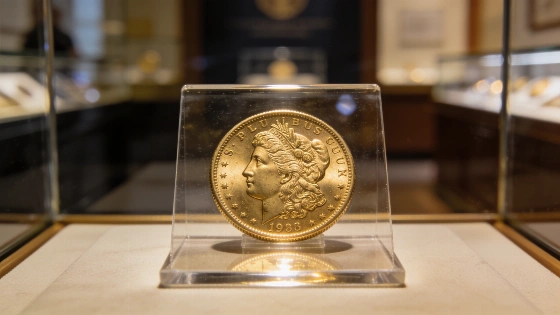
The 1879 Liberty Head "Quintuple" Stella, graded PR-64+ Deep Cameo by PCGS and once part of the Bob R. Simpson Collection, led the auction. Only five examples are known, with one held by the Smithsonian Institution. Its $2.56 million sale price broke the previous record for this type, set just a year earlier. The coin's ties to the $4 Stella series and collectors like Virgil Brand added to its appeal (CurrencyInformation.org).
Next was an 1879 Coiled Hair Stella from the Tacasyl Collection, graded PR-67 Cameo by NGC, which sold for $1,891,000. With only 14 known, it is among the rarest US coins. The 1824/1 Capped Head Left quarter eagle, a proof from the Harry W. Bass, Jr. Core Collection, reached $1,494,500. Only two proof examples exist, with one at the Smithsonian, making this the only proof available to private collectors. The rarity of these coins is a major factor in their value, especially as inflation expectations remain steady near the Federal Reserve's 2% target, supporting confidence in real asset markets.
Another highlight was the unique 1876 Liberty double eagle, which sold for $1,403,000. This transitional gold pattern, offered for the first time since the 1980s, is the only known example and was missing from even the most famous pattern collections. Rounding out the group, an 1880 Coiled Hair Stella brought $1,189,500, confirming its status as the rarest of the four Stella varieties with just 10 known pieces. The concentration of value in these top lots mirrors a broader trend in global collectibles, where scarcity and provenance drive high prices, as seen in recent ECB analyses of alternative investment flows.
Market Data and Collector Trends
Heritage's August 31-September 5 US Coins Signature® Auction generated $39,918,268 in sales. The World & Ancient Coins Auction added $26,415,000, and the Physical Cryptocurrency session contributed $850,798. The combined total of $67,184,066 for all three auctions points to a strong market for both classic and newer numismatic assets. The top five coins alone accounted for over $8.5 million, showing how much value is concentrated in the rarest pieces (CurrencyInformation.org).
These results fit a pattern seen in other major coin sales, where unique provenance and top certification drive premiums. As reported earlier, even modern US coins with unique features can reach extraordinary prices when rarity and collector demand come together. The global context matters too: during the same week, Heritage set new records for Brazilian, Mexican, and ancient rarities, reflecting a worldwide surge in demand for high-end collectibles. These markets often move in the opposite direction of currency volatility and central bank intervention, as documented by the Bank for International Settlements.
Why Pattern Coins Bring Premiums
Pattern coins like the Stellas and the 1876 Liberty double eagle were made as experimental or proposed designs and were never meant for general circulation. Their limited mintage-often just a handful-means surviving examples are highly sought after. The mix of rarity, historical significance, and previous ownership by well-known collectors drives prices higher.
Certification by grading services such as PCGS and NGC adds to a coin's appeal, confirming its authenticity and condition. In today's market, coins with the highest grades and best pedigrees consistently sell for more, even within the same type. This premium for quality and provenance is even stronger in an environment where central banks, including the European Central Bank, keep a close eye on inflation and asset prices, which can influence investor behavior in alternative assets.
The Role of US Pattern Coins in Collecting
US pattern coins hold a special place in coin collecting. Unlike regular issues, patterns were struck to test new designs, denominations, or metals, often in response to proposals for monetary reform or international standards. Most patterns never entered circulation, but they document the evolution of US coinage and the debates that shaped it. Collectors value these coins for their rarity and for the insight they offer into the US Mint's decision-making. Pattern coins serve as both historical artifacts and high-value collectibles, connecting monetary history with today's collectibles market.