
The Bureau of Engraving and Printing will not produce any new $2 bills in 2026, prioritizing advanced security features and new tactile elements for other denominations instead. Collectors and cash users will see the $2 note sidelined as modernization accelerates.
The $2 bill will be missing from the next round of US currency production. The Bureau of Engraving and Printing (BEP) has confirmed it will not print any new $2 notes in 2026, a move that disappoints collectors and leaves a gap in the usual lineup of bills. Instead, the BEP is focusing its efforts on redesigning higher-demand denominations and adding new security and accessibility features, following its annual planning and the Treasury's modernization goals.
Even though there are now a record 1.8 billion $2 bills in circulation, the note remains the least used denomination in the US. Federal Reserve data shows $2 bills make up just 0.001% of the total value of US banknotes in use. Because they are rarely spent, $2 bills circulate slowly and wear out less quickly, so the BEP needs to replace them far less often than other bills. The agency has skipped $2 bill production before-in 2013, 2017, 2018, and 2020-as part of its low-demand management strategy. The 2026 pause stands out because it coincides with the US Semiquincentennial, a year that has prompted special issues for other denominations.
Security and accessibility take priority
Rather than issuing commemorative $2 bills, the BEP is putting its resources into new $10 notes with advanced tactile features for the visually impaired and upgraded anti-counterfeiting technology. BEP planning documents and Federal Reserve guidance show the agency expects to print about 4.4 billion notes in 2026, with the $10 bill at the center of its modernization push. The new $10 notes are projected to cost $101.64 per 1,000 notes to produce-just over 10 cents each-reflecting the added complexity of the new features. This focus on security follows a global trend, as central banks like the European Central Bank and Bank of England have also prioritized anti-counterfeiting and accessibility in their recent banknote series.
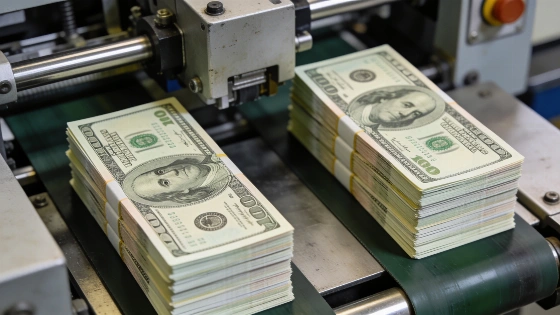
The BEP's modernization program goes beyond design changes. The agency is investing in new intaglio printing presses, electronic inspection systems, and finishing equipment, with funding already set aside for 43 new machines. The goal is to boost productivity, reduce environmental impact, and make counterfeiting more difficult. The Federal Reserve Board and the BEP have a joint plan for equipment replacement and production upgrades to keep US currency ahead of evolving threats. For more on the Federal Reserve's role in currency policy, see the Federal Reserve payments systems overview.
Why the $2 bill is left behind
The $2 bill is not part of the redesign effort for a simple reason: it is rarely targeted by counterfeiters. According to the Federal Reserve, the government redesigns notes mainly to fight counterfeiting. Since the $2 bill is almost never faked, it is low on the list for security upgrades. There are no plans to introduce a new $2 note with enhanced features or commemorative designs in the near future. This approach matches the BEP and Treasury's official statements, which describe current upgrades as part of a broader security program, not a commemorative push for the $2 bill.
For collectors, this means there will be no special 250th anniversary $2 bills to look for, despite the historical significance of the year. The BEP's focus on denominations with higher demand and greater risk of counterfeiting leaves the $2 bill unchanged, circulating in record numbers but with little impact on daily transactions. When people do get $2 bills, they tend to keep them rather than spend them, which further reduces the need for new print runs.
Production volumes and circulation trends
BEP reports for 2026 project a print order between 3.8 billion and 5.1 billion notes across all denominations, down from the previous year. The lower end of the 2026 order is 0.3 billion notes (8.2%) less than in 2025, while the upper end is down by 0.8 billion notes (13.3%). Despite these reductions, the total value of currency in circulation continues to rise, increasing by $43.1 billion between June 2024 and June 2025, according to Federal Reserve data. However, the pace of growth has slowed compared to pre-pandemic years, reflecting changes in cash usage and payment habits. This trend is also seen in other advanced economies, as noted in the ECB's exchange rate statistics, where digital payments and declining cash demand are changing how currency is issued.
As the BEP prepares to issue new notes with the facsimile signature of President Donald J. Trump-starting with the $100 bill-collectors and the public will see a new era of US currency design. The $2 bill, with its unique place in American collecting culture, will remain unchanged and unmarked in this cycle.
For those watching the evolution of physical currency, the sidelining of the $2 bill is another sign of how modernization and security concerns are shaping the priorities of currency issuers. As reported earlier, the broader trend is toward digital payments and advanced authentication, leaving traditional denominations to fade from view.
The $2 bill's marginal role in the US cash system shows the trade-offs currency authorities face. While commemorative issues and niche denominations have cultural and collector appeal, the practical needs of security, accessibility, and efficient production now drive which notes are updated or retired. The BEP's decision to skip the $2 bill in 2026 is not just about cost or tradition-it reflects the realities of modern cash use and the ongoing effort to stay ahead of counterfeiters. For now, the $2 bill remains a curiosity, circulating in record numbers but unlikely to return to the spotlight in the next generation of US currency.
Banknote redesigns in the United States are shaped by security needs and how people actually use cash. The BEP and Federal Reserve regularly review which denominations are most at risk of counterfeiting and which are most widely used. Notes that see heavy circulation, like the $10, $20, $50, and $100 bills, are prioritized for upgrades and new features. In contrast, denominations like the $2 bill, which are rarely used and almost never counterfeited, are left out of major redesign cycles. This approach lets currency authorities use resources efficiently while keeping public trust in the integrity and accessibility of US cash.