Markets expect annual inflation to rise to 3.6%, but that move is already in forecasts. A broader pickup in prices could put the December Fed increase back in question.
The September consumer price report is due at 13:30 BST on 14 October.
Investors are weighing whether a December Federal Reserve rate increase will be the final move in the current cycle. A hotter CPI reading would not automatically lift the Dollar: the report's details could matter more than the headline, especially for gold.
Annual headline inflation is expected to rise, and markets have already priced in that increase. The sharper question is whether price pressure is spreading beyond energy and food, challenging the view that inflation will cool enough for rate increases to end after December.
The September report is scheduled for 14 October at 13:30 BST. Crédit Agricole's 9 October calendar put consensus annual headline inflation at 3.6%, up from 3.4%. Since an acceleration is expected, the figure alone would not count as an upside surprise. The composition of the report could carry more weight with policymakers.
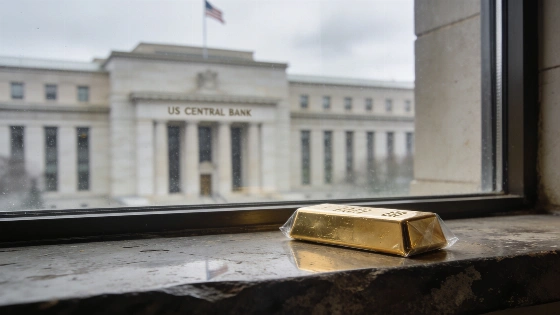
At its 15-16 September meeting, the Federal Reserve raised its policy rate by 25 basis points, setting a target range of 3.75-4.00%. Minutes published on 7 October showed that most policymakers expected another increase before the end of 2026. An October pause had become the base case. Interest-rate futures put the odds of an October increase at about 17%, against roughly 81-84% for a December move. Markets are watching the 8-9 December meeting for the next step. The Fed's policy information records the September decision.
Goldman Sachs expects one more quarter-point increase in December, lifting the federal funds target range to 4.00-4.25%. The bank lowered its estimate of the chance that policymakers would skip the move after Governor Christopher Waller's 8 October speech. It read comments from President Williams and Vice Chair Jefferson as pointing toward no increase in October.
Waller said that further rate increases would be needed to return inflation to the Federal Reserve's 2% target more promptly if the data followed his expected path. He also stressed that the pace remained flexible. In August, core personal consumption expenditures inflation rose 0.25% month on month and stood 3% higher than a year earlier. Waller said annual core inflation had remained around 2.5-3.0% since spring 2024. His 8 October remarks also discussed a recent core PCE reading of 2.0% at a three-month annualised rate. That figure uses a different inflation measure and time frame from the annual headline CPI figure due Wednesday.
Minutes from the September meeting recorded disagreement over whether inflation reflected broader demand or temporary shocks from energy and tariffs. Policymakers will face those questions at their 27-28 October meeting. St. Louis Fed President Alberto Musalem also said further tightening would be needed to return inflation to 2%, without saying whether he supported an October increase.
Goldman's view that December could be the last increase depends on inflation improving by March. That is the next meeting at which another move might be considered under an every-other-meeting pattern. Persistent pressure from energy could complicate the forecast. So could technology goods or possible tariffs. A broad rise in prices excluding food and energy would challenge the outlook more directly than a headline increase concentrated in petrol.
Higher Treasury yields do not necessarily mean markets expect an immediate change in the Fed's policy rate. Crédit Agricole reported that long-dated yields had climbed amid government debt supply and rising long-term rates in Europe. Recent Fed comments, meanwhile, had helped keep short-term rates anchored by signalling little urgency to raise rates in October.
Investors can demand more compensation to hold longer-term government debt even when their view of the next central-bank decision barely shifts. Crédit Agricole judged that an in-line CPI reading would leave limited room for short-term rates to rise. It also warned that long-term yields could keep climbing in the near term.
For currencies, the release matters if it changes expectations for the policy path, not simply because the headline rate moves higher. Any effect on the Dollar will also depend on how much optimism about the US currency is already reflected in market positions.
UBS has described the US Dollar as overbought and the Euro as oversold. It said the EUR/USD decline had exceeded what underlying fundamentals alone would justify. That positioning may make investors less willing to add to existing Dollar bets unless the CPI report provides fresh support. A separate account of dollar strength and central-bank policy appears in recent rupee coverage, which concerns a different currency pair and policy setting.
Gold faces another pressure. If expectations of higher US rates lift inflation-adjusted yields, interest-bearing assets may look more attractive than a metal that pays no interest. UBS remains constructive on gold over the longer term, citing central-bank demand and debt concerns. Its outlook also accounts for expectations of a weaker US Dollar and allows for near-term weakness.
Headline inflation measures the overall change in consumer prices. Core measures exclude food and energy to help assess underlying pressure. Neither measure alone dictates a Federal Reserve decision. Policymakers consider the wider inflation picture, while markets respond to whether new data shifts rate expectations.
An expected rise in annual headline CPI may have less impact than evidence that price increases are spreading or proving persistent. The September report is due Wednesday 14 October at 13:30 BST. Goldman Sachs forecasts a December increase that would put the federal funds target range at 4.00-4.25%.