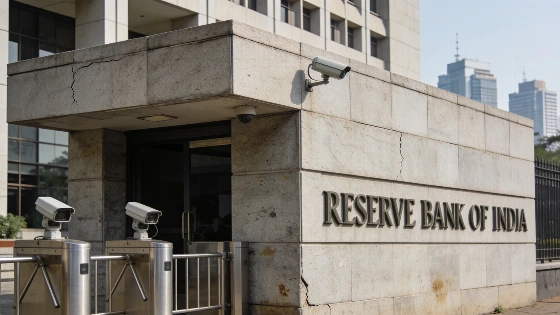
The Reserve Bank of India raised its repo rate to 5.50 percent and shifted to a calibrated tightening stance, but the Rupee is still trading near record lows against the US Dollar. Analysts warn more challenges are ahead.
India's central bank raised rates for the first time in nearly four years, but the Rupee barely budged. The Reserve Bank of India (RBI) lifted its repo rate by 25 basis points to 5.50 percent, ending a ten-month pause at 5.25 percent. Even with this move and a new "calibrated tightening" stance, the Rupee stayed pinned near its weakest levels. Traders are now watching to see if more hikes can turn things around. According to Reuters analysis, the RBI's decision came as pressure on the currency kept mounting.
On the day of the announcement, the USD/INR rate hovered at 96.78. That was the lowest close in almost five months, and the pair briefly touched 96.83-just a hair off the all-time low of 96.98. The Rupee has struggled to find its footing, even after the RBI stepped in earlier in October to slow the slide as capital left Indian markets and the Dollar gained strength. On October 5, the Rupee traded at 96.2650 per Dollar, compared to 96.3150 the day before. The swings show how volatile things got ahead of the policy move, as reported by Reuters.
Policy shift leaves markets guessing
Goldman Sachs called the RBI's quarter-point hike before it happened. The bank's forecasts suggested the Rupee might get a short-lived boost, but Dollar strength would likely return. Goldman set its USD/INR targets at 96 for three months and 97 for both six and twelve months, expecting the RBI to move cautiously. The actual hike was backed by all six committee members, but the shift from "neutral" to "calibrated tightening" passed by a 4-2 vote. That change didn't shift the big picture. Now, the focus is on whether the RBI will keep raising rates and if higher yields can make Rupee assets attractive enough to slow the Dollar's advance. The RBI Governor described "calibrated tightening" as a careful approach, leaving the door open for more hikes but not promising to move fast, according to Moneycontrol.
For investors, the RBI's stance means rate cuts are off the table for now. The central bank tied future moves to inflation, growth, and how price pressures spread. It left itself room to either hike again or pause. The policy statement made it clear: the RBI won't defend any specific Dollar-Rupee level, but it will step in to prevent wild swings. Governor Sanjay Malhotra said the goal is to keep currency moves in line with economic fundamentals. After the announcement, the USD/INR dipped about 0.2% to 96.59. That small move showed currency traders were not convinced the hike would change the trend, as noted by Investing.com.
Inflation and capital outflows keep pressure on
Higher rates can, in theory, help the Rupee by making Indian assets more appealing. But global factors are working against that support. Energy prices remain high, inflation risks are stubborn, and US yields keep drawing capital away. The RBI expects inflation at 5.2 percent for the current financial year. Weak monsoon rains and expensive commodities add to the uncertainty. Raising rates can't fix these outside shocks, but it can help keep inflation expectations in check and stop businesses from passing on higher costs. Before the RBI meeting, 35 out of 61 economists polled by Reuters predicted a 25 basis point hike, while 26 saw no change. Swap markets had already priced in the move and even saw a chance of a bigger 50 bps hike, showing how sensitive markets are to inflation and liquidity risks, according to Reuters.
External financing remains a headache. From April through October 5, net foreign portfolio outflows hit US$10.3 billion. The RBI tried other steps to lure capital, but outflows from Indian stocks sped up as the Dollar kept rising. The central bank's interventions in the currency market earlier in October aimed to steady the Rupee, but the pressure didn't let up. Goldman Sachs's global outlook still sees US yields as a major competitor. Its latest report expects the Federal Reserve's final rate hike to come in December. That timeline offers little relief for the Rupee, since higher US rates could keep offsetting India's tightening. The Fed's path remains a key factor for all emerging market currencies, not just the Rupee.
Forecasts show little room for Rupee rebound
Goldman Sachs's pre-meeting forecasts for USD/INR-96 in three months, 97 in six and twelve months-point to only a brief pause before the Rupee could weaken again. With the currency already trading near those levels, there's not much room for further drops unless new risks pop up. The RBI's stance leaves investors watching for signs of more hikes or a pause, with inflation data and capital flows likely to drive the next move. Traders are also eyeing government bond yields and the gap between Indian and US securities for clues about where the Rupee might head next.
Recent coverage has shown that even bigger reserves haven't stopped the Rupee's slide. Policymakers face a tough job: they have to juggle fighting inflation at home with the reality of global capital flows and outside shocks. The RBI, like the Federal Reserve and the European Central Bank, has to weigh domestic goals against the impact of global monetary policy shifts.
For anyone tracking the Rupee, the RBI's latest move makes one thing clear: raising rates alone won't steady the currency while outside pressures stay strong. The central bank is ready to step in against wild swings, but the real drivers-capital leaving the country, global rate competition, and stubborn inflation-can't be fixed with small rate hikes. Unless those bigger forces change, the Rupee will stay exposed to both local and global headwinds.
Central banks use policy rates to steer currency values and inflation. The policy rate is what commercial banks pay to borrow from the central bank, which sets the cost of credit across the economy. Raising the rate is meant to make local assets more attractive and slow inflation, but the effect depends on how those changes stack up against global rates and what investors expect. In a world where markets are tied together, even bold moves at home can be drowned out by bigger shifts abroad or by stubborn outside shocks. That limits how much any one central bank can control its currency's path.