
Recent US-Japan intervention to support the yen is prompting investors to reconsider the Swiss franc as a funding currency, raising questions about future exchange rates and the impact on Swiss exporters and policymakers
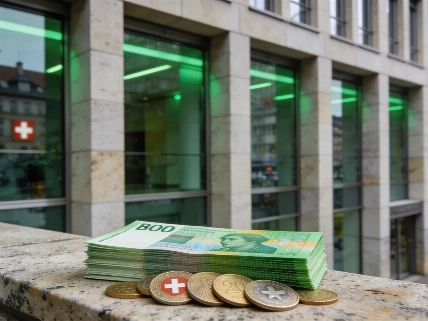
The Swiss franc, long regarded as a symbol of stability and strength, is now at the center of a shifting global currency landscape. Recent coordinated intervention by the United States and Japan to support the Japanese yen has unsettled established patterns in international funding markets, leading investors to look for alternative low-yielding currencies for so-called carry trades. As the yen's role as the world's preferred funding currency becomes less certain, the Swiss franc is emerging as a new candidate-potentially altering its value and the outlook for Swiss businesses and policymakers.
For years, the Swiss franc has remained strong against the euro and the US dollar, supported by Switzerland's persistent current account surplus, low inflation, and reputation as a safe haven. Even after some recent softening, the franc is still about 12% stronger against the euro than it was five years ago. This strength has made Swiss exports more expensive abroad, putting pressure on economic growth and prompting the Swiss National Bank (SNB) to monitor the currency closely.
Carry Trades and Currency Rotation
Carry trades involve borrowing in a currency with low interest rates and investing in assets denominated in higher-yielding currencies. Traditionally, the Japanese yen has been the funding currency of choice due to its low rates and deep liquidity. However, after the recent intervention to strengthen the yen, investors are increasingly wary of further official action and sudden volatility. This has led to a gradual rotation toward the Swiss franc as an alternative funding currency, according to several analysts and institutional investors.
At the time of writing, the Swiss franc is trading near its weakest level against the euro in about a year, with the EUR/CHF pair around 0.9385. The franc has depreciated roughly 4% from its 11-year peak against the euro in March and nearly 7% from its high against the US dollar in January. Rabobank recently revised its 9- to 12-month target for EUR/CHF to 0.95, reflecting expectations of further franc weakness. The SNB's policy rate remains at 0%, while the Bank of Japan's rate is 1%, making both currencies attractive for funding, but the franc now stands out for its lower volatility.
Risks and Policy Implications
While the yen is likely to remain a major funding currency, the risk of further intervention and speculation about Japanese policy changes-including possible rate hikes and shifts in domestic investment by large institutions-are making investors reconsider their strategies. The Swiss franc's appeal is further enhanced by its stable policy environment and the SNB's willingness to intervene if the currency becomes too strong. According to Bank of America, funding in Swiss francs is now more attractive than in yen, and the bank has recommended selling the franc against the yen, targeting a move from 196 yen per franc to 190.
Any sustained weakening of the franc would be welcomed by Swiss policymakers, who have struggled with the economic consequences of a strong currency. The SNB has stated it is prepared to act if necessary to prevent excessive appreciation. However, the shift toward using the franc as a funding currency is still in its early stages, and the long-term effects remain uncertain. As ING's global head of markets notes, both Japan and Switzerland have clear preferences for their currencies' direction: Japan wants a stronger yen, while Switzerland would prefer a weaker franc.
Facts and Figures
According to recent market data, the Swiss franc has depreciated about 4% against the euro since March 2026, with the EUR/CHF exchange rate moving from a peak near 0.9 to around 0.9385. Against the US dollar, the franc is down nearly 7% from its January high. The SNB's policy rate is currently 0%, while the Bank of Japan's stands at 1%. These conditions have contributed to the franc's growing role in global carry trades, as investors seek alternatives to the yen amid intervention risk.
Changing Dynamics in Global Currency Markets
The evolving role of the Swiss franc in international funding markets highlights the complex interplay between central bank policy, investor behavior, and global capital flows. As seen in the recent US-Japan intervention, official actions can quickly reshape currency preferences and funding strategies. For a broader perspective on how intervention risk can affect currency confidence, see this analysis of the yen's vulnerability when USD/JPY approaches key levels: what a break above 160 in USD/JPY could mean for the yen.
Carry trades are particularly sensitive to changes in volatility and policy signals. When a funding currency becomes unstable or subject to intervention, the small profits from interest-rate differentials can be quickly erased by exchange-rate swings. This dynamic forces investors to constantly reassess their positions and look for new opportunities, often with significant consequences for the countries involved. The Swiss franc's new role as a potential funding currency will depend on how both the SNB and global investors respond to these shifting conditions.
Carry trades are a longstanding feature of international finance, allowing investors to profit from differences in interest rates between countries. However, the strategy carries significant risks, especially when central banks intervene or when volatility rises unexpectedly. A sudden appreciation of the funding currency can wipe out gains and lead to rapid unwinding of positions, amplifying market moves. Central banks like the SNB and the Bank of Japan must balance domestic economic objectives with the realities of global capital flows, often making policy decisions that have far-reaching effects beyond their borders.