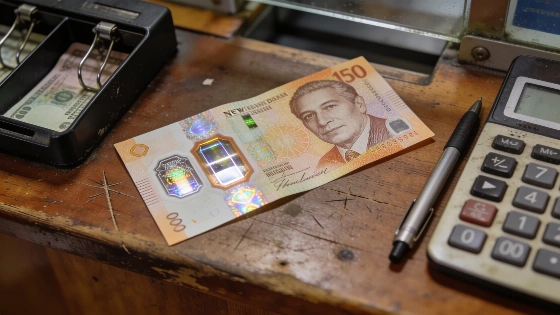
The Solomon Islands marks its 50th anniversary with a limited-edition $50 polymer note, while the Eastern Caribbean Currency Union unveils a new series featuring national heroes and updated security features
Two major currency developments are underway in the Pacific and Caribbean regions as the Solomon Islands and the Eastern Caribbean Currency Union introduce new banknotes in 2026. Both initiatives reflect a shift toward modern security features and a renewed focus on national identity, with implications for collectors, everyday users, and the broader cash landscape.
The Central Bank of the Solomon Islands has issued a commemorative $50 banknote to celebrate the nation's Golden Jubilee, marking 50 years since independence. This limited-edition note closely resembles the existing $50 bill in design but is produced on polymer substrate, offering enhanced durability and resistance to counterfeiting. The note incorporates updated security elements, including transparent windows and advanced holographic features, aligning with global trends in banknote technology. According to the Central Bank, the commemorative issue is available in restricted quantities and is expected to attract interest from collectors as well as the general public.
Eastern Caribbean Series Redesign
Meanwhile, the Eastern Caribbean Central Bank is preparing to launch a new series of banknotes for the eight countries that share the Eastern Caribbean dollar (XCD): Anguilla, Antigua and Barbuda, Dominica, Grenada, Montserrat, St. Kitts and Nevis, St. Lucia, and St. Vincent and the Grenadines. For the first time, the new series will remove the portrait of Queen Elizabeth II, replacing it with images of national heroes and prominent figures from the region. This change reflects a broader movement among Commonwealth nations to update currency iconography in line with evolving national narratives. The new notes will also feature upgraded security measures, including tactile elements for the visually impaired and improved anti-counterfeiting technology. The Eastern Caribbean Central Bank has stated that the transition will be phased, with both old and new notes circulating in parallel for a period to ensure a smooth changeover.
Facts and Figures
The Solomon Islands $50 commemorative note is being issued in a limited run, though the Central Bank has not disclosed the exact quantity. The Eastern Caribbean dollar (XCD) is used by over 600,000 people across its eight member states, and the new series is expected to enter circulation in late 2026. Both issuers have emphasized that existing notes will remain legal tender during the transition, minimizing disruption for cash users and businesses.
Commemorative and Collectible Value
Commemorative banknotes often attract collectors due to their limited availability and unique designs. The Solomon Islands' Golden Jubilee note is expected to follow this pattern, with demand driven by both local and international numismatists. In the Eastern Caribbean, the redesign marks a significant departure from colonial-era imagery, potentially increasing the appeal of both the outgoing and incoming series among collectors. For context, the role of special-issue coins and notes in shaping collector interest has been explored in other regions, such as the United States, where rare commemorative dollar coins have influenced modern collecting trends.
National Identity and Banknote Design
The decision to feature national heroes and local figures on banknotes is part of a wider trend among countries seeking to reinforce cultural identity through currency. While the practical function of cash remains unchanged, the imagery and design choices can have a lasting impact on how citizens perceive their money and history. The move away from colonial symbols is particularly significant in regions with a shared currency, as it requires consensus among multiple governments and reflects a collective vision for the future of the union.
Banknote design is a complex process that balances security, durability, accessibility, and symbolism. Polymer substrates, now widely adopted in many countries, offer advantages such as longer lifespan and improved resistance to environmental damage. Security features like transparent windows, color-shifting inks, and tactile elements help deter counterfeiting and make notes easier to authenticate. The transition to new designs often involves public education campaigns and phased rollouts to ensure that users and businesses can adapt without confusion or loss of confidence in the currency.