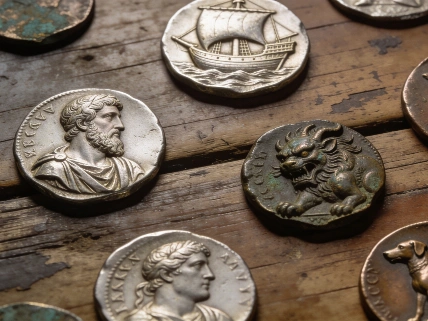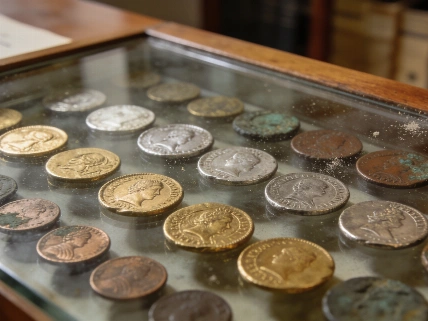

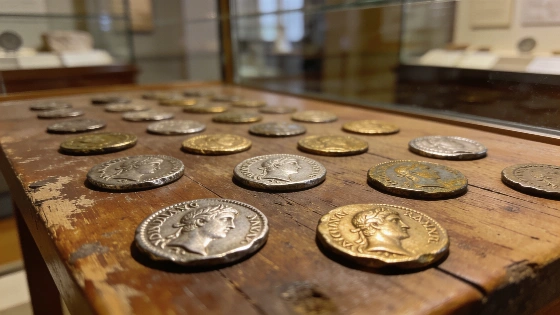
A trove of 934 Roman silver denarii, covering nearly three centuries, is now on display at the LVR-LandesMuseum Bonn. The find sheds light on ancient money and the economic life of Roman Germany.
In a field near Wesseling, Germany, a metal detector beeped. That signal led to 934 Roman silver denarii coming out of the ground. The coins are now at the LVR-LandesMuseum Bonn. This is the largest Roman coin hoard from Hadrian's reign ever found in Germany. The total weight is 3.1 kilograms. Multiple independent reports, including DW and ABC News, confirm the details. The find shows how people have trusted precious metals to hold value for centuries. Central banks still rely on this principle, as seen in the ECB's foreign reserves data.
Oliver Riedl, an amateur archaeologist, found the coins after his detector picked up a strong signal. The oldest coin dates to 148 B.C., from the Roman Republic. The newest was struck in A.D. 124 or 125, during Hadrian's rule. Coins from the Flavian dynasty are also in the mix, minted under Vespasian, Titus, and Domitian between A.D. 69 and 96. Nearly 300 years of Roman money ended up in one buried stash. This gives researchers a rare look at how currency and inflation changed over time. Today, the Federal Reserve tracks the Consumer Price Index (CPI) to watch purchasing power. The Romans had their own ways of coping with rising prices.
Ancient wealth, modern find
Experts think the coins were hidden in the second quarter of the 2nd century A.D. There were no banks. People hid their savings. Erich Classen, a state archaeologist, says the owner may have died before coming back for the hoard. The coins stayed underground for almost 2,000 years. Local archaeological authorities agree the hoard was buried on purpose. The LVR-Office for the Preservation of Archaeological Monuments in the Rhineland supports this view, as reported by international news agencies.
How much was the hoard worth? A Roman legionary earned about 300 denarii a year. Half went to food and gear. Saving 934 denarii would take six years of careful saving. That's a lot of money. It could have belonged to a group or a wealthy individual. Today, saving and storing value is still at the heart of monetary policy. The Bank of England and other central banks set interest rates to shape how people save and spend. Inflation is always a concern.
Scale and rarity among Roman finds
Roman coin hoards turn up in Europe, but few from the 2nd century match Wesseling's size. Museum experts say it is the fifth largest hoard of its kind worldwide. The coins are well preserved and cover a wide range of emperors. This lets researchers study how Roman money changed, what people valued, and how they kept their wealth safe. The European Central Bank still tracks the euro's exchange rate against other major currencies. Currency stability mattered then. It matters now.
Other big coin finds have changed what we know about trade and money in the past. Earlier discoveries from shipwrecks and buried hoards have rewritten parts of currency history. Each new find adds another piece to the puzzle.
History in silver, questions remain
No one knows exactly why the coins were buried. With no banks, people hid their savings. The fate of the owner is a mystery. The coins' journey-from ancient mints to a modern museum-shows how some money survives while most is lost. The International Monetary Fund (IMF) often points out the need for safe ways to save. Ancient hoards prove people have always worried about security.
For a Roman soldier, 934 denarii was a fortune. The coins' dates and emperors show how the empire changed. The Bank for International Settlements (BIS) still studies how precious metals and currency reserves affect global stability. Silver was trusted then. It still matters now.
Roman denarii were silver coins used for trade, army pay, and savings. Their value changed as silver content dropped, inflation rose, or politics shifted. Hoards like Wesseling's show how people tried to protect their money. They chose coins over goods or barter. Studying these finds helps us understand ancient economies and why physical money still matters.