Germany will reduce the silver content in its commemorative euro coins after halting releases due to surging silver prices. The move marks a significant shift for collectors and signals changing economics for legal-tender coinage.
Collectors in Germany just got a jolt. The government is slashing the silver content in its uncirculated commemorative euro coins. This isn't a minor tweak. It's a direct answer to the sharp jump in global silver prices. For years, Germany stood out in the eurozone for its high-silver legal-tender coins. That era is ending. The European Central Bank (ECB) has warned about how wild swings in metal prices can hit eurozone money supply. Germany's decision shows the pressure on mints across Europe.
Back in late October 2025, the Bundesbank pulled the plug on two planned coins: the €25 and €20 Heilige Drei Könige (Three Holy Kings) and the 125 Jahre Wuppertaler Schwebebahn (125 Years of the Wuppertal Suspension Railway). The Federal Ministry of Finance pointed straight to the surging spot price of silver. At that point, silver hovered just under $50 an ounce. Five months later, it had shot past $70. The math no longer worked for high-silver coins. According to market listings, demand for silver bullion and collectibles stayed high. Minting costs kept climbing.
New standards for German commemorative coins
In March, the government made it official. Future uncirculated commemorative coins will have much less silver. Copper will take over a big part of the mix. The new €35 and €50 coins will drop from .925 to .500 silver fineness. That's a 46% cut in silver by fineness. The €35 coin will also lose a gram, dropping from 18 to 17 grams. The first coin to get the new specs will be the €35 issue for Hermann Hesse's 150th birthday in 2027. The €35 Elisabeth Schwarzhaupt coin, first planned for 2026 but now pushed to January 2027, will also use the new standard. The Bundesbank's search portal doesn't yet show a direct policy statement. The rules are still being finalized. Parliamentary oversight, as archived by the Bundestag, is still in play.
Proof-quality coins are a different story. They'll keep their original silver content and specs. But uncirculated coins, sold at face value and still legal tender, will change. The Ministry of Finance says the goal is to stop coins from turning into targets for metal speculators or blowing past budget limits as silver prices swing. The ECB's monetary policy reports have stressed how important it is to keep legal-tender coins stable when metal costs spike.
Economic and historical context
Silver prices have jumped fast. For Germany, that means the metal in some coins is now worth as much as, or more than, their face value. That's a problem. Other countries have faced the same squeeze and made similar changes. Until now, Germany was one of the last eurozone countries still putting out legal-tender coins with lots of silver. Past German commemoratives have honored names like Goethe, Albert Einstein, and Pope Benedict XVI. The Federal Reserve and other central banks have tracked how precious metal price spikes hit currency stability and collector demand. Inflation, as shown by the Consumer Price Index (CPI), has kept up the pressure in recent years.
Debasing coins-cutting the precious metal content-is nothing new. In Germany, silver in coins has gone up and down for over a hundred years. The German Empire used .900 fine silver. The Weimar Republic dropped to .500 after hyperinflation and heavy debasement. West Germany's 5-Deutsche mark coins, from 1951 to 1974, were .625 fine silver. They were pulled when their metal value beat their face value. East Germany's commemoratives ranged from .500 to .800 fineness. After reunification, 10-Deutsche mark coins started at .625 and later .925 fine silver. Today, most of these are traded for their metal, not their face value.
Collector impact and legal-tender status
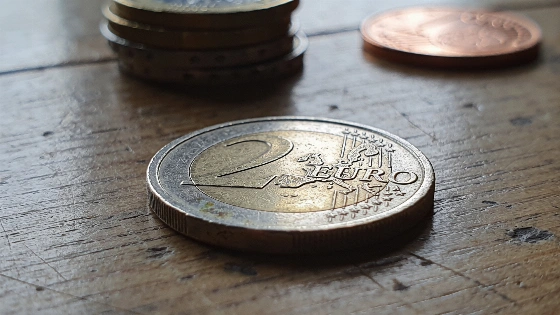
This is a turning point for collectors. Proof coins will keep their specs. Uncirculated coins will lose much of their silver value. The face value has climbed from €20 to €35, but the diameter stays at 32.5 millimeters. Germany's move lines up with what's happening elsewhere. The United States switched its cent to a plated coin in 1982. Canada now issues gold-plated silver coins. The ECB's monthly bulletins have tracked the shift in eurozone coin alloys. Germany's €2 commemoratives have used copper-nickel and nickel-brass since at least 2022, as shown in NumisAisne coin records.
German commemorative euro coins are still legal tender. But most people don't use them in daily life. Uncirculated coins sell at face value. Proof coins cost more. The metal change is meant to keep the program alive and stop coins from being hoarded or melted for silver. As reported earlier, collector demand and metal prices have already pushed rare coin auction values higher. This shows the tension between numismatic interest and monetary policy. The Bank for International Settlements (BIS) has also looked at how commodity price shocks hit sovereign coin programs. The trade-offs are real.
Understanding German silver and coinage terminology
One last thing. "German silver" isn't real silver. It's an alloy of copper, nickel, and zinc. No actual silver inside. It looks silvery but has no precious metal value. Only coins with verified silver content track metal prices. "German silver" items are valued for their design, not their metal. For more on eurozone coin standards and monetary policy, check the ECB statistical data warehouse.