
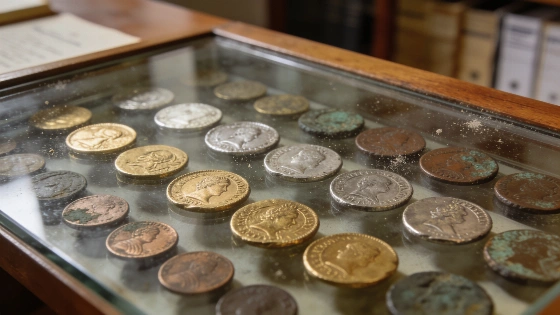
A trove of ancient coins amassed by John Quincy Adams and his descendants was sold in New York after years in obscurity. The sale highlights how changing laws and shifting priorities have transformed the fate of historic collections.
In 1971, the Massachusetts Historical Society let go of the Adams family's ancient coin collection. This was not a grand tribute to numismatic history. It was a practical move. Security worries and limited resources forced their hand. Nearly a thousand lots, once handled by US presidents and diplomats, went under the hammer at Stack's Galleries in New York. That ended a story that began with the ambitions of America's early elite. It closed as new rules and risks took over. The sale happened just as the US monetary system was changing. The Federal Reserve was steering through the end of Bretton Woods. In August 1971, the US dollar stopped being convertible to gold. That shook global currency markets and changed how people valued precious metals.
The Adams collection's path from presidential hobby to auction room shows how the meaning of old coins has changed. What started as a sign of classical learning and diplomatic travel turned, over time, into a storage headache and a legal maze. Many coins came from diplomatic trips in Europe. In the end, they sat locked in a Boston bank vault. Scholars and the public could not see them. At the same time, the US Treasury and the International Monetary Fund (IMF) were watching capital flows and exchange rates more closely. This made things even harder for collectors of foreign and ancient coins.
Presidential provenance and diplomatic acquisitions
John Quincy Adams, America's sixth president, picked up his love of ancient coins from his father, John Adams. He was not alone. Thomas Jefferson also collected coins. He once got a set of Roman bronzes from a Danish scholar and gave them to the American Philosophical Society. But the Adams family took collecting further. Charles Francis Adams, John Quincy's son, grew the collection to over 5,000 pieces. He often went to London coin auctions while serving as US Minister to the United Kingdom during the Civil War. Their collecting matched the rise of the international gold standard and the growing power of sovereign coinage in world trade, as the Bank of England and other central banks recorded.
Charles Francis Adams kept careful notes. He went to Sotheby's coin sales, sometimes slipping away from official work to chase his hobby. He said he spent more than $2,500 on coins and medals in six years in London. That's about $55,000 today. He was methodical. For him, numismatic knowledge mattered more than just piling up coins. The collection included ancient coins and medals. This reflected the Adams family's wider diplomatic and commemorative interests, as shown in records from the Massachusetts Historical Society.
After Charles Francis Adams died in 1886, his son Henry Adams inherited the coins. Henry had little interest. He put them in a Washington bank vault. In 1913, Henry gave the collection to the Massachusetts Historical Society. He did not care what happened to it. The society could not afford to conserve or display the coins. They asked a court for permission to sell, citing security risks and the lack of public access. Many institutions face the same problem. They must balance preserving history with the costs of storage and insurance. These costs often rise with inflation, tracked by the Consumer Price Index (CPI) from the Federal Reserve.
From vault to auction room
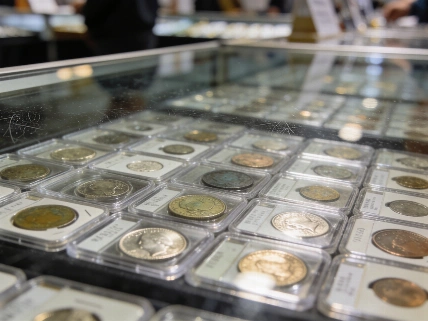
The Adams coins were sold in five Stack's auctions between 1970 and 1973. The March 1971 sale focused on ancient coins. The catalog listed 971 lots. There were gold, silver, and bronze coins from Greek, Roman, and Byzantine times. Not every coin was pictured. Some were pulled from the sale over doubts about authenticity. The top price was $1,200 for a rare Carthaginian silver tetradrachm. Other highlights included a gold stater of Alexander the Great and a Roman Republican gold coin from 211 B.C. These would sell for much more today. The auction happened during wild swings in gold and silver prices. The US dollar's value was unstable after gold convertibility ended. This was tracked in Federal Reserve monetary policy reports.
Many coins in the Adams sale matched the tastes of the 19th-century elite. Greek city-states, Roman Republican and Imperial coins, and famous names like Julius Caesar, Cleopatra, and Marc Antony filled the catalog. Some lots, like the set of Nine Muses denarii, missed only the rarest coins. The catalog had gaps. Some coins were not photographed. There were mistakes in attributions. This has made it harder for later collectors to trace provenance. The Adams sale also happened as more people wanted tangible assets. Investors were looking for something solid as inflation and currency drops hit. The IMF and the Bank for International Settlements (BIS) recorded these trends.
The Massachusetts Historical Society used the sale proceeds to fund editing and publishing the Adams papers. The society said the coins had become "of diminishing use for the purposes of history." Keeping them in "dead storage" or risking theft was not an option. The sale brought a new problem. Some sellers might fake Adams provenance to raise prices. This risk is even bigger now. Provenance can make or break an auction. Regulatory scrutiny of high-value deals has grown. Anti-money laundering rules from agencies like the US Treasury's Financial Crimes Enforcement Network (FinCEN) now apply.
Changing laws and collector risks
The Adams collection's story shows how new laws have changed the ancient coin market. In 2011, the US State Department made a deal with Italy. It restricted imports of some ancient coins, including types sold in the 1971 auction. For example, a Roman Republican cast bronze coin from Lot 381 would now face import hurdles. The US government, once led by John Quincy Adams, now enforces rules that would have blocked his hobby. These rules are part of a bigger trend. The US and EU central banks and customs now watch cross-border movement of valuable collectibles. They want to stop illegal trade and capital flight, as explained in ECB external statistics.
Collectors today face a tough market. Provenance can boost value, but missing paperwork and legal barriers create doubt. A search of the CoinArchives Pro database found 46 coins from the Adams sale showing up in auctions from 1997 to 2025. Some coins have been sold more than once. The Adams name adds value-if it's real. But fake pedigrees are a real risk. Buyers and sellers now need proper documentation and must follow import and export rules. Sometimes, coins without papers are seized or sent back to their country of origin.
The Adams collection was sold out of necessity. But it also marks a bigger shift. Old coins are now valued, regulated, and accessed in new ways. The move from family legacy to public auction, and from open collecting to restricted trade, mirrors how currency itself has changed. It's both artifact and asset. Other recent cases, like the reported earlier rush for countermarked US coins, show how history, law, and collector demand keep changing the market.
Key figures and auction data
The March 1971 Stack's auction had 971 lots. There were 58 gold coins. The rest were silver and bronze. The breakdown: 309 ancient Greek, 320 Roman Republican, 278 Roman Imperial, and 3 Byzantine coins. The top price was $1,200 for a Carthaginian tetradrachm. Other big results: $825 for a Roman Republican gold coin and $750 for an archaic Athenian tetradrachm. Many coins sold at or above their estimates. Prices for similar coins have soared since then. Some now sell for $8,000 to $20,000. These jumps follow trends in the collectibles market. Prices often move opposite to sovereign bond yields and react to changes in real interest rates set by central banks like the Federal Reserve and the European Central Bank.
The Adams collection's story is about the struggle between preserving history and managing real-world risks. Institutions must weigh storage, theft, and fading relevance against public access and research. The Adams coins, once symbols of learning and diplomacy, now move through a market shaped by new rules and old desires.
Ancient coin collecting in the US has always followed bigger trends in education, diplomacy, and law. In the 18th and 19th centuries, coins were souvenirs of the Grand Tour or signs of classical learning. Now, the legal climate is much tighter. Import controls and provenance rules would have frustrated even the most determined early American collectors. The Adams family's story shows how the meaning of currency-money, artifact, or collectible-can change fast. Forces far beyond any one person or group shape that change.
Provenance matters in the world of collectible coins. It means the documented history of who owned a coin. This can raise a coin's value and appeal. Real provenance, especially from a famous collection like the Adams family's, can bring a premium at auction. But incomplete records and the temptation to fake pedigrees mean buyers must be careful. New rules, like import bans on ancient coins, have made the market even more complex. Now, sellers and collectors need solid paperwork and must follow the law at every step.