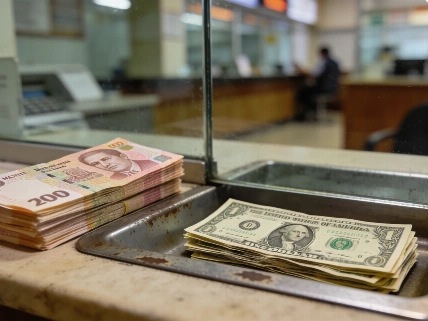
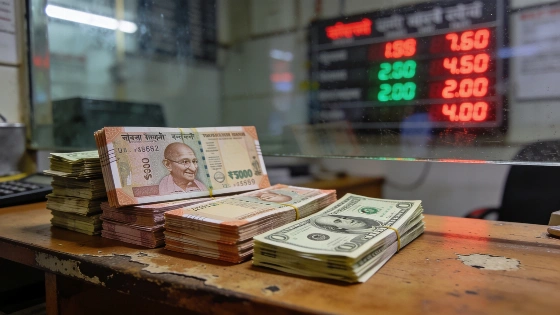
The Indian Rupee's recent rally has stalled as Brent crude nears 98 dollars and foreign investors pull capital from Indian markets. Analysts now expect the USD to INR rate to climb despite record central bank reserves and ongoing intervention.
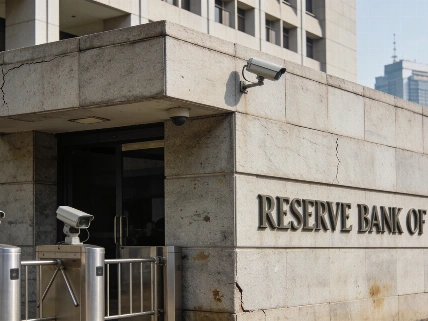
The Indian Rupee's momentum has abruptly reversed as surging oil prices and renewed foreign investor withdrawals push the USD to INR exchange rate higher, challenging the Reserve Bank of India's (RBI) efforts to stabilize the currency. With Brent crude approaching 98 dollars per barrel and overseas funds selling Indian assets, the Rupee has slipped back toward 94.7 to 94.8 per US dollar, erasing much of last week's appreciation.
Currency strategists at MUFG now forecast the USD to INR rate will reach 95.50 by the end of 2026 and 96.50 by the second quarter of 2027. This outlook signals that even with the RBI's record foreign-exchange reserves and persistent intervention, the underlying pressure on the Rupee remains unresolved. The central bank's recent support has slowed, but not stopped, the currency's depreciation.
Oil Prices and Investor Flows Drive the Shift
India's heavy reliance on imported energy means that every uptick in global oil prices directly increases demand for US dollars. As Brent crude edges toward 98 dollars, India's import bill swells, putting additional strain on the Rupee. At the same time, foreign investors have resumed net selling of Indian equities and bonds, with September alone seeing outflows of 1.2 billion dollars. This dual pressure has forced the RBI to step up its dollar sales, with state-run banks repeatedly intervening near the 94.70 level.
Despite these efforts, MUFG's projections suggest that the Rupee's recent gains were always likely to be temporary. The bank's analysts had previously identified 94.00 as a short-term target, not the start of a lasting appreciation cycle. Now, with oil prices rising and portfolio outflows accelerating, the rebound in USD to INR is expected to begin from a higher base, with 95.50 in sight before the end of next year.
Central Bank Reserves and Policy Response
The RBI's arsenal has grown significantly thanks to large foreign-currency inflows, particularly through its FCNR(B) deposit program. By the end of August, this initiative had attracted over 130 billion dollars, helping push India's official foreign-exchange reserves to a record 740.8 billion dollars, including 600.7 billion in foreign-currency assets. This buffer reduces the risk of a disorderly Rupee decline, but it does not guarantee stability if external pressures persist.
MUFG expects the RBI to tighten policy by 50 basis points starting in December, focusing on containing excessive currency volatility rather than engineering a sustained Rupee rally. The central bank's interventions have so far prevented sharper depreciation, but the removal of incremental liquidity support, rapid credit growth, and the delayed inflationary impact of earlier oil shocks all point toward higher USD to INR rates in the coming quarters.
Forecasts and Market Implications
According to MUFG's latest scenario, the USD to INR rate is projected to reach 95.50 in the fourth quarter of 2026, 96.00 in the first quarter of 2027, and 96.50 by the second quarter. These forecasts imply a 1.9 percent rise from the current level of 94.69. The RBI's interventions are expected to moderate, but not reverse, the Rupee's depreciation trend. The next moves in the exchange rate will depend on the trajectory of oil prices, the scale of RBI dollar sales, and the impact of upcoming US inflation data.
Official data confirms the scale of the challenge. On August 28, India's foreign-exchange reserves reached an all-time high of 740.8 billion dollars, yet the Rupee remains vulnerable to external shocks. The September 11 US inflation report and further oil price movements will be critical in determining whether the currency can hold below the 95 mark or begins to track MUFG's higher path.
Recent developments echo themes covered in our earlier breakdown of the RBI's intervention strategy, where high energy costs and global risk sentiment repeatedly tested the central bank's ability to maintain currency stability.
Understanding Currency Intervention Limits
Central bank intervention can slow a currency's decline, but it rarely changes the underlying direction when external factors-such as commodity prices and capital flows-move against it. India's record reserves provide a buffer, but not an unlimited shield. As the RBI weighs further tightening and manages its foreign-currency assets, the Rupee's path will remain sensitive to global energy markets and investor sentiment. The lesson for policymakers and market participants is clear: even the largest reserves and most active interventions cannot fully insulate a currency from persistent external shocks or structural outflows.