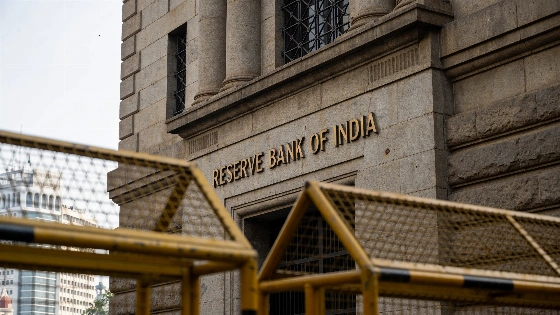
Analysts expect the Reserve Bank of India to limit rupee losses against the US dollar in the coming quarters, but high oil prices and global risks could test the central bank's ability to maintain stability
The Indian rupee remains under pressure against the US dollar, with the USD/INR exchange rate hovering near 95.75 in recent trading. Despite this, the Reserve Bank of India (RBI) has stepped up its intervention efforts to prevent the currency pair from breaching the 96 mark, a level increasingly seen by market participants as a critical threshold for rupee weakness. According to analysts, the RBI's actions are helping to offset the negative impact of elevated oil prices, which continue to weigh on India's external balance and inflation outlook.
MUFG, a major international bank, has set its third-quarter target for USD/INR at 94.00, which is about 1.8% below current market levels. The bank projects a moderate recovery for the rupee through September, followed by a gradual return to depreciation, with forecasts of 94.50 for the fourth quarter and 95.50 by the first quarter of 2027. This outlook suggests that while the rupee may regain some ground in the near term, underlying pressures are likely to persist as the year progresses.
Oil Prices and Hedging Add to Rupee Risks
India's dependence on imported oil remains a central risk for the rupee. With Brent crude trading above $93 per barrel, the country's import bill has risen, increasing the risk of higher domestic inflation and limiting the rupee's ability to benefit from periods of US dollar weakness. Market sources report that corporate hedging activity has intensified, adding further demand for US dollars and amplifying pressure on the rupee. Some traders indicate that those looking to take long positions on USD/INR are waiting for significant dips before entering the market, reflecting uncertainty about the sustainability of any rupee rebound.
Despite the RBI's active intervention, the broader market bias remains tilted toward rupee depreciation. According to a report from Reuters, the rupee has had to "lean on central bank intervention for support" even as other Asian currencies have shown relative strength. The International Monetary Fund (IMF) projects Indian economic growth at 6.4% in 2026, with consumer prices expected to rise by 4.7%. While India's foreign exchange reserves remain robust-above $700 billion-analysts caution that these reserves can only smooth volatility, not fully shield the rupee from a sustained oil shock or a shift in global energy markets.
Forecasts and Policy Uncertainty
MUFG's scenario is not the only one pointing to near-term rupee stabilization. OCBC's trajectory bias, published on 3 August, suggests USD/INR could move to 95.20 in September, 94.80 in December, and 94.50 by March 2027. However, OCBC emphasizes that these are not precise quarter-end forecasts but rather indicative of the currency's likely path. The 96 level is increasingly viewed as a hard ceiling for rupee weakness, with further depreciation likely only if oil prices surge, corporate hedging intensifies, or the US Federal Reserve raises rates earlier than expected.
On the policy front, the IMF's Asia-Pacific department has advised that monetary policy should remain agile, warning that a prolonged energy shock could weaken regional currencies and lead to more persistent inflation through exchange-rate pass-through effects. ANZ, another major bank, expects the Reserve Bank of India to consider rate hikes only if inflation pressures remain elevated due to energy prices and monsoon-related factors, with the first move potentially coming as late as December 2026.
Recent developments in global central banking, such as renewed debate over European Central Bank rate hikes following improved economic sentiment in Germany, highlight the interconnectedness of currency and policy decisions. For example, a recent article on rising German confidence and ECB policy debate illustrates how shifts in one region can influence expectations and volatility elsewhere, including in emerging markets like India.
Key Data and Mechanisms
As of Thursday, the USD/INR spot rate was close to 95.75, with the RBI intervening to prevent a move above 96. MUFG's forecast for end-Q3 is 94.00, with 94.50 for Q4 and 95.50 for Q1 2027. OCBC's trajectory bias points to 95.20 in September and 94.80 in December. India's foreign exchange reserves remain above $700 billion, while Brent crude's price above $93 per barrel continues to pose a risk to the rupee's stability. The IMF projects 6.4% GDP growth and 4.7% consumer price inflation for India in 2026.
Central bank intervention in currency markets typically involves the buying or selling of foreign currency reserves to influence the exchange rate. In India's case, the RBI sells US dollars from its reserves to support the rupee when it comes under pressure. While this can help limit short-term volatility and prevent disorderly moves, it does not address the underlying causes of currency weakness, such as persistent trade deficits or external shocks like rising oil prices. Over time, the effectiveness of intervention depends on the scale of reserves, the credibility of policy, and the willingness of market participants to test the central bank's resolve.