
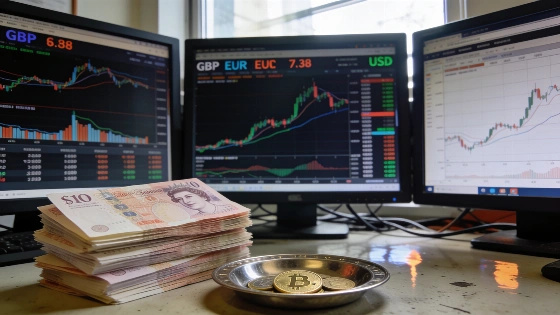
Heavy speculative bets against the Pound Sterling have left the currency exposed to a possible rebound if US economic data disappoints. Goldman Sachs points to stretched positioning as a key vulnerability for those betting on further declines
Traders have piled into bets against the Pound Sterling. The numbers are now so lopsided that even a small shift in mood could spark a rush to cover. Goldman Sachs says the risk is real. The latest US jobs data has already started to shake up expectations for global interest rates.
Goldman Sachs points to a simple problem. When too many traders are on one side, a surprise can force them to scramble. That scramble can make the move bigger. The U.S. Bureau of Labor Statistics reported just 29,000 new nonfarm jobs in September. That is far below the usual forecast of 84,000 to 90,000. Unemployment ticked up to 4.2% from 4.1%. The labor force grew by 485,000, pushing participation to 61.8%. July and August job gains were also revised down by 60,000. The US job market is cooling. That is already changing what traders expect from the Federal Reserve.
Bearish positioning and the mechanics of a rebound
Goldman Sachs, in research dated 30 September, found both the Pound and the Euro deep in "stretched-short territory." Speculative futures bets are near the most negative levels in three years. Their Sentiment Index, which runs from zero to 100, put both currencies below 10. That means traders are extremely pessimistic. Reuters notes there is no official regulatory confirmation of "extreme bearish positioning" in the latest CFTC data. Still, the Pound dropped more than 2% against the US Dollar in September. A strong dollar and talk of tighter Fed policy drove that move.
Short sellers make money when a currency falls. But to close out, they have to buy it back. If too many try at once, prices can jump. That is a short squeeze. Goldman Sachs says these squeezes can get worse when everyone is already betting the same way. Leveraged funds, who often take the biggest risks, are even more negative on the Pound. But not every currency or investor group reacts the same way. Not every data release triggers a stampede.
US jobs data and exchange rate moves
The case for a Pound rebound got stronger after the latest US jobs report. Only 29,000 jobs were added in September. Unemployment rose to 4.2%. Annual wage growth slowed to 3%. After the news, the Pound jumped against the Dollar. GBP/USD hit about 1.3256, up 0.43% for the day. The weak jobs report also made a Fed rate hike at the October meeting much less likely, as Reuters reported. That shift hit the whole FX market.
Goldman Sachs warns that not every weak payroll number flips the market. Their research says broader economic surprises matter more when positions are stretched. The monthly jobs report does not always spark big moves. Their futures-based indicators also lag behind options-based ones. The Bank of England's policy is still a big driver for the Pound. Traders are watching for signs of more tightening or a pause. Recent swings have come from both US and UK central bank signals.
Limits of positioning as a signal
Extreme positioning can set up a rebound. But Goldman Sachs says it is only one piece of the puzzle. CFTC data is just one input. It does not explain everything. Other forces-like risk appetite or details in the data-can easily take over. Recent rates show the Pound at 1.176614 against the Euro (up 0.28%) and 1.323954 against the Dollar (up 0.31%). The Euro trades at 1.125224 against the Dollar (up 0.03%). These moves show how sensitive the market is to both positions and news.
Currency Information's earlier breakdown looked at how UK data and central bank moves have shaped the Pound. The story is not simple. Domestic and global forces both matter.
Understanding short squeezes in currency markets
Short squeezes happen when traders betting against a currency have to buy it back fast. This usually comes after a surprise. The move can be sharp and feed on itself. But the size and length of a squeeze depend on how deep the bets are, what triggered the move, and the wider market mood. Stretched positions make a squeeze more likely. They do not guarantee it. Anyone exposed to currency swings should watch these patterns. But no one should rely on positioning data alone to predict what comes next.