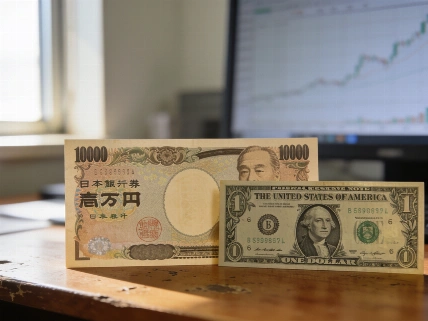


Japan's top currency official signals that authorities remain unsatisfied with recent yen movements, keeping markets on edge as the government weighs its next steps to stabilize the currency
Japan's currency authorities are not letting their guard down. Despite recent shifts in the yen's value, the Ministry of Finance has made it clear that any sense of relief is premature. The message from Atsushi Mimura, vice finance minister for international affairs and Japan's chief currency diplomat, is unambiguous: vigilance remains the order of the day.
"We remain on a state of heightened alert." That was the core message delivered by Mimura, who refused to comment on specific exchange-rate levels or market interventions. His stance signals that Japanese officials are far from satisfied with the yen's current trajectory, and that the government is prepared to act if volatility threatens economic stability.
Persistent Concerns Over Yen Movements
Recent months have seen the Japanese yen fluctuate sharply against the US dollar and other major currencies. While the yen briefly strengthened in late May, it has struggled to hold gains, with market participants watching for signs of official intervention. The Ministry of Finance's continued warnings reflect deep unease about the risk of further depreciation, which could drive up import costs and undermine consumer purchasing power.
For context, the yen traded near 157 per US dollar in early June 2026, after touching multi-decade lows earlier in the year. This level remains well below the average seen in the previous decade, and far from the 100-120 range that prevailed before the Bank of Japan's prolonged ultra-loose monetary policy. The government's reluctance to specify a "line in the sand" leaves markets guessing about the threshold for intervention.
Official Signals and Market Reactions
Japan's approach stands in contrast to some other major economies, where central banks have shifted to tighter policy in response to inflation. The Bank of Japan has only recently begun to adjust its stance, and the resulting interest-rate gap with the US Federal Reserve continues to weigh on the yen. As a result, traders remain alert to any sign that the Ministry of Finance might step in to support the currency, whether through direct market action or verbal warnings.
Earlier this year, research from BCA suggested that the Japanese yen could become more attractive if US yields weaken and foreign investment flows shift. As reported earlier, analysts have pointed to the yen's undervaluation and the potential for a reversal if global conditions change. However, the Ministry of Finance's current posture suggests that officials are not waiting for market forces alone to restore stability.
Implications for Households and Businesses
For Japanese households, a weaker yen means higher prices for imported goods, from energy to food. Businesses that rely on overseas inputs face rising costs, while exporters may benefit from improved competitiveness abroad. The government's balancing act is to prevent excessive volatility without undermining the gradual recovery in domestic demand.
Currency intervention is not a cost-free tool. When authorities buy yen to support its value, they typically sell foreign reserves-often US dollars-potentially affecting Japan's reserve position and signaling policy priorities to international partners. The Ministry of Finance's repeated warnings are designed to deter speculative attacks, but the effectiveness of verbal intervention depends on market credibility and the perceived willingness to act.
Japan's currency policy is shaped by a complex interplay of domestic and international factors. The Ministry of Finance, the Bank of Japan, and other agencies coordinate closely, but the ultimate trigger for intervention remains opaque. For now, the official message is clear: the government is watching, and the yen's fate is not being left to chance.
Japan's experience highlights the challenges of managing a floating exchange rate in a world of divergent monetary policies. While the yen's weakness has persisted longer than many expected, the authorities' refusal to declare victory or set explicit targets reflects a pragmatic recognition of market realities. Until the underlying drivers-such as interest-rate differentials and global risk appetite-shift decisively, Japan's heightened alert is likely to remain the norm rather than the exception.
Japan's currency intervention framework is built on a combination of direct market action and carefully calibrated communication. Unlike fixed or pegged regimes, a floating currency like the yen is subject to market forces, but authorities retain the option to intervene when volatility threatens economic or financial stability. The Ministry of Finance typically acts in coordination with the Bank of Japan, using foreign reserves to buy or sell yen as needed. However, intervention is reserved for periods of disorderly market conditions, and officials often rely on verbal signals to influence expectations before resorting to actual transactions. This approach aims to preserve flexibility while maintaining credibility with both domestic and international audiences.