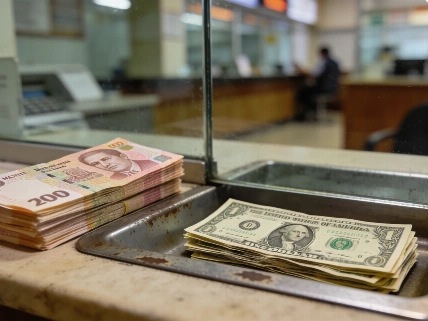
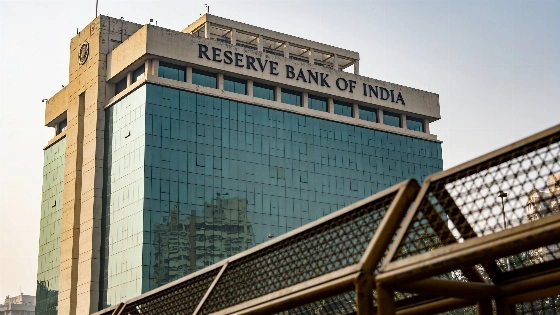
MUFG and Goldman Sachs expect the Indian rupee to keep weakening against the US dollar through 2027. The RBI's bigger reserves help steady the currency but aren't enough to stop the slide.
The Reserve Bank of India (RBI) has been building up its foreign-currency reserves. Still, the Indian rupee is set to stay under pressure against the US dollar for years to come. Both MUFG and Goldman Sachs expect the rupee to keep losing ground through 2027. Any short-term gains are likely to be brief. Recent numbers back this up. On 22 September 2026, the rupee closed at 95.59 per US dollar. That was a session gain, helped by a 1.5% drop in Brent crude to $98.8 per barrel and signs the RBI may have stepped in. But traders and Reuters say this bounce is only a pause, not a real turnaround.
On Tuesday, the USD/INR rate slipped to 95.6039, down 0.11% after a 0.29% drop the day before. This move pulled the rate back from last week's highs above 96. Still, analysts doubt the rupee's recovery will last. Goldman Sachs sees the USD/INR at 97 in both six and twelve months. MUFG expects 96.00 by March 2027 and 96.50 by June. In the near term, Goldman puts the rate at 96 in three months. MUFG projects 95.50 for December 2026. These forecasts point to only a slight rise from current levels before the rupee resumes its longer slide.
Central bank reserves and steady dollar demand
The RBI's bigger reserves give it more room to manage swings and stop sharp rupee drops. As of the week ending 11 September 2026, India's foreign exchange reserves stood at $780.78 billion. That was down $4.92 billion from the week before. Foreign currency assets were $645.80 billion, and gold reserves had fallen by $4.17 billion since March 2026. The RBI's position is also backed by $143.6 billion in inflows under its concessional swap facility as of 18 September. This shows the central bank is actively using its liquidity tools (Reserve Bank of India; Reuters).
But demand for US dollars stays strong. Foreign direct investment (FDI) repatriation and a steady stream of Indian IPOs keep the pressure on. When foreign investors take their money out, they convert it back to dollars, which weighs on the rupee. During the week of 16-18 September, the rupee briefly broke past 96 per dollar for the first time in over a month. Banking traders told Reuters the RBI likely stepped in to slow the fall. Even so, the currency closed around 95.94-95.93, showing how capital flows and global markets keep pushing against the rupee.
MUFG says the bigger reserve buffer can help stop wild swings, but it doesn't fix the root causes of rupee weakness. They see the risks still pointing to a slow rupee decline, not a sudden drop. Crédit Agricole disagrees, expecting the rupee to recover in 2027. This split shows how banks see the outlook differently.
Policy tightening and inflation risks
Foreign-currency inflows have left banks with extra rupees after swapping dollars with the RBI. To mop up this surplus, the central bank has used bond sales and currency intervention. This cut excess liquidity in the banking system to 4.92 trillion rupees, down 55% from a record 11.16 trillion rupees just two weeks earlier. Managing this liquidity is key as the RBI tries to keep the rupee steady and control inflation. The job is harder with energy prices jumping and global monetary policy shifting.
MUFG expects the RBI to raise rates by 50 basis points between December 2026 and February 2027. If inflation stays high, the hike could reach 75 basis points. Oil prices are a big risk for India, which relies on imports. Brent crude traded near $101.64 earlier on Tuesday, keeping energy costs high and adding to the rupee's problems. Higher US yields, flagged by MUFG as another drag, also hurt the currency's outlook. The US Federal Reserve's stance keeps shaping global capital flows and hits emerging market currencies like the rupee.
These patterns show up in other currency markets too. Central bank moves and commodity prices work together to shape exchange rates. As reported earlier, energy costs have also played a big part in the Canadian dollar's recent moves. This highlights how global these pressures are.
Forecasts and different scenarios
The RBI can smooth out swings, but it can't fully offset the steady demand for dollars that comes with India's ties to global markets. MUFG and Goldman Sachs both see the rupee slowly losing ground against the US dollar through 2027, unless something big changes outside India. Crédit Agricole's call for a rupee rebound shows how uncertain currency forecasts can be, especially with so many moving parts.
For anyone watching the USD/INR rate, the main point is clear. Central bank reserves can cushion sudden shocks, but they don't reverse long-term trends. The rupee's path will depend on capital flows, policy choices, and global commodity prices. The RBI will have to juggle liquidity and inflation, but the strong demand for dollars is a structural problem that won't go away soon. For more on India's monetary policy and reserves, see the RBI press releases.
Central bank reserves are a country's stockpile of foreign currencies and assets. They help stabilize the national currency and let the central bank step in when needed. A bigger reserve can help defend against sudden moves, but it doesn't change the deeper economic forces that drive exchange rates over time. In India's case, steady demand for US dollars from investment outflows and energy imports means even a well-funded RBI can't stop the rupee from slipping over the long run. Knowing the difference between short-term fixes and long-term currency trends is key for anyone following emerging-market exchange rates.