A rare 1976 $2 Federal Reserve Note with a seven-digit serial number mismatch reveals the mechanical failures that can create some of the most intriguing and valuable errors in U.S. currency collecting
Among the most fascinating errors in U.S. banknote history is the mismatched serial number, a mistake that can transform an ordinary note into a prized collectible. One of the most remarkable examples surfaced on a 1976 $2 Federal Reserve Note from the Atlanta district, where a seven-digit mismatch between the left and right serial numbers pointed to a rare and complex mechanical malfunction during the printing process.
Collectors and researchers have documented over 250 varieties of mismatched serial number errors across different denominations and series. However, the 1976 $2 note stands out for the scale of its discrepancy and the insight it provides into the mechanics of currency production. The note in question features a left serial number far exceeding the highest known legitimate serial for its series, immediately raising questions about its origin and authenticity.
Unraveling the Mechanical Breakdown
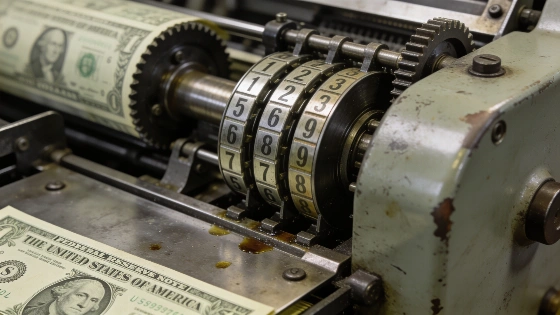
To understand how such an error could occur, it is essential to examine the serial numbering process used by the Bureau of Engraving and Printing (BEP). On the COPE (Currency Overprinting Processing Equipment) press, each serial number is applied by a set of eight mechanical wheels, each responsible for one digit. These wheels are designed to advance independently in a base-10 sequence, but a mechanical jam or failure can cause several wheels to lock together and move in unison, disrupting the intended progression.
In the case of the 1976 $2 note, analysis of the serial numbers revealed a consistent difference of 44,444,110 between the left and right sides. This pattern, with repeated increments of '4' in the higher-order digits, indicated that five of the wheels had become mechanically linked. Instead of advancing one at a time, these wheels skipped together, producing a dramatic mismatch. The right-hand serial number matched the expected sequence for the note's plate position, confirming it as the correct value, while the left-hand number reflected the malfunction.
Mathematics Behind the Error
By subtracting the right serial number from the left, researchers identified a repeating pattern that pointed to a "carry the one" failure-a situation where the numbering mechanism failed to advance properly between digits. In base-10 systems, such failures can produce negative differences, which, when adjusted, reveal the locked-wheel effect. The result is a predictable numerical offset that can be traced across multiple notes if more than one example from the same run is found.
For the 1976 $2 Atlanta note, the difference between the two serials was not random but followed a mathematical logic tied to the mechanics of the press. When two or more wheels lock, the difference between the correct and erroneous serial numbers increases by multiples of 11, 111, or higher, depending on how many wheels are involved. This phenomenon is well-documented in the field of error note collecting and has been observed in other denominations and series, though rarely on such a scale.
Confirmation and Collector Impact
The discovery of a second note from the same print run, with a similar mismatch, provided further evidence of the mechanical failure. The two notes' right-hand serial numbers were 32 apart, and the left-hand numbers differed by 22222222-exactly two increments of 11111111-demonstrating that all eight wheels had advanced together during the error sequence. This mathematical consistency, combined with the physical characteristics of the notes, strongly supports their authenticity as genuine production errors rather than post-issue alterations.
Such errors are not only of technical interest but also have significant implications for collectors. Mismatched serial number notes, especially those with multiple digits affected, are highly sought after and can command substantial premiums at auction. Their rarity is underscored by the fact that most mechanical failures are quickly detected and corrected during production, making large-scale mismatches exceptionally uncommon.
For context, the 1976 $2 Federal Reserve Note was part of a run of 20,000 sheets (Run 95) printed for the Atlanta district. The highest legitimate serial number for this series was F 608 00000 A, making any note with a higher left-hand serial immediately suspect. The COPE press, while more advanced than earlier overprinting equipment, introduced new complexities that could occasionally result in dramatic errors like the one described here. Similar debates over the origins and authenticity of rare U.S. currency errors have arisen in other cases, such as the controversy surrounding the 1866 nickel Quarter Eagle, where collectors and historians continue to weigh evidence of intentional patterns versus accidental mistakes.
Understanding Serial Numbering Logic
The mechanics of serial numbering on U.S. banknotes rely on precise synchronization between multiple moving parts. Each wheel must advance at the correct moment to ensure a unique serial for every note. When a jam or misalignment occurs, the resulting errors can range from a single digit out of place to the kind of multi-digit mismatch seen in the 1976 $2 note. The BEP's quality control procedures are designed to catch such anomalies, but the sheer volume and speed of production mean that some errors inevitably escape detection.
Collectors and researchers use mathematical analysis, plate position calculations, and physical examination to authenticate error notes. The presence of consistent, logical patterns in the mismatched serials-such as the multiples of 11 or 111-provides strong evidence of a genuine mechanical failure rather than tampering. As more examples are discovered and documented, the understanding of these rare errors continues to deepen, offering a window into both the challenges and the fascination of currency production.
Mechanical numbering systems in banknote production are engineered for reliability, but their complexity means that failures, though rare, are inevitable over long print runs. When multiple wheels lock together, the resulting errors follow predictable mathematical patterns, allowing experts to distinguish genuine production mistakes from post-issue alterations. The study of such errors not only enriches the field of numismatics but also highlights the intricate interplay between technology, quality control, and human oversight in the creation of everyday money.