
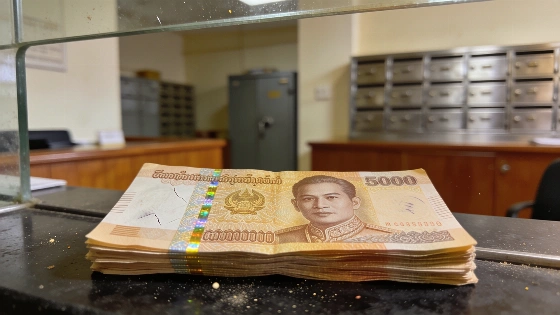
Cambodia's central bank is alerting the public to a new wave of AI-generated counterfeit riel banknotes, raising concerns about the impact on currency trust and the ongoing dominance of the US dollar in daily transactions
Authorities in Cambodia are raising alarms over a new form of currency fraud: the appearance of AI-generated counterfeit riel banknotes. The National Bank of Cambodia (NBC) has issued public warnings after manipulated images of Cambodian currency began circulating online, highlighting the growing risks posed by advanced digital tools in the fight against counterfeiting.
While counterfeiting is as old as paper money itself, the use of artificial intelligence to create highly convincing fake notes marks a significant escalation. According to the NBC, these digital forgeries are not only undermining confidence in the riel but also complicating efforts to promote the national currency in a market already dominated by the US dollar.
AI Counterfeits and Social Media Manipulation
Recent incidents have seen AI-generated images of Cambodian banknotes, including fantasy denominations, shared on social media platforms. Some posts have even used altered images of prominent political figures and official-looking pages to suggest that new notes are being prepared for circulation. The NBC has clarified that these claims are false and that the manipulated images are not part of any official issuance.
Two social media accounts, operating under the names Konkhmer Konndal and Kim Dabin, have been identified as sources of these counterfeit images. While both have denied responsibility for creating or distributing fake notes, the NBC has referred the cases to relevant authorities for further investigation. The central bank has emphasized that the riel is more than a payment instrument-it is a symbol of Cambodia's economic sovereignty and national identity.
Currency Use and Economic Context
The challenge of promoting the riel is not new. Cambodia's economy remains heavily dollarized, with more than 90% of commercial bank deposits and up to 90% of cash transactions conducted in US dollars rather than riel. This reliance on the dollar dates back to the late 1970s and early 1980s, when economic disruption and inflation led to widespread use of foreign currency, particularly US dollars distributed as humanitarian aid.
Officially, the riel is issued in denominations ranging from 100 to 200,000 riels, with the highest note worth about $49 at recent exchange rates. Despite efforts to encourage riel usage, the currency's share in daily transactions remains limited, and the emergence of sophisticated counterfeits could further erode public trust.
Legal Framework and Penalties
Cambodian law strictly prohibits the creation, alteration, or distribution of counterfeit currency. Article 53 of the Law on the Organization and Conduct of the National Bank of Cambodia forbids damaging or altering banknotes, while Article 65 provides for prison sentences of 20 years to life for those convicted of counterfeiting legal tender, whether Cambodian or foreign.
The NBC has urged the public to verify the authenticity of banknotes and to rely only on official sources for information about currency issuance. The central bank also warns that fake or fantasy notes, even if not intended for use as real money, can have serious negative impacts on the country's values and financial stability.
Facts and Figures
As of January 2026, Cambodia's inflation rate stood at 1.26% according to the NBC, a relatively modest figure compared to the country's historical average of 4.35% between 1995 and 2026. The riel's largest denomination, the 200,000-riel note, is valued at approximately $49. No major currency reforms have been implemented during this period, and the US dollar continues to dominate both deposits and cash transactions.
Recent social media incidents have involved AI-generated images of 10,000 and 100,000 riel notes, but there is no evidence that these fantasy notes have entered physical circulation. The NBC continues to monitor the situation and has referred suspected cases to law enforcement.
Understanding Cambodia's Dollarization
Cambodia's persistent use of the US dollar alongside the riel is rooted in decades of economic instability and external intervention. After the collapse of the domestic currency system in the late 1970s, the reintroduction of the riel was hampered by inflation and a lack of public confidence. The widespread availability of US dollars, initially through humanitarian aid, provided a stable alternative for daily transactions. Today, the dual-currency environment presents both practical benefits and policy challenges, as efforts to strengthen the riel's role must contend with entrenched habits and the perceived security of the dollar. The rise of AI-generated counterfeits adds a new layer of complexity, testing both regulatory capacity and public trust in Cambodia's monetary system.