
A new €2 coin from the Central Bank of Ireland honors U2's five-decade run, with both uncirculated and proof editions snapped up by collectors across Europe.
On September 25, 2026, the Central Bank of Ireland put a fresh spin on band memorabilia. A limited-edition €2 coin, minted for U2's 50th year, landed in the hands of collectors and fans. The date lines up with the group's 1976 start, but this isn't a coin you'll find in your change. The bank skipped standard circulation rolls, making it clear this is a collector's piece, not a coin for daily cash use Guide-Irlande.
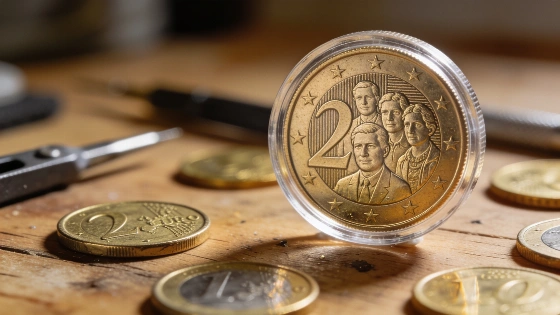
Shaughn McGrath's design on the reverse shows Bono, The Edge, Adam Clayton, and Larry Mullen Jr., flanked by the years "1976" and "2026" and the word "Éire". The image nods to both Dublin roots and global reach. U2's numbers back that up: over 175 million records sold and 22 Grammy Awards, the most for any band Focus.
The Central Bank set the mintage at 155,000 coins. That breaks down to 150,000 Brilliant Uncirculated (BU) coins on collector cards and 5,000 Proof coins in booklets. The Royal Dutch Mint struck both versions. The BU coin launched at €14.95, while the Proof edition started at €39.95. These prices sit far above the €2 face value, a standard move for eurozone commemorative coins ECB reference rates.
Proof coins vanished from the official shop almost immediately. Within days, secondary market sellers listed them for €300 to €400 each. The Central Bank's price holds no sway here; scarcity and collector demand set the pace. This pattern echoes other euro commemorative launches, where limited runs and cultural weight push prices well beyond face value. The European Central Bank keeps tabs on these spikes as part of its oversight of euro cash and collector coin policy.
Despite the €2 denomination and legal tender status, the Central Bank and outside sources confirm that shops and banks can refuse these coins. Actual circulation is rare. Most coins end up in private collections. This legal distinction matters for eurozone monetary policy, where the ECB and national banks coordinate both circulating and commemorative coin issues. The aim is to keep these releases from skewing the money supply or affecting inflation benchmarks like the Harmonised Index of Consumer Prices (HICP).
Eurozone countries have used commemorative coins to spotlight cultural icons and national milestones. Ireland's U2 coin puts a global act at the center of its modern image. The Central Bank's online shop opened access to buyers across borders, but with only 5,000 Proof coins, supply fell short of collector appetite. The Bank for International Settlements (BIS) has flagged in annual reviews that limited-edition coins can drive cross-border collector flows, though their effect on the wider currency system is minor compared to regular cash.
U2's story started in Dublin in 1976. Since then, the band has sold over 175 million records and picked up 22 Grammys. The U2 €2 coin is legal tender across the eurozone, but few will ever see it in a wallet. The BU version is capped at 150,000 pieces at €14.95, and the Proof at 5,000 pieces at €39.95. Both come from the Royal Dutch Mint, showing how euro coin production often crosses national lines.
This U2 coin joins Ireland's run of commemorative issues. Earlier coins have marked anniversaries and national figures, but few have focused on a pop-culture force with global reach. Other countries have used coins to spotlight their own icons, as seen in the earlier breakdown of rare U.S. coins that became collector legends.
Commemorative coins stand apart from everyday currency. They keep their face value and legal status, but their real draw is in the design and the story. The U2 €2 coin is unlikely to turn up in daily transactions. For collectors, the mix of limited mintage and official backing gives this coin a clear edge.
Unlike standard coins made for daily use, commemorative issues come in small numbers to mark events or milestones. They can be spent, but collectors value them for much more than their face value. Eurozone rules let member states issue these coins if they meet design and mintage standards. For many, these coins become physical reminders of national pride or artistic achievement, sitting at the crossroads of money and cultural artifact.