
The 2026 US Mint Proof Set launches with ten coins that break tradition, including the first post-circulation Lincoln cent, Liberty's return to the dime and half dollar, and five quarters tracing key moments in US history
Collectors will see a different kind of US coin set when the Mint opens sales for its 2026 Proof Set on October 6. This isn't just another annual release. The lineup captures a year when American coins changed for good. The penny leaves daily life. Liberty comes back to the dime and half dollar. Five new quarters trace the country's path from its earliest days to the Civil War. The Federal Reserve has tracked these changes closely, watching how cash use and coin demand shift as the Mint rewrites the rules.
The set costs $107. Buyers get ten coins, all struck at the San Francisco Mint with the "S" mintmark. Each set comes in two clear cases and includes a certificate of authenticity. The Mint set a product limit of 480,000 sets. That number could change, depending on sales and returns. There's no household order limit. Some of these coins may show up in other Mint products, so 480,000 isn't a hard cap for each design. The Mint's pricing and mintage plans try to balance what collectors want with what it costs to make the coins. This is a regular topic in Mint reports and Treasury policy talks.
End of the circulating penny
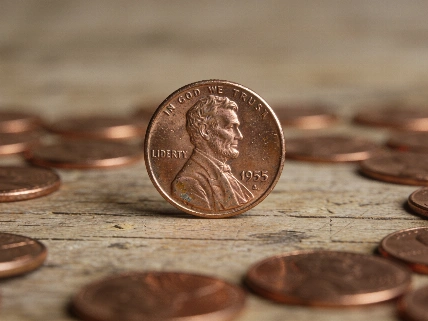
The 2026 Proof Set's Lincoln cent is unlike any penny since 1793. In November 2025, the Mint made its last one-cent coin for circulation. That ended a 232-year run. Pennies will no longer show up in daily transactions, but the Mint will keep making special versions for collectors. The 2026-S Proof cent keeps Victor David Brenner's Lincoln portrait and the Union Shield on the back. The front now shows "1776 ~ 2026," tying together the nation's founding, Lincoln's era, and the penny's exit from daily use. Reuters reports about 114 billion pennies are still out there. All remain legal tender, even as new ones stop rolling off the presses.
This isn't just a symbolic move. Dropping the penny changes how Americans handle cash, round prices, and deal with small change. Congress passed the Common Cents Act in 2026. That law ended penny production after 234 years and set up cash rounding to the nearest five cents. The Mint says stopping the one-cent coin will save about $56 million a year. That covers both materials and operations, according to Federal Reserve monetary policy. People can still spend pennies. Businesses will round cash sales. Electronic payments stay exact to the cent, as Treasury and Mint officials confirm.
Liberty returns to US coins
Liberty is back on the dime for the first time since 1945. The 2026 Emerging Liberty dime replaces Roosevelt for one year. The new design shows Liberty facing forward, hair swept by the wind, with a cap decorated in stars and stripes. This brings the dime back to its roots before 1946, when Liberty was the face of the coin. It's not just a new look. It's a clear nod to the country's early coinage at a big anniversary. The European Central Bank (ECB) has pointed out in its studies that special coins like these can drive up collector interest and prices, especially during major national events.
The half dollar changes too. The Enduring Liberty Half Dollar drops John F. Kennedy's portrait. Instead, it shows a close-up of the Statue of Liberty, eyes looking outward. On the back, Liberty passes her torch to a new generation. The words "KNOWLEDGE IS THE ONLY GUARDIAN OF TRUE LIBERTY" run alongside. This is the first big change to the Kennedy half dollar in over sixty years. Collectors and historians will notice.
Quarters as a timeline of American ideals
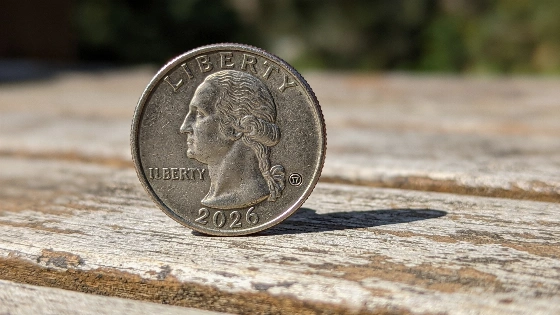
The set's five quarters tell a story in metal. Each one marks a key moment: the Mayflower Compact, the Revolutionary War, the Declaration of Independence, the US Constitution, and the Gettysburg Address. These aren't small tweaks. Each quarter has its own design, showing how American self-rule, independence, and national ideals took shape.
The Mayflower Compact quarter looks back at early self-government. The Declaration of Independence quarter pairs Thomas Jefferson with the Liberty Bell. The Constitution quarter features James Madison and Independence Hall. The Gettysburg Address quarter puts Abraham Lincoln's vision front and center, tying the Civil War to the country's founding ideas. Together, these coins pack a history lesson into your palm.
Other 2026 designs and historical connections
The 2026-S Jefferson nickel keeps its usual look. Jefferson faces forward, Monticello sits on the back, and now the coin shows "1776 ~ 2026." The Native American $1 Coin for 2026 honors Polly Cooper and the Oneida Indian Nation. They helped the Continental Army at Valley Forge. The back shows Cooper sharing a basket of corn with George Washington. This story rarely makes it into standard history books.
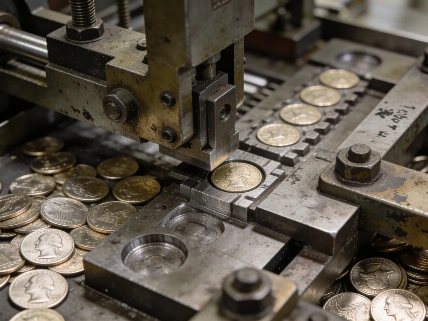
Every coin in the set is Proof quality. That means the Mint uses polished blanks and dies for sharp details and mirror-like surfaces. The technical specs match recent years. The cent is 2.5% copper, the rest zinc. The nickel is 25% nickel, the rest copper. The dollar coin mixes zinc, manganese, nickel, and copper. Quarters and the half dollar are 8.33% nickel, the rest copper. The Mint and Treasury review these mixes often to keep costs down and supply steady, especially as global metal prices shift. The International Monetary Fund (IMF) tracks these trends.
Facts and figures
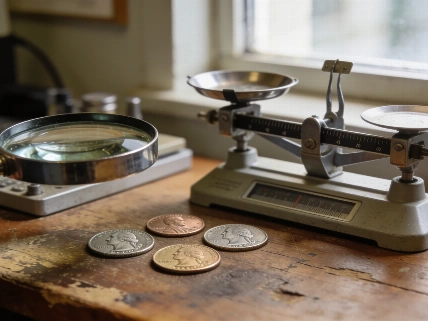
The 2026 Proof Set has ten coins: one cent, one nickel, one dime, five quarters, one half dollar, and one Native American $1 Coin. Price is $107. Product limit is 480,000. All coins are made at the San Francisco Mint and carry the "S" mintmark. The cent weighs 2.50 grams, the nickel 5.00 grams, the dime 2.268 grams, each quarter 5.67 grams, the half dollar 11.34 grams, and the dollar coin 8.10 grams. Sales start at noon Eastern Time on October 6, 2026. For more on US coin policy and mintage history, check the Treasury Department's currency and coins page.
The Mint's approach to new coin designs and ending old denominations has drawn attention. Collectors react fast to changes. As reported earlier, every new Mint policy tests the balance between tradition and change.
Editorial perspective
The 2026 Proof Set is more than a collector's box. It's a snapshot of a year when US coins crossed a line. The penny's exit, Liberty's comeback, and the five quarters' story arc all show a return to founding ideas. For collectors, this set is a must. But anyone interested in how a country tells its story through money will find meaning here. The Mint's choice to keep the cent for collectors but end it in daily life is a practical move. It keeps history alive while saving money. The 2026 Proof Set is a landmark. It may be remembered as the year US coins became both a record of the past and a signpost for the future.
Commemorative sets like this show how coins can be more than change in your pocket. Most coins are for spending. Special issues highlight history, culture, or policy shifts. Picking designs, approving changes, and making limited runs all reflect bigger debates about what a country values and how it adapts its symbols. As cash use changes, these sets matter more. They become artifacts of national memory and history.