
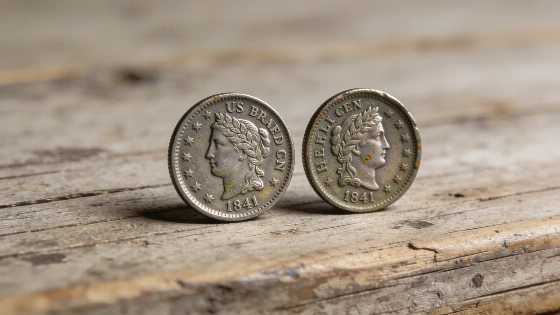
A recent submission to Numismatic Guaranty Company reveals how counterfeiters are targeting the elusive 1841 Braided Hair half cent, using advanced electrotype techniques to deceive even experienced collectors
The 1841 Braided Hair half cent is a coin most collectors never see in person. When one landed at Numismatic Guaranty Company (NGC), it looked right at first glance. The surface, color, and details seemed convincing. But this coin was a fake. It was an electrotype, built to fool even sharp-eyed collectors. The warning is clear. Fakes are getting better, and the rarest coins are now prime targets.
Collectors know the Braided Hair half cent series, especially from 1840 to 1848, is full of rarities. Some dates, like 1841, exist only as proofs or later restrikes. That makes them magnets for counterfeiters. Buying one without expert help is risky. Numismatic sources stress that authentication is a must before any purchase. The numismatic value chart spells it out.
These coins started in 1840. They are almost as big as a modern quarter. Most were made only as proofs, in tiny numbers, for collectors. Later, unofficial restrikes added a few more, but real proofs from the 1840s are still rare. Prices run into the thousands. The half cent denomination ended in 1857. It never caught on in daily use. Market tables show that for many dates, including 1841 and 1842, no worn coins should exist. If you see a circulated example, it is probably a proof, a fake, or a misidentified piece. That is why authentication matters. The market analysis backs this up.
Electrotype counterfeits enter the market
The coin sent to NGC had details that matched a real 1841 half cent. There were large berries in the wreath on the back. A die crack ran through the stars on the front. But something was off. Raised metal near one star, a warped bar in the E of LIBERTY, and a fuzzy look to the design all raised red flags. These were not the usual signs of a fake made from false dies. The Federal Reserve has said that trust in coins and bills is key to the whole money system. When fakes get this good, even collectors can be fooled. That shakes confidence in both collectibles and regular cash.
This was an electrotype. The process is different from striking coins. Thin metal shells are electroplated over wax molds taken from a real coin. The two halves are joined and filled with metal to get the right weight. On this coin, the edge showed clear tool marks. Someone tried to hide the seam where the halves met. Some electrotypes are made for museums or as teaching tools. But when the seam is hidden, they can slip into the market as "real" coins. The Bank for International Settlements (BIS) has warned in its annual reports that counterfeiting is a global risk. Strong authentication is needed for both currency and high-value collectibles.
Authentication challenges and collector impact
For collectors, these advanced fakes raise the stakes. Electrotypes can match the look and weight of real coins. Even experts can struggle to spot them. NGC's review showed that you have to check not just the design, but also the coin's structure. The edge and any signs of assembly matter. For the Braided Hair half cent, the problem is worse. Most dates from 1840-1848, plus the 1849 Small Date and 1852, are only known as proofs or restrikes. Regular "circulated" coins should not exist. If one turns up, it is a warning sign for everyone.
All real 1841 Braided Hair half cents are rare. Original proofs from the 1840s were made in tiny numbers. Later restrikes, most of them unofficial, added only a few more. Any coin claiming to be an 1841 half cent needs careful checking. NGC says its guarantee covers both authenticity and grade. That gives some peace of mind in a market full of risk. The European Central Bank (ECB) keeps publishing data on fake euro coins and notes. Their message is clear. Stay alert and use third-party checks for all coins and currency.
NGC's recent encounter with an electrotype 1841 half cent shows how counterfeiters keep changing their methods. The fake's surface and tooled edge prove that forgers are watching collector demand and chasing high prices. If you want a Braided Hair half cent, you need to be careful. Professional authentication is not just smart. It is essential. Market prices for these coins range from tens to hundreds of dollars for collectible pieces. Proofs from the early dates can cost much more. No sale should happen without formal confirmation that the coin is real.
Understanding electrotype counterfeits
Electrotype fakes are not made like regular coins. Instead of striking metal blanks, forgers make a mold from a real coin. They coat it with conductive powder and electroplate it to form a thin shell. Two shells-one for each side-are joined and filled. The seam is often hidden with edge tooling. Some electrotypes were made for museums or as replicas. But their close match to rare coins makes them a real threat. Even coins that feel and look right can hide signs of assembly. The edge or blurry design details can give them away. For more on anti-counterfeiting and monetary policy, see the Federal Reserve's monetary policy resources.