
Exchange-Rate Regimes
4 articles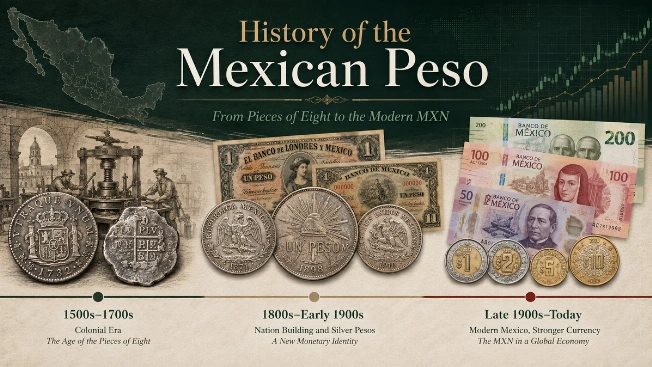
History of the Mexican Peso: From Pieces of Eight to the Modern MXN
The Mexican peso grew out of the silver pieces of eight minted in New Spain and used across the Americas, Europe and Asia. This detailed history follows the currency from pre-Hispanic exchange and the first mint in the Americas through independence, the 1982 debt crisis, the 1993 nuevo peso redenomination and today’s floating MXN.
History of the Japanese Yen: From Edo Money to the Modern JPY
The Japanese yen emerged from a sweeping nineteenth-century reform that replaced the gold, silver, copper and paper currencies of the Edo period with a unified decimal system. This detailed history follows the yen from the 1871 New Currency Act and the creation of the Bank of Japan through the gold standard, the ¥360 post-war dollar peg, the 1973 float and the modern JPY.
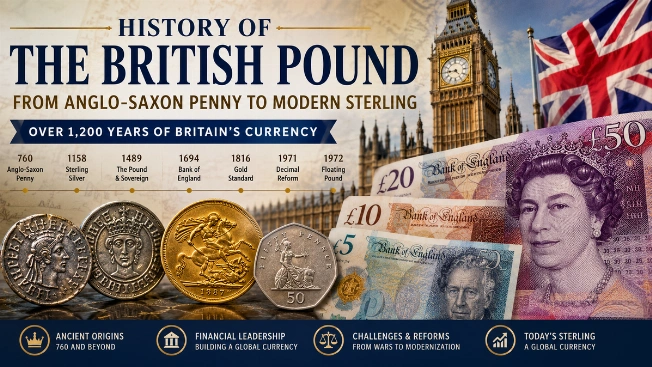
History of the British Pound: From Anglo-Saxon Silver to Modern Sterling
The pound sterling began as a weight-based unit built around the Anglo-Saxon silver penny and developed into the leading currency of nineteenth-century global finance. This detailed history follows sterling through medieval coinage, the Bank of England, the gold standard, wartime devaluations, Decimal Day, Black Wednesday and today’s floating GBP.
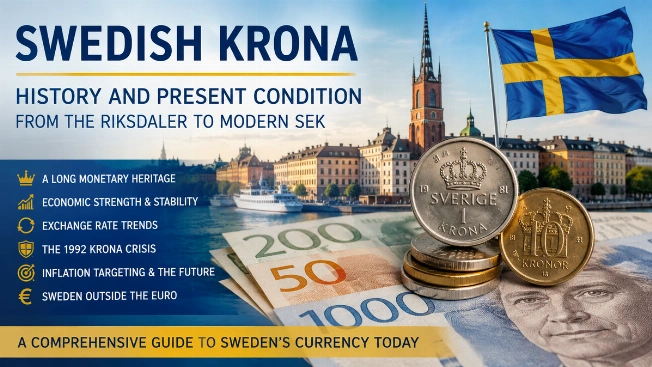
History and Present Condition of the Swedish Krona: From the Riksdaler to Modern SEK
The Swedish krona grew out of centuries of copper, silver, paper money and riksdaler reforms before becoming Sweden’s national currency in 1873. This detailed guide follows SEK through the Scandinavian Monetary Union, the 1992 currency crisis, inflation targeting, the 2003 euro referendum and the increasingly digital Swedish payment system of 2026.