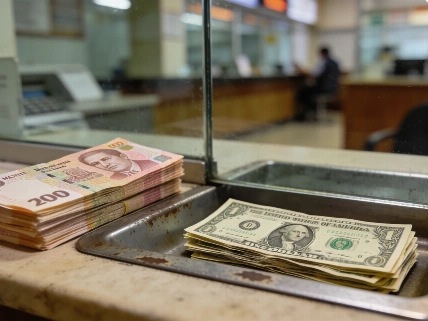

The Japanese yen remains well above its recent four-decade low after rare joint intervention by the US and Japan. Market attention now turns to the durability of this support and the broader impact on Asian financial stability.
The Japanese yen continued to trade above its recent historic lows against the US dollar on Tuesday, following a rare episode of coordinated intervention by the United States and Japan. While the US dollar itself was little changed on the day, the yen weakened modestly but stayed well clear of the 164 per dollar level it reached before last week's intervention, which marked its lowest point in over forty years.
US Treasury Secretary Scott Bessent confirmed earlier this week that Washington had joined Tokyo in direct market action to support the yen, marking the first such joint intervention since 2011 and the first time the US has specifically acted to strengthen the yen since 1998. According to Bessent, the US decision was driven by concerns that further yen weakness could destabilize financial markets across Asia, given Japan's economic size, trade links, and role as the largest foreign holder of US Treasury bonds. He emphasized the importance of a stable yen for regional and global financial stability.
Before the intervention, the yen had fallen to 164 per US dollar, a level not seen since the early 1980s. This depreciation has put pressure on Japan's import-dependent economy by raising the cost of foreign goods and energy. The yen's slide has also drawn attention because of Japan's significant holdings of US government debt, raising questions about potential spillover effects if Japan were to sell Treasuries to defend its currency.
Market analysts noted that the US's explicit participation in yen-buying removes the traditional constraint of limited foreign reserves that often undermines unilateral interventions. Both countries' finance ministries have indicated they may use the Federal Reserve's Foreign and International Monetary Authorities (FIMA) Repo Facility to manage liquidity during future operations. Some strategists argue that while the intervention may cap further yen weakness in the near term, any relief rallies could be short-lived, and the cost of resisting a stronger yen has now increased for market participants. On Tuesday, the USD/JPY exchange rate was last reported at 157.76, up 0.4% on the day.
Elsewhere in currency markets, the US dollar index-which measures the greenback against six major currencies-was nearly unchanged at 99.88. The index had declined sharply the previous week, reflecting both uncertainty over the Federal Reserve's interest rate outlook and the impact of the yen intervention. Investors are now watching US labor market data for further clues on monetary policy. The Bureau of Labor Statistics reported 7.359 million job openings in June, slightly below expectations, with May's figure revised lower. Despite the softer reading, the overall data suggested continued strength in US employment, supporting the Fed's recent focus on inflation rather than maximum employment.
In the euro area, the euro gained 0.2% to $1.1531, while the British pound rose 0.2% to $1.3450. Meanwhile, oil prices extended their decline for a second consecutive day, helping to ease some inflationary pressures. In the Middle East, US officials indicated that negotiations with Iran over reopening the Strait of Hormuz were progressing, with a possible deal to normalize shipping routes under discussion. Qatar, which has acted as a mediator, reported that draft language for a potential agreement is circulating among negotiators, though no direct talks have been scheduled.
According to market data, the yen's sharpest move occurred in the days leading up to the intervention, when it fell from around 158 to 164 per US dollar-a drop of nearly 4% in less than a week. Following the intervention, the yen recovered to trade in the 157-158 range. The US dollar index, which had dropped from above 101 to below 100 during the same period, has since stabilized. These figures highlight the scale of recent volatility and the immediate impact of coordinated policy action.
Currency interventions are a tool used by governments and central banks to influence exchange rates, typically by buying or selling their own or foreign currencies in the market. While such actions can provide temporary relief from rapid currency moves, their effectiveness often depends on broader economic fundamentals and market confidence. In the case of the yen, Japan's authorities have intervened several times in recent years, but joint action with the US is rare and signals heightened concern about regional financial stability. The use of facilities like the FIMA Repo allows countries to access US dollar liquidity without selling US Treasuries outright, helping to manage reserves more flexibly during periods of stress.