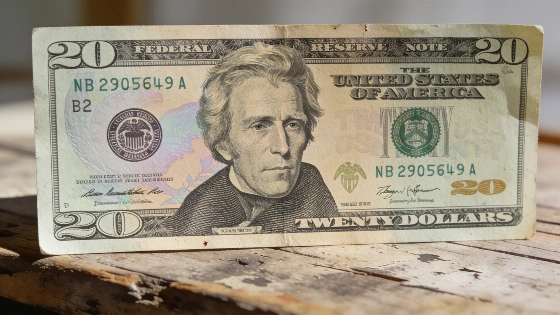
Plans to put Harriet Tubman on the twenty dollar bill have been shelved. The Treasury now targets 2030 for any major redesign, keeping Andrew Jackson on the note for the foreseeable future.
Behind closed doors, the Treasury has let the Tubman banknote plan fade, leaving a decade of speculation unresolved. Andrew Jackson's portrait stays put as the department pivots to a new redesign, now pushed to 2030. Despite a flurry of headlines, neither the Treasury nor the Federal Reserve has issued a final, unambiguous cancellation. Major wires like Reuters and Bloomberg have not published definitive documentation, so the record remains murky.
The Tubman proposal first surfaced in 2016 under the Obama administration. Officials pitched the idea as a way to mark the centennial of the 19th Amendment and spotlight women's contributions to US history. Jacob Lew, then Treasury Secretary, pointed to thousands of public comments backing the move. Yet, only a conceptual design ever materialized. The Treasury never set a release date or published a finished layout.
Momentum fizzled as administrations changed. Donald Trump dismissed the Tubman note as "pure political correctness" and floated the idea of Tubman on a two dollar bill, a suggestion the Treasury never took up. The Biden White House tried to revive the project. Press Secretary Jen Psaki said the Treasury was looking for ways to speed up the redesign, aiming to better reflect the country's history and diversity. But Secretary Janet Yellen later pointed to technical hurdles, especially the need for new anti-counterfeiting features, as the reason for a delay until at least 2030. Senators Jeanne Shaheen and Ben Sasse pressed Yellen to keep diversity on the agenda, but the department never set a launch date or released technical specs.
By July 2026, the Treasury told Spectrum News it was "not at present" moving forward with the Tubman plan. That answer came after a year-long wait for a status update requested by Representative Joyce Beatty of Ohio. Reuters reported that the Treasury left the door open for a future administration to revisit the subject, but for now, Jackson stays. The Federal Reserve, which handles currency distribution, has stayed silent on the Tubman note. The Bureau of Engraving and Printing continues to focus on technical upgrades for existing bills.
Jackson's face has been a fixture on US currency for generations. He has appeared on the 1869 five dollar Legal Tender note, the 1914 ten dollar Federal Reserve note, and the 1870 ten thousand dollar Gold Certificate. His legacy is tangled: Jackson led as a military commander and president, but his administration seized millions of acres from Native Americans, fueling the expansion of slavery. Tubman's story runs in the opposite direction. Born into slavery, she escaped and became a symbol of resistance.
Politics and precedent shape every US banknote. The 1866 Thayer Amendment, passed after the Spencer Clark Incident, bars living people from appearing on currency. Martha Washington is the only real woman to have held the main portrait spot on a US note. Other bills have shown women only as allegorical or anonymous figures. The Federal Reserve reviews and distributes new designs, but the Treasury Secretary has the final say.
Swapping out a portrait is never just a design tweak. Modern bills need advanced anti-counterfeiting features. The Treasury says these technical demands drive the long timeline, with no new twenty dollar note expected before 2030. The Bureau of Engraving and Printing recently decided to overhaul its Washington DC facility instead of moving to Maryland, as reported earlier. The Federal Reserve keeps a close eye on note durability and security. Any new series must pass tough tests to meet both US and international anti-counterfeiting standards.
The last major twenty dollar redesign brought in color-shifting ink and security threads. Each update takes years of research and coordination with banks and cash handlers. The US dollar's global role raises the stakes. With over $2.3 trillion in Federal Reserve notes circulating in 2024, according to the Federal Reserve, any change must protect international trust and smooth foreign exchange operations.
The Tubman plan was first announced in 2016, with a target launch in 2020. By July 2026, the Treasury confirmed the redesign was off the table, and the next possible update is at least four years away. Jackson has anchored the twenty since 1928 and appeared on other bills since the nineteenth century. Martha Washington remains the only real woman to have been the main portrait on a US banknote.
Technical, political, and historical forces keep shaping US currency. The Treasury has left the Tubman question open for future administrations, but for now, continuity and technical caution take priority. The Thayer Amendment still bars living people from currency. The process for picking new portraits runs through public input, political wrangling, and technical studies. Any change must balance national values with the realities of secure, widely accepted cash. The Federal Reserve, European Central Bank, and Bank of England all enforce strict standards for note security and public trust, as seen in their policy statements and statistical bulletins.