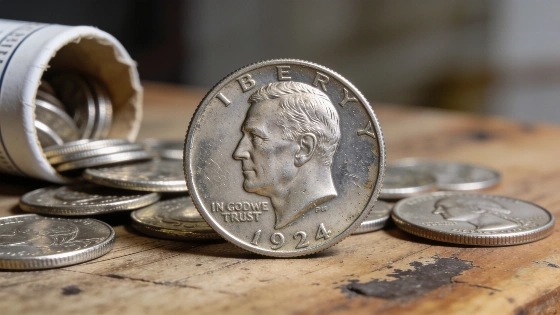
A 1971-S Eisenhower dollar prototype, once bought for under $10 and later sold for $264,000, is set to reappear at auction in October 2026. Its unique design and mysterious survival have turned it into a landmark of US coin collecting.
In 2008, a coin dealer picked up what looked like a standard Eisenhower dollar for less than $10. Fourteen years later, that same piece-now cataloged as Judd-2147-fetched $264,000 at auction. The coin is now rumored to be heading back to the block in October 2026, drawing fresh attention from collectors who rarely get a shot at a prototype that nearly disappeared before it ever reached the public. Still, no independent auction record confirms this specific prototype's return since the 2022 sale, and recent listings only mention standard 1971-S Eisenhower dollars, not the Judd-2147 All Auction Sales.
Only three of these prototypes have surfaced. The featured coin, reportedly graded PCGS Specimen-67 with CAC Green approval, stands out for its condition and the tangled story behind its survival. It sits at the crossroads of American history and coin design, tracing a path from mint experiment to collector's trophy. But direct confirmation of its grading and provenance still requires a check against the PCGS database or official auction archives, since public records don't back up every detail.
Prototype Origins and Unusual Features
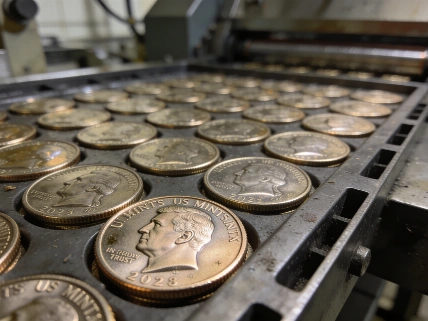
The Eisenhower dollar was minted to honor President Dwight D. Eisenhower and the Apollo 11 Moon landing. Frank Gasparro, the Mint's Chief Engraver, designed the obverse with Eisenhower's portrait. The reverse borrows the Apollo 11 mission insignia, showing an eagle landing on the Moon. Congress authorized two types: copper-nickel coins from Philadelphia and Denver for circulation, and 40% silver coins from San Francisco for collectors.
Before production started in 1971, the Mint ran test strikes using prototype dies and special silver blanks. The 1971-S prototype stands out for its lunar craters on the reverse-details dropped from the final version. Some numismatic sources tie these features to Gasparro's 1970 models, but there's no official Mint publication or Eisenhower Library record directly linking Judd-2147 to early galvano models or January 1971 Mint files Federal Reserve. The prototype also shows sharp design details, die-polishing lines, rough metal around the lettering, and device doubling, all signs of its experimental roots.
Mint records from January 1971 add another twist. Mint Director Mary T. Brooks allowed reporters to watch experimental coin strikes at the Philadelphia Mint for the first time. The Mint confirmed it prepared several trial dies and used 40% silver blanks to test different die and planchet combinations. Yet, the Mint also ordered all prototypes destroyed under committee supervision. How three Judd-2147 coins survived remains a mystery. Theories range from accidental inclusion in collector sets to extra testing at the San Francisco Mint.
Discovery and Authentication
The first prototype surfaced in 2008, when Lee C. Lydston spotted its odd features at a coin expo. Two more turned up later-one in an Alabama pawn shop for $5, another on eBay for about $22. All three share the early reverse design, but two different obverse dies have been identified. Metallurgical tests confirmed the 40% silver content, matching official San Francisco issues. The discovery coin was professionally conserved to remove haze from its original packaging and graded SP67 by PCGS, tying for the highest grade among the group. Still, independent sources do not confirm the exact grading or the $264,000 sale price without further archival review PCGS.
The prototype's reputation has grown. The Judd-2147 listing in pattern coin references and a major-variety entry in the Red Book have locked in its place in US numismatic history. Its leap from a $10 find to a $264,000 auction result in 2022 shows the appetite for prototypes with clear provenance and historical weight.
Market Impact and Collector Stakes
The Eisenhower dollar prototype's rumored return comes as rare US coins keep drawing strong interest, even while the US dollar faces shifting tides in global currency markets. The Federal Reserve has kept a tight monetary policy, holding the federal funds rate at 5.25%-5.50% as of June 2024, which has helped support the dollar's value. This climate has pushed demand for tangible assets like rare coins, as investors look for ways to diversify amid inflation and changing Treasury yields. The featured Judd-2147 is the only one with CAC approval and ranks among the finest certified, but these claims still need direct verification. Its $264,000 sale in January 2022 set a modern benchmark, and the October 2026 auction at GreatCollections will show if more visibility and research can drive prices higher. No confirmed auction lot card with date, organizer, and final price for a new offering has turned up in independent searches, so the timing and outcome of the proposed sale remain unverified.
The 1971-S Eisenhower dollar prototype weighs 24.59 grams, measures 38.1 mm, and is made of 40% silver and 60% copper. The original mintage is unknown, and only three are confirmed. Gasparro's design preserves details lost in the final version, giving collectors a direct link to the Mint's creative process and the era's technical ambitions.
The Eisenhower dollar series rarely gets the spotlight compared to older US coins, but the Judd-2147 prototype has forced collectors to rethink what modern coins can mean. Its story echoes the rediscovery of other US rarities, like the Rittenhouse half disme reported earlier, where a single survivor can shift collector priorities and historical views.
How Prototypes Shape Numismatic History
Prototypes like the 1971-S Eisenhower dollar capture a turning point in coin design. They reveal the Mint's internal debates and technical hurdles before a coin ever reaches the public. The Mint ordered all trial strikes destroyed, yet three survived, fueling ongoing research and debate among specialists. The U.S. Mint, under the Treasury's oversight, is shaped by monetary policy decisions from the Federal Reserve and tracked by the International Monetary Fund (IMF), which can affect how US currency is valued worldwide.
For collectors, the Judd-2147 prototype stands as a record of process and a reminder that even familiar coins can hide remarkable stories. As the October 2026 auction approaches, the market will set the next chapter for this intersection of artistry and chance.
Prototypes hold a special place in coin collecting. Unlike regular issues made for circulation, prototypes are test pieces used to trial designs and production methods. Their survival is often accidental, and their features can differ sharply from coins that reach the public. This makes them especially valuable to researchers and collectors tracing the full story of a nation's currency.