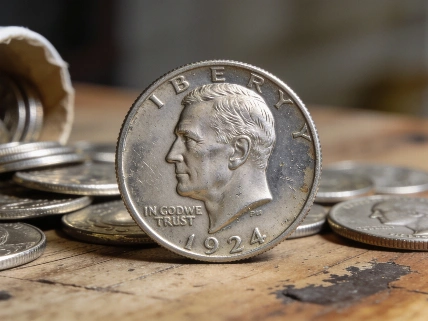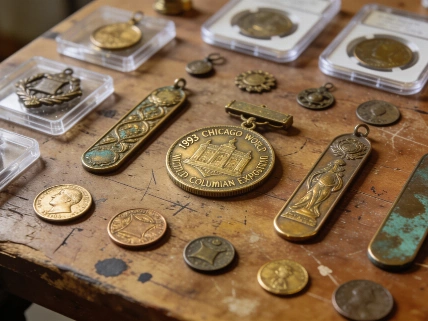

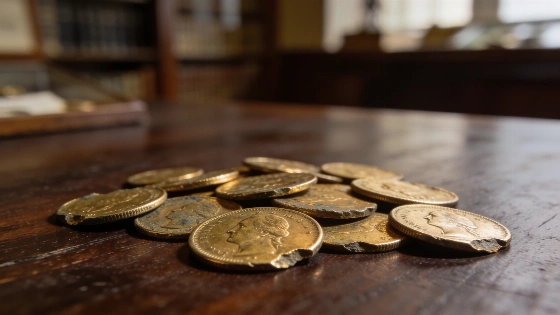
Nineteenth-century private gold coins, once melted for low gold content, have become some of the rarest and most expensive collectibles as collectors chase the few survivors.
In the mid-1800s, private mints sprang up across Georgia, North Carolina, California, Oregon, Utah, and Colorado, each trying to plug gaps left by official U.S. currency. These outfits churned out gold coins, but most never gained a foothold. Merchants and the public often refused them, and many coins landed in the melting pot almost as soon as they appeared. The era's unstable gold prices and lack of federal oversight left currency quality in the hands of local banks and private players. The Federal Reserve wouldn't arrive until 1913, so there was no central referee to enforce standards.
Collectors now chase these elusive coins, but their scarcity comes from a hard lesson in trust. Private gold coins faced immediate suspicion. To stand a chance against U.S. Mint coins, they had to match both weight and gold purity. Some private mints got the weight right but skimped on gold. Once word spread that a coin was light on gold, acceptance collapsed. Coins vanished from circulation and headed straight for the furnace. Still, recent research points out that low gold content wasn't always the only reason for rejection. The real causes behind mass melting and withdrawal remain tangled, with numismatic researchers still digging through what little primary evidence survives.
Testing was swift and unforgiving. Merchants and competitors checked new coins, and any hint of subpar gold triggered instant rejection. Refused coins were melted for bullion. That left only a handful of survivors, which now rank among the rarest in the market. The Civil War ended the legality of private gold coinage, but a few, like the Bechtler coins, kept circulating in North Carolina banks into the early 1900s. With no federal regulator watching over quality-unlike today's Federal Reserve and Treasury-market forces alone decided which coins would last.
Some private coins, such as those from the Betchlers, Moffat, Kellogg, and Clark Gruber, kept high standards and show up more often in collections. But the real prizes are the lightweight or impure coins, often the work of inexperienced or unscrupulous minters. Their rarity comes straight from their rejection and destruction. Official records from the U.S. Mint or Congress don't spell out how many coins were melted or the exact gold content of each private issue. Auction catalogs and regulatory filings confirm the absence of such data, leaving collectors to piece together the story from what's left.
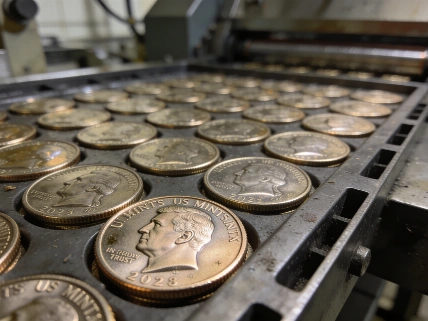
Private and territorial gold coins were always minted in small numbers, unlike the mass production at the U.S. Mint. In some cases, so few were made that even without melting, they'd be rare today. But low mintage combined with mass melting has made certain issues nearly impossible to find. California Fractional Gold coins are a rare exception, showing up more often, but most other private issues have become legendary rarities. The lack of detailed archival records only adds to the mystery, a sharp contrast to the statistical bulletin published by the European Central Bank, which tracks every note and coin in circulation.
Collector demand has surged in recent years. Auction prices have soared, with rare coin sales topping $1 million as reported in recent coverage. Investors are looking for alternatives as yields on U.S. Treasuries swing and central banks shift policy. The stories behind these coins-tales of failure, rejection, and survival-fuel the chase.
It's a twist that coins once shunned for poor quality now command higher prices than those that met the mark. The market rewards what's rare, not always what's best. Well-made private coins are easier to find and cost less, while flawed survivors fetch a premium from collectors hungry for a piece of monetary drama. Perceived value and scarcity drive the market, themes that still shape how central banks like the Federal Reserve and Bank for International Settlements talk about currency today.
Private gold coinage filled a gap in official supply, but its legacy is a warning about trust in money. The market punished substandard coins, yet time has turned some of those failures into treasures. Lessons from that era still echo in the regulatory checks and quality controls enforced by central banks, making sure today's currency-physical or digital-meets strict standards for acceptance.
Private and territorial gold coins show that currency acceptance hinges on both real and perceived value. When coins fall short-by weight, purity, or trust-they're quickly pushed out of circulation. The few that survive stand as relics from a time when the line between official and unofficial money was still being drawn, and quality control was learned the hard way.