Explore the documented beginnings of coin collecting, from ancient rulers and Renaissance scholars to the first professional coin dealers in the United States, and see how the hobby evolved into a global pursuit
The history of coin collecting stretches back more than two millennia, with its earliest roots found among rulers and scholars who valued coins for their artistry, rarity, and historical significance. While coins have circulated as money for over 2,500 years, the practice of collecting them as objects of study or prestige developed gradually, shaped by changing attitudes toward money, power, and culture.
Ancient Collectors and Royal Treasures
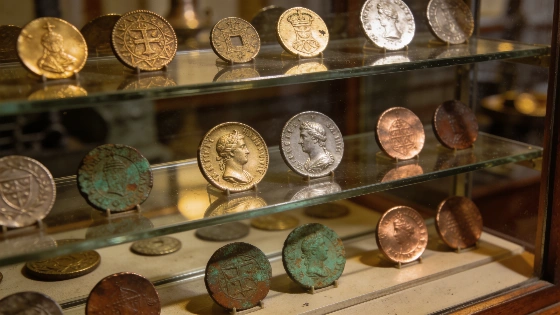
One of the earliest figures associated with coin collecting is Mithridates VI Eupator, the king of Pontus in the 2nd to 1st centuries BCE. According to historical records, an inventory of his treasures seized by the Romans included a diverse array of coins, suggesting he may have assembled them intentionally. Another early candidate is the Roman Emperor Augustus, who is reported to have distributed coins of various types-including old and foreign issues-as gifts, indicating an appreciation for their diversity and history.
These early examples reflect a time when coins were not only currency but also symbols of authority and cultural exchange. The act of collecting coins, whether for personal interest or as a display of power, was largely confined to the elite, as coins themselves were valuable and not widely accessible to ordinary people.
From Renaissance Scholars to Modern Dealers
The Renaissance marked a turning point in the history of coin collecting. Italian scholar Petrarch (1304-1374) is often credited as the first modern collector, having assembled and studied ancient Roman coins. In 1355, he presented a collection to Holy Roman Emperor Charles IV, sparking a trend among European aristocrats. This association with royalty and intellectual curiosity led to coin collecting being dubbed the "hobby of kings."
As interest in coins grew, so did the emergence of professional dealers. In the United States, Edward Cogan is recognized as the first person to make a living exclusively from buying and selling coins. An English-born accountant, Cogan organized coin auctions between 1858 and 1879, helping to establish the commercial side of numismatics in America. The rise of professional dealers paralleled the expansion of coin collecting beyond elite circles, making it accessible to a broader public.
Early American Collectors and Institutional Legacies
Identifying the first collector of U.S. coins is challenging, as records from the early years of the republic are limited. However, prominent figures such as Thomas Jefferson assembled collections of both European and American coins, partly to study minting techniques for the new nation. John Quincy Adams and his father, John Adams, are also known to have collected ancient coins, with John Quincy Adams taking a scholarly approach to his collection.
Coin businesses with long histories continue to shape the field. The Monnaie de Paris, founded in 864 by Charles the Bald, is the world's oldest continuously operating mint. In Germany, Dr. Busso Peus Nachf. traces its roots to 1870, while in the United States, Briggs and Coops-originally established as the Royale Stamp Company in 1907-holds the distinction of being the longest-running coin dealership under the same ownership.
Facts and Figures: The Growth of Numismatics
By the late 19th century, coin collecting had become a recognized hobby in Europe and North America, supported by specialized dealers, auctions, and societies. The American Numismatic Association, founded in 1891, now counts tens of thousands of members worldwide. According to industry estimates, the global numismatic market-including coins, medals, and tokens-has grown to encompass millions of collectors and billions of dollars in annual transactions. Recent expansions, such as the addition of 390 rare coins and medals to the inventory of a major dealer, as reported in a recent update on the global coin market, highlight the ongoing vitality and international reach of the field.
Understanding the Hobby of Kings
Coin collecting, or numismatics, is more than a pastime; it is a window into the economic, political, and artistic history of societies. Each coin carries information about its issuing authority, the technology of its time, and the values it was meant to represent. The transition from royal treasuries to public auctions and organized societies reflects broader changes in access to money, education, and historical awareness. Today, collectors range from casual enthusiasts to institutional investors, and the market continues to evolve with new discoveries and technologies.
The distinction between collecting and dealing is important in numismatics. While collectors seek coins for personal interest, study, or investment, dealers facilitate the exchange and authentication of coins, often providing expertise on rarity, condition, and provenance. The growth of professional dealers and auction houses has helped standardize grading and pricing, making the market more transparent and accessible. As numismatics continues to expand globally, understanding its origins and mechanisms remains essential for both new and experienced participants.