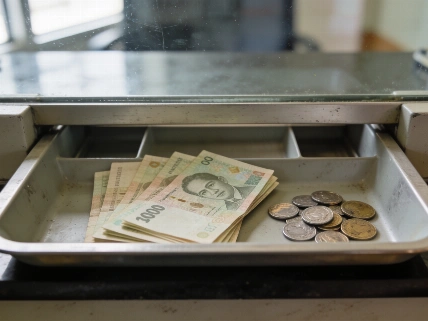

The Swiss Franc is under pressure as the US Dollar strengthens before the Federal Reserve's September meeting, with investors watching for a possible rate hike and shifting global yields.
With the Federal Reserve's September meeting approaching, the Swiss Franc has weakened against the US Dollar, highlighting the limits of its reputation as a safe-haven currency in a period of rising global yields. The Dollar gained 0.8% against the Franc this week, pushing the USD/CHF exchange rate close to 0.8165-a level last seen in early summer. Traders are adjusting their expectations for both currencies as US monetary policy tightens. According to Reuters, the Dollar rose 0.47% to 0.817 CHF per USD on September 11, right after US inflation data was released. This move shows how sensitive the currency pair is to surprises from the Federal Reserve (Reuters pricing).
US inflation data on Friday added to the pressure. Core prices rose 0.3% in August, up from 0.2% in July, while annual core inflation eased to 2.4%. This mix of steady monthly price increases and a still-high annual rate led traders to see an 85% chance of a Federal Reserve rate hike in September, up from about 70% before the CPI release. The prospect of higher US rates has made the Dollar more attractive, especially as the Swiss National Bank (SNB) keeps its policy rate at 0% and signals caution about tightening further. The Federal Reserve has kept its benchmark rate in a 3.50%-3.75% range this year, with a 9-3 split in the July vote showing a more hawkish mood among FOMC members (FOMC policy calendar).
Swiss Franc's yield disadvantage
The SNB's reluctance to raise rates has left the Franc at a clear yield disadvantage compared to the Dollar and other major currencies. As of September 10, markets expected the SNB to keep its policy rate at 0% at the September 24 meeting, with no hike likely until next year. This dovish stance has made the Franc a main funding currency for carry trades, as Reuters notes, with the real policy rate around -1%. While the SNB has intervened in the past if the Franc appreciates too quickly, its current approach offers little immediate support as investors look for higher yields elsewhere.
Recent data from Exchange Rates UK Research shows the Swiss Franc underperforming against a basket of major currencies over the past week. The biggest drop was against the Japanese Yen, with the Franc down 2.52%. Against the US Dollar, it lost 0.79%, and it also slipped against the Euro and Pound Sterling. These moves fit a broader pattern: as global yields rise, currencies with lower policy rates and less aggressive central banks are lagging behind. The European Central Bank and Bank of England have also signaled they will keep policy tight, widening the yield gap with Switzerland.
Household relief and market sentiment
There is some good news for Swiss households. Regulators have announced that average household electricity prices will fall by 4% next year, offering relief from the energy shock that has pushed inflation higher elsewhere. This could help support domestic spending and ease one source of inflation, making it harder to justify a rate hike from the SNB. Still, analysts at Crédit Agricole warn that the Franc remains "overbought," and a shift in risk sentiment could quickly boost demand for the currency if global confidence falters.
For now, the Dollar's strength is driven by expectations of more tightening from the Federal Reserve. As recent coverage shows, global bond yields have surged as investors react to persistent inflation and central bank moves, challenging the safe-haven appeal of both government bonds and currencies like the Franc. The next move will depend on whether the Fed signals more aggressive action or if a sudden bout of risk aversion revives demand for the Franc's traditional safety.
Key figures and market moves
Between September 6 and 13, 2026, the Swiss Franc lost 0.79% against the US Dollar and 0.66% against the Euro, and fell 2.52% against the Japanese Yen. The USD/CHF pair traded near 0.8165 at the end of the week. Market-implied odds of a US rate hike in September reached 85% after the latest inflation data, according to Reuters. Meanwhile, Swiss regulators confirmed a 4% drop in average household electricity prices for the coming year, a rare positive for domestic consumers.
Safe-haven status under scrutiny
The Swiss Franc's reputation as a safe-haven currency is being tested by the global shift toward higher yields. While the SNB's policy stance and Switzerland's economic fundamentals remain solid, the currency's yield disadvantage is now a clear weakness. If global risk sentiment turns, the Franc could recover quickly, but for now, the Dollar's policy-driven strength is setting the pace.
Central banks set policy rates to influence borrowing costs, inflation, and currency values. When a central bank like the Federal Reserve raises rates, its currency often becomes more attractive to investors seeking higher returns, leading to appreciation against lower-yielding currencies. The Swiss National Bank's decision to hold rates steady reflects a balancing act: supporting domestic stability while avoiding excessive Franc appreciation that could hurt exporters. But as global yields rise, currencies with lower rates can face sustained pressure, especially when investors expect further tightening elsewhere. This helps explain why the Swiss Franc, despite its safe-haven status, is not immune to shifts in global monetary policy.