
Speculators have swung to net long positions on the Japanese yen for the first time since February, as expectations of faster Bank of Japan rate hikes and asset repatriation drive a dramatic shift in currency market sentiment.
Speculative investors have quickly reversed course on the Japanese yen, moving to a net long position in yen futures for the first time since February. This marks a sharp change in sentiment, with traders now expecting the Bank of Japan (BoJ) to tighten policy more quickly than before. Recent statements from the central bank and shifts in market pricing have reinforced this view (Reuters).
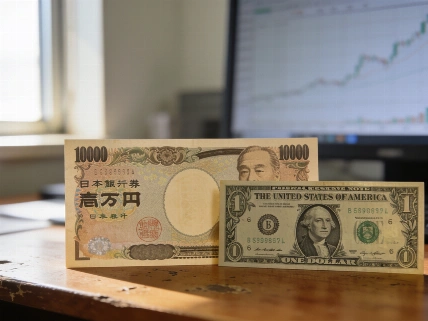
The main trigger for this shift was the yen's sudden rise against the US dollar in early September, which surprised many in the market. After hitting a low of 163.99 per dollar in July, the yen climbed to 152.89 per dollar by September 8, its strongest level since mid-February. This move was driven by speculation that the BoJ could speed up its rate hikes and by expectations that Japanese investors might start bringing overseas assets back home, which would further support the currency. The rally also reflected the unwinding of large carry trade positions that had benefited from Japan's low interest rates (Reuters).
Market data reveals scale of shift
Commodity Futures Trading Commission (CFTC) data released on September 8 shows that net non-commercial positions in yen futures swung from a net short of 92,227 contracts to a net long of 10,796 contracts in just one week. This swing of more than 100,000 contracts is one of the most abrupt changes in recent years, showing how quickly market expectations can change when policy signals shift. Reuters and other financial news outlets have described this as a historic turnaround in speculative sentiment, highlighting the market's sensitivity to central bank policy.
The yen has been under pressure for years, with its decline accelerating after Sanae Takaichi became prime minister in October last year. Concerns that the BoJ was slow to tighten policy compared to the Federal Reserve and the European Central Bank deepened the selloff. By July, the yen had dropped to levels last seen in the 1980s. Authorities in Tokyo and Washington intervened to stabilize the exchange rate. In August, Japan's Ministry of Finance reported that foreign exchange reserves fell by a record $79.6 billion to $1.208 trillion, after interventions totaling 15.4 trillion yen between July 30 and August 26-the largest monthly operation on record.
Policy expectations and investor behavior
The latest yen rally comes as markets price in a faster pace of rate hikes from the BoJ. As Japanese yields rise, domestic investors have less incentive to keep funds abroad, making asset repatriation and further yen strength more likely. This pattern has appeared in previous cycles, but the speed of the current adjustment stands out. According to sources close to the BoJ, the central bank is prepared to raise its policy rate by 25 basis points to 1.25% at its September 17-18 meeting, and may signal a faster tightening cycle if inflation risks grow. Public comments from government advisors, including Takudji Aida, have added to expectations that rates could rise quarterly through January next year.
Recent data shows that speculative investors have abandoned the consensus trade of betting on further yen weakness. Instead, they are now positioning for more gains, with changing expectations for Japanese monetary policy as the main driver. The scale of this shift is similar to other major currency turning points, such as the surge reported earlier when rate hike bets last intensified. The BoJ's evolving stance is being watched closely by global investors, and further volatility is possible if policy signals diverge from market expectations.
Implications for currency markets
This reversal in speculative positioning has immediate effects for both Japanese and international investors. A stronger yen can lower the cost of imports for Japanese consumers and businesses, but it can also hurt export competitiveness-a long-standing concern for policymakers. For global markets, the yen's renewed strength complicates carry trades and cross-border investment strategies that have relied on a weak yen as a funding currency. The BoJ's policy decisions, along with interventions by the Ministry of Finance and monitoring by the International Monetary Fund, remain central to the outlook for the yen and broader currency markets.
The BoJ has not yet confirmed any change to its official policy path, but the market's reaction shows how quickly expectations can shift when central banks are seen as lagging. The yen's recent rally and the sharp swing in futures positioning highlight how sensitive currency markets are to changes in policy signals and capital flows. For now, the focus is on the BoJ: unless policymakers deliver on expectations for faster tightening, the risk of renewed volatility remains high.
Currency futures are standardized contracts that let investors speculate on the future value of a currency relative to another. For the Japanese yen, non-commercial positions-mainly held by hedge funds and other large speculators-are closely watched as a gauge of market sentiment. A net long position means these investors expect the yen to rise. Rapid swings in positioning can amplify currency moves, especially when they coincide with changes in monetary policy or official intervention. Understanding these mechanisms is key for anyone following the links between central bank decisions, capital flows, and exchange rates in the global economy.