
The South Korean won has surged ahead of its Asian peers in 2026, powered by record semiconductor exports and aggressive central bank tightening, even as most regional currencies struggle against the US dollar's resilience
South Korea's won has seized the top spot among Asia's major currencies in 2026, defying the region's broader retreat against the US dollar. While most Asian currencies have lost ground or barely held steady, the won's rally stands out for both its scale and its underlying drivers.
It's not just a story of dollar weakness. The won's momentum is anchored in a rare alignment of surging export demand-especially for semiconductors and AI hardware-and a central bank that refuses to blink in the face of inflation. The Bank of Korea's latest rate hike, its second in as many meetings, has pushed policy rates to 3.00% as of August 27. That move, paired with a bullish revision of the country's 2026 growth forecast to 3.3%, has sent a clear message: Korea is prioritizing currency stability and external strength, even at the risk of domestic consumption.
Export Power and Policy Tightening
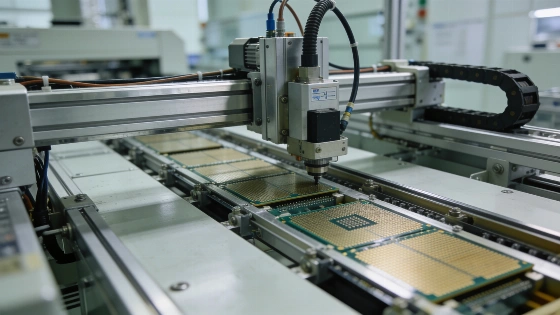
August's trade data delivered a jolt: South Korean exports soared 68.7% year over year, generating a $34.75 billion trade surplus. Semiconductor shipments and AI-related components have become the backbone of this export boom, providing the won with a fundamental tailwind that few regional rivals can match.
But the policy environment is just as critical. The Bank of Korea's back-to-back rate hikes have set it apart from more cautious central banks in the region. With headline inflation at 3.1% and core inflation accelerating to 3.4% in August, the central bank faces a delicate balancing act. Further tightening could reinforce the won's gains, but it risks undermining household spending and broader economic momentum.
Currency performance data as of September 3, 2026, underscores the won's lead. The USD/KRW pair has fallen 5.68% year-to-date, meaning the won has appreciated sharply against the dollar. By comparison, the Chinese yuan (USD/CNY) is down 3.94% YTD, and the Singapore dollar (USD/SGD) has gained just 1.29%. Other regional currencies, including the Japanese yen, Malaysian ringgit, and Indian rupee, have either weakened or posted only marginal gains against the dollar over the same period.
Regional Dynamics and Global Headwinds
Despite the won's outperformance, the broader Asian currency landscape remains shaped by US monetary policy. Markets are currently pricing a 61%-67% probability of another Federal Reserve rate hike in September, a scenario that could limit further gains for Asian currencies in the near term. The direction of US yields and the dollar remains a critical variable for the region.
China's yuan, meanwhile, has provided a measure of stability. With USD/CNY down nearly 4% YTD and expectations from Goldman Sachs for a gradual 3%-5% annual appreciation, the yuan's managed path offers a potential anchor for neighboring currencies. Japan's yen is also in focus, as speculation mounts over a possible Bank of Japan rate hike. However, higher oil prices and renewed risk aversion could quickly reverse any regional currency gains.
For South Korea, the stakes are unusually high. The won's rally is not simply a byproduct of a softer dollar; it reflects Korea's improving external balance and the country's ability to capitalize on global demand for advanced technology. Yet this strength comes with heightened sensitivity to the semiconductor cycle. Any downturn in chip demand or a reversal in AI hardware investment could expose the won's vulnerability.
Risks, Scenarios, and the Path Forward
Looking ahead, the outlook for Asian currencies is anything but uniform. The bull case for the won and its peers hinges on continued export strength, further Bank of Korea tightening, a steady appreciation of the yuan, and eventual easing by the Federal Reserve. The bear case is equally plausible: a surprise Fed hike, a spike in energy prices, or a sudden drop in global tech demand could all tilt the balance back in favor of the dollar.
Export-driven currencies like the won currently enjoy the clearest support, but they are also the most exposed to sector-specific shocks. The distinction is crucial: Korea's rally is built on real economic gains, not just speculative flows. That makes the won's advance more credible than most, but it also means the currency is acutely exposed to any reversal in the global semiconductor cycle.
Recent analysis from BCA Research has already highlighted a shift in sentiment away from the US dollar, with the South Korean won, Japanese yen, and Singapore dollar among the favored alternatives. The current data confirms that, for now, Korea's currency is leading the pack-but the risks remain tightly linked to both global policy and the fortunes of its export sector.
Unlike many regional rallies that fade with the next shift in US rates, the won's current strength is rooted in Korea's external surplus and policy resolve. This is not a speculative flash in the pan. However, the same factors that have propelled the won could just as quickly turn against it if the global chip cycle falters or if the Bank of Korea is forced to reverse course. For now, Korea's currency stands as Asia's benchmark for export-driven resilience, but the margin for error is razor-thin.
When a country's currency strengthens against the US dollar, it means that fewer units of the local currency are needed to buy one dollar. This can lower the cost of imports and help contain inflation, but it can also make exports less competitive if the appreciation is too rapid. In South Korea's case, the won's rise has been supported by a surge in high-value exports and a proactive central bank. However, the relationship between exchange rates, trade balances, and monetary policy is complex. A strong currency can be both a sign of economic health and a source of new challenges, especially for economies deeply tied to global demand cycles like semiconductors.