
Rabobank warns Brent crude could average USD 105 late into 2026, with only slow relief ahead. Refinery outages and shipping delays may keep fuel costs up until 2027.
Oil buyers looking for a break are out of luck. Rabobank now expects Brent crude to stick around USD 105 per barrel in the last quarter of 2026. Prices may only start to ease in 2027. That's a sharp split from Goldman Sachs. Goldman sees Brent at just USD 85 by the end of 2026 and USD 80 in 2027. Their forecast banks on Middle Eastern supply bouncing back and weaker demand from China, according to Reuters. The two banks disagree on how fast oil supply problems will clear up and when lower prices will actually reach buyers.
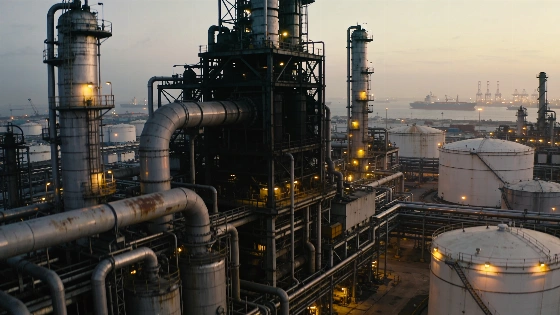
Rabobank's main point is blunt. Even if crude shipments pick up, there's still not enough refined fuel to go around. The bank points to refinery outages in the Middle East, Russian production problems, and tighter Chinese controls on imports and refinery output. Recent numbers show Persian Gulf crude exports have climbed back to 23.3 million barrels per day. That matches 2025 averages. But refined product exports-diesel and gasoline-are stuck at about half of 2025 levels. Refineries in the region are still down by 2.0 million barrels per day above normal for this time of year, according to Reuters and Investing.com. The upshot: even if crude oil moves, there's not enough diesel and gasoline. The market stays tight.
Refinery repairs and shipping delays
Goldman Sachs is betting on a faster fix. They expect Gulf production to recover, new shipping routes to open, and demand to stay soft. Rabobank isn't convinced. They say fixing refineries takes time. Tankers can't just reroute overnight. The bank says these delays will keep the market squeezed. The European Central Bank (ECB) has also warned that stubborn energy price shocks make it harder to control inflation and keep the euro stable. That's in their recent monetary policy statements.
For companies that need fuel-logistics, farming, construction, manufacturing-the shortage is more than a technical headache. Rabobank singles out diesel as the stress point. If diesel stays scarce, costs go up everywhere. The risk of another round of inflation is real. The Federal Reserve flagged this in its latest FOMC minutes. Energy price swings could push the Consumer Price Index (CPI) higher.
Slow price relief in 2027
Rabobank's numbers are higher than what the futures market shows for both crude and refined products through late 2026 and into 2027. The bank expects Brent to average USD 101 in the first quarter of 2027 and USD 98 in the second. Prices drop, but not fast. The bank assumes refinery repairs and shipping changes will help, but not right away. Meanwhile, a Reuters poll of 30 economists and analysts just bumped up the consensus Brent forecast for 2026 to USD 89.05 per barrel. That's up from USD 85.08 a month ago. The reason: supply risks in the Persian Gulf aren't going away.
Exchange Rates UK has tracked these shifting forecasts using live market data and published bank outlooks. The gap between Rabobank and Goldman Sachs shows how uncertain the energy market is. Each bank weighs supply risks and recovery speed differently. Rabobank's approach is cautious. They see ongoing disruptions, just as they did in their recent yuan outlook.
Key numbers and market fallout
For late 2026, Rabobank puts Brent at USD 105 per barrel. Goldman Sachs says USD 85. Rabobank's 2027 forecast: USD 101 in the first quarter, USD 98 in the second. The bank also notes Persian Gulf refined-product exports are just 25% of pre-war flows. Two million barrels per day of refinery capacity are still offline in the region. That's a big gap. It keeps fuel prices jumpy. Goldman Sachs warns that if shipments through the Strait of Hormuz get disrupted again, Brent could shoot above USD 120 by the end of 2026, according to Reuters.
Crude oil grabs headlines. But the real squeeze is in refined fuel. Fixing refineries and rerouting ships takes time. Even if crude supply improves, diesel and gasoline shortages could drag on. That means higher costs for everyone. Inflation could stick around into 2027. The Bank for International Settlements (BIS) has warned that energy bottlenecks can shake up exchange rates, especially for countries that import oil.
Diesel and gasoline come from refineries. These are complex plants that turn crude oil into usable fuel. When a big refinery goes down, the pain spreads far beyond the local area. Global supply chains feel it, especially when the trouble hits major exporters like the Middle East or Russia. Fixing a refinery isn't quick. It can take months or even years, depending on the damage and how fast parts arrive. During that time, backup supply is limited. Shipping routes may need to change. All of this keeps fuel in short supply and prices unstable, even if crude oil production is back on track.