Saudi Arabia now counts 49 foreign bank branches after Bank of Jordan's arrival. The international banking scene is changing fast, and the kingdom's financial landscape is shifting.
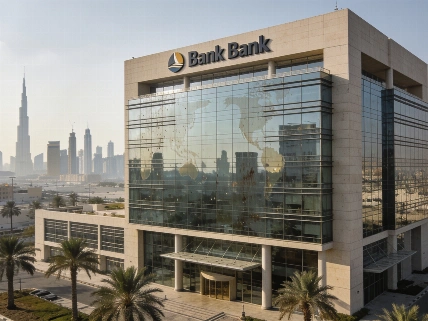
Bank of Jordan has landed in Saudi Arabia. That brings the reported number of foreign bank branches in the kingdom to 49 by the end of August 2026. This is a sharp jump. The country is pushing hard to bring in international banks and open up its financial sector. But there's a catch. The Saudi Central Bank (SAMA) does not publish a full list of foreign branches or confirm the exact entry date for Bank of Jordan. SAMA's official data sticks to sector-wide numbers, not branch-by-branch details. For the closest look, analysts still turn to the SAMA annual report.
For a long time, local banks ran the show in Saudi Arabia. That changed fast. Foreign banks are moving in at a pace not seen before. Some market sources say the number of foreign banks with a Saudi presence jumped to 22 by August 2026, up from 17 a year earlier. SAMA's public reports don't break down the numbers by bank or branch. But the trend is clear. Five new foreign banks have entered since November 2025. Four of those started up in 2026. The pace is rapid, not gradual.
New entrants shake up the market
The latest wave includes the National Bank of Egypt, which opened its first Saudi branch in November 2025. Abu Dhabi Commercial Bank followed in April 2026. Bank of China Limited arrived in May. Bank Misr came in July. Bank of Jordan joined in August. Each brings its own network and know-how. The market is feeling the pressure. Branch locations and customer offers are shifting. SAMA stays in charge, setting the rules for all banks in the country.
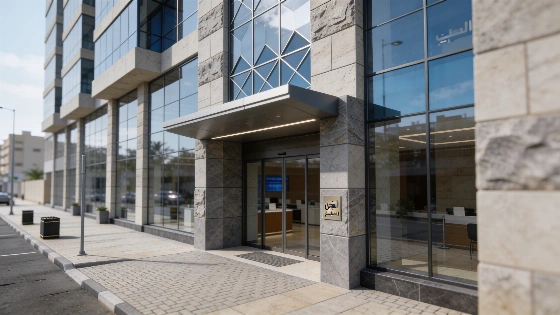
Emirates NBD stands out. It runs 22 branches across Saudi Arabia. No other foreign bank comes close. Kuwait National Bank and First Abu Dhabi Bank each have three branches. Qatar National Bank and Industrial and Commercial Bank of China have two each. The rest, including the newest arrivals, operate just one branch apiece. The spread is uneven. That says a lot about competition and regulation in the sector.
Branch networks and regional reach
By the end of August 2026, Saudi Arabia had 1,933 bank branches in total. That includes both local and foreign banks, plus Gulf International Bank's three branches. The number was 1,902 a year before. Local giants still dominate. Al Rajhi Bank leads with 513 branches. Saudi National Bank follows with 491. Riyad Bank has 234. SAMA's reports confirm these totals but don't split them by bank origin.
Riyadh is the main hub. It had 597 branches as of the second quarter of 2026. Mecca had 390. The Eastern Province counted 350. These numbers track with population and economic priorities. Banks want a foothold in the busiest regions. SAMA's oversight keeps expansion in line with national goals and financial stability.
Data gaps and market moves
From August 2025 to August 2026, foreign bank branches in Saudi Arabia reportedly rose from 43 to 49. The number of foreign banks grew from 17 to 22. Most of the new action happened in big cities. Emirates NBD's 22-branch network towers over the rest. The gap is wide. Still, SAMA's official reports, like the Financial Stability Report, don't confirm these exact figures. They focus on the big picture-sector strength and risk, not branch counts.
Other countries in the region are seeing similar trends. Emirates NBD Egypt's expansion is one example. But Saudi Arabia stands out for the speed and scale of its foreign bank growth. The kingdom's open-door policy and economic reforms are driving this. The International Monetary Fund (IMF) has pointed to Saudi Arabia's push to modernize its financial sector as part of Vision 2030. The focus is on bringing in foreign investment and boosting cross-border money flows.
Macroeconomic and foreign exchange context
The banking boom is happening as Saudi Arabia sees strong credit growth and shifting monetary policy. SAMA's August 2026 bulletin shows loan growth at 7% year-on-year and 0.9% month-on-month. Deposits fell by 1.1% in the same period. The loan-to-deposit ratio hit 112%. That means credit demand is high and liquidity is tight. SAMA and global groups like the Bank for International Settlements (BIS) watch these numbers closely. They matter for the Saudi riyal's stability and the country's monetary health.
International payments are changing too. In September 2026, Saudi Awwal Bank teamed up with Swift to make cross-border payments more transparent. The bank is licensed by SAMA and follows its rules. This move ties Saudi Arabia more closely to the global financial system. Big foreign lenders are also active in Saudi deals. In October 2026, Abu Dhabi Commercial Bank, Industrial and Commercial Bank of China, HSBC Bank Middle East, and Standard Chartered all took part in the $2.58 billion Rabigh 2 expansion project. Not all of them have branches in Saudi Arabia, but they are still involved in major financing.
Editorial view: A sector in flux
The jump in foreign bank branches is more than a statistic. It signals a shift in Saudi Arabia's financial sector. Bank of Jordan and other newcomers are changing the game. Customers get more choice. Service standards could rise. But Emirates NBD's dominance shows that just opening a branch does not guarantee a big market share. The real test is ahead. Can new banks win customers and innovate, or will the big players keep control? For now, Saudi banking is more international than ever. The balance of power is still shifting.
Foreign banks in Saudi Arabia face strict rules. SAMA sets the bar for licensing, capital, and operations. Foreign banks can offer many services, but growing their branch networks and products depends on following local rules and Saudi policy shifts. The system tries to balance global expertise and competition with financial stability and national goals. For more on the rules and sector data, see the SAMA annual report and IMF regional outlooks.