A 1924 Saint-Gaudens double eagle graded MS-67 was reported sold for $47,580 with CAC approval and $11,285 without it. The September figures have not been independently confirmed in the available research.
The auction records cited for September come with a caveat: the available research did not independently confirm the reported Heritage and Stack's Bowers transactions or locate official results for the cited lots. Treat the figures as reported prices, not verified totals.
Two 1924 Saint-Gaudens double eagles carried the same PCGS MS-67 grade. The article reported that one, with CAC approval, sold for $47,580 at Heritage Auctions on September 2, 2026. The other, without CAC approval, brought $11,285. That is a reported difference of more than fourfold.
The two sales were among 12 September transactions highlighted by CAC. Buyers reportedly paid sharply different prices for coins whose holders showed the same grade. But a numerical grade leaves out details that matter at auction, and comparisons depend on the particular coin and sale date. Certification also matters, as does whether the quoted realized price includes the buyer's premium.
When the same grade diverges
The 1924 double eagle is not scarce by mintage. The Philadelphia Mint struck 4,323,500. Heritage reportedly counted only 28 CAC-approved MS-67 examples, with none approved at a higher grade. That population creates a narrower market for collectors seeking the best-preserved coins than the date's overall availability might suggest.
Heritage's September 2 sale also reportedly showed how much individual quality can matter in a scarce issue. An 1864 Liberty Head quarter eagle graded PCGS AU-50 with CAC approval realized $100,650. Stack's Bowers had reportedly sold an NGC AU-50 example without CAC approval the day before for $36,600. The Philadelphia Mint made 2,824 quarter eagles that year. Heritage estimates that only 18 to 22 circulation strikes survive. These are not controlled comparisons: the coins had different certification and approval histories. The available research did not independently confirm either transaction.
Two coins with the same grade are still different objects. Strike quality and remaining luster matter, while surfaces and eye appeal can vary within one grade. Separate auctions bring different bidders and market conditions. The gaps show demand for particular coins, not a fixed fee attached to every CAC sticker.
One coin makes the case
The clearest before-and-after comparison involved an 1801 Draped Bust dollar. Stack's Bowers reportedly sold the same PCGS AU-53 coin for $10,800 on November 11, 2025, without CAC approval. After it gained approval, the coin reportedly brought $20,740 in the same holder on September 1, 2026. The reported increase was $9,940. The interval between sales leaves room for other influences on price, and the available research did not independently verify the lot records or establish whether both figures used the same basis, including buyer's premiums.
Other early American coins showed smaller reported gaps. An 1806 Capped Bust Right half eagle attributed as BD-1, the Pointed 6 variety, reportedly sold for $40,260 at Stack's Bowers on September 1 in CACG MS-63+. A PCGS MS-63+ example without CAC approval reportedly brought $35,380 at Heritage the following day. A CAC-approved 1910-S Indian Head half eagle in PCGS MS-64 reportedly realized $25,620 at Stack's Bowers. A non-CAC PCGS MS-64 example had reportedly sold at Heritage on July 16 for $16,470.
Early dollars also rewarded buyers who looked beyond the grade. GreatCollections sold a CAC-approved 1799 Draped Bust dollar graded PCGS XF-45 for $8,911.10 on September 27, according to the figures cited in the article. A non-CAC PCGS XF-45 example brought $4,132.70 there on July 19. A non-CAC AU-50 example sold for $7,715.40 on August 9. The higher-grade coin did not beat the September result, but these were separate pieces sold on different dates. The cited results have not been independently confirmed in the available research.
Premiums beyond rare gold
Classic commemoratives showed similarly strong reported competition. A CAC-approved 1938-D Texas Centennial half dollar in PCGS MS-68 sold for $17,875 at GreatCollections on September 27. A non-CAC PCGS MS-68 example brought $8,845 at Heritage on September 4. The Denver issue had a mintage of 3,775. A CAC-approved 1900 Lafayette commemorative dollar in PCGS MS-64 realized $5,060 at GreatCollections. A non-CAC PCGS MS-64 example sold there on July 19 for $2,255. Check the sale records and fee conventions before treating these prices as directly comparable.
The certification gap appeared at lower price levels, too. David Lawrence Rare Coins reportedly sold a CACG VF-35 1921-D Mercury dime for $750 on September 27. Heritage had reportedly sold an NGC VF-35 example without CAC approval for $488 on September 1. A CACG MS-62 1876 Liberty Seated quarter brought $625 at DLRC. A non-CAC PCGS MS-62 example reportedly realized $390.40 at Heritage on July 28.
The modern end of the range included a 2024-P Liberty & Britannia silver medal graded CACG Proof-70 Deep Cameo, reported sold by DLRC for $160 on September 6. Two NGC Proof-70 Ultra Cameo examples reportedly sold through GreatCollections for $104.61 on September 13 and $111.22 on September 27.
Separate October coverage offers a rarity comparison. CoinWeek reported that Heritage sold an 1832-O Large Letters half dollar, O-101a, graded PCGS AU58+ with CAC approval for $3,294 on September 4, 2026. The same coverage cited the October 6 PCGS Population Report, which listed 373 certified 1832 Large Letters coins against 4,818 Small Letters examples. The report cautions that resubmissions and crossovers may mean those figures do not represent unique coins. AU58 denotes minimal friction on the high points, with most luster remaining. CAC Grading separately considers surface problems and cleaning. Separate collecting coverage has considered overlooked gold issues in an earlier coin report.
What the sticker can and cannot say
Heritage reportedly sold a CACG Proof-66 Cameo 1879 Flowing Hair Stella for $292,800 on September 2. A PCGS Proof-67 Cameo Stella without CAC approval had reportedly brought $288,000 at Stack's Bowers on November 11, 2025. The lower numerical grade fetched more, but the coins were different and sold months apart. The Stella's unusual $4 denomination came from an international-coinage proposal. Congress did not authorize it for regular circulation. October market commentary in the available research cautions that an unusually strong result can reflect the exceptional quality of an individual coin rather than a general price trend.
CAC approval adds a quality assessment within an assigned grade. CACG runs its own grading and encapsulation service. A coin without a sticker has not necessarily been examined and rejected by CAC. Auction prices also reflect the individual item and the conditions of each sale, so September's comparisons cannot establish a universal certification premium. The available October materials contain no official statement from Heritage Auctions, Stack's Bowers, CAC, PCGS or NGC announcing a dispute, revision or new decision concerning the transactions described here.
The reported prices are in U.S. dollars. The available research provides no verified exchange-rate series, inflation adjustment or dated CPI or PCE comparison for the sale periods. The Federal Reserve's policy materials explain the monetary-policy setting, while the European Central Bank publishes euro reference exchange rates. Neither source supports an inference about a specific currency effect on these coin results without matching dated data. For overseas bidders, movements in the dollar can change the local-currency cost of a U.S. auction purchase, but the available evidence does not attribute any particular exchange-rate move to these sales. Interest rates, inflation expectations and sovereign bond yields may shape broader investment conditions. The cited results alone do not establish that monetary policy drove the price gaps.
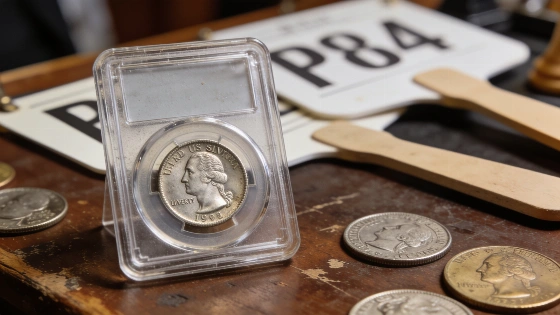
A grade compresses many physical qualities into one label. A second assessment may help buyers identify coins they consider especially desirable, but it does not replace inspecting the coin or comparing like with like. September's reported prices show that certification can sharpen competition, though the available research has not independently verified the transactions.
For context on the U.S. policy framework, consult the Federal Reserve policy materials. For currency conversion context, the ECB maintains euro reference rates. These references do not verify the auction results or provide a basis for retroactively adjusting the reported prices.