
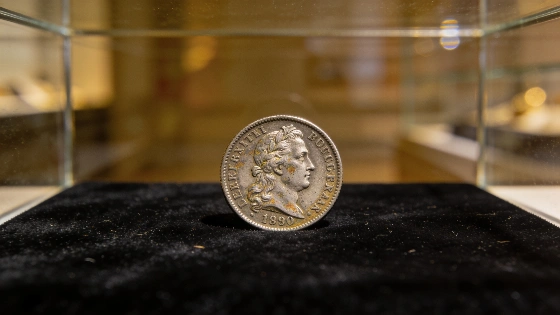
The top-graded 1792 half disme, known as the Rittenhouse Specimen, has surfaced at Heritage's GACC Signature Auction after more than a decade, with bidding already topping $1.4 million.
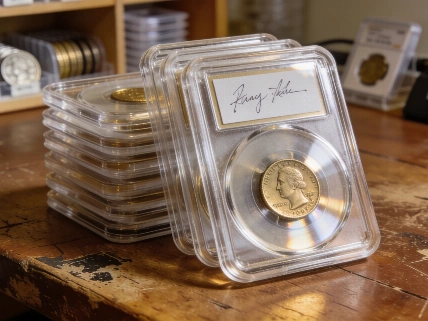
Collectors and institutions wasted no time when the Rittenhouse Specimen hit the auction circuit again. This 1792 half disme, graded Mint State-68 by PCGS, anchors Heritage's Official U.S. Coins GACC Signature Auction, set to close on October 8, 2026. Cataloged as lot #3414 from the Ronald Firman Collection, the coin has already cleared $1 million in bids. The interim figure stands at $1.225 million, with a buyer's premium pushing the total to $1.4945 million. That number isn't final, but it signals strong appetite for elite U.S. numismatic pieces. The collectibles market keeps moving, even as the Federal Reserve sticks to tight monetary policy to fight inflation, as outlined in recent FOMC statements.
This half disme hasn't changed hands publicly in over thirteen years. Since PCGS encapsulated it, the coin stayed in private ownership. Yet it didn't vanish from view. The piece appeared at the American Numismatic Association's Chicago convention in 2013, at Mount Vernon in 2014 and 2015, at the ANA's Denver event in 2017, and at the ANA Edward C. Rochette Money Museum in Colorado Springs from 2018 through 2024. Each public showing only fueled anticipation for its return to the auction floor.
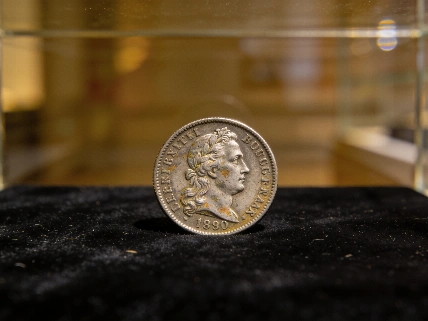
The Rittenhouse Specimen's technical edge goes beyond its grade. The coin's preservation and visual impact set it apart. Heritage's lot notes point to "brilliant mint luster" on both sides and a "commanding appearance." The patina mixes soft silver-gray with flashes of rose, amber, gold, and blue that shift under light. Early U.S. coins rarely survive with this kind of surface and color, making this example a reference point for both technical and visual standards among its peers.
Heritage's sale doesn't stop with the Rittenhouse coin. A newly surfaced 1867-S half eagle ($5 gold) graded MS-63, the best known by two grade points, also joins the lineup. These fresh finds are drawing attention from advanced collectors and institutions looking for pieces with both historical and technical weight. The rare coin market keeps showing resilience, even as the U.S. dollar index swings with changing expectations for Federal Reserve rate moves and global macroeconomic shifts, tracked by the ECB's reference exchange rates.
The 1792 half disme holds a key spot in U.S. coinage history. It was struck in the Mint's earliest days. Surviving in such high grade is rare, and the coin's public exhibition record and careful handling add to its draw. Its reappearance after more than a decade in private hands is unusual, and the early bidding shows both its scarcity and the hunger for top-tier U.S. coins. Heritage Auctions has shifted its view on the coin's provenance. PCGS CoinFacts still links the chain of ownership to David Rittenhouse and his family, but Heritage now disputes this, citing mismatches between old photos and the current coin. The only solidly documented ownership starts in October 1988, when Stack's offered it as part of the "Property of a New England Museum" collection, with the institution unnamed at the time.
While the Rittenhouse Specimen leads the sale, the broader auction lineup underlines the rare coin market's momentum. Heritage is offering coins that haven't been available for years, giving collectors a shot at pieces that rarely surface. For those watching the intersection of history and value, this sale shows how the rarest coins keep setting new price and prestige marks. The sector's performance still tracks with broader financial conditions, including U.S. Treasury yields and inflation expectations, monitored by the Federal Reserve and the U.S. Treasury.
The 1792 half disme stands among the earliest coins from the U.S. Mint and is one of the few to survive in such pristine shape. Its MS-68 grade puts it at the very top for this issue. Most known examples show much heavier wear or surface flaws. Its exhibition history at major venues, including ANA conventions and the Edward C. Rochette Money Museum, has made it one of the most recognized early American coins in recent memory.
Public display can move the needle on both value and reputation for rare coins. The Rittenhouse Specimen's repeated showings at major events and museums have boosted its profile, a factor that often translates into stronger demand when it returns to market. As seen in recent coverage of new U.S. commemorative coin programs, collector interest hinges on more than rarity and grade. The story and public exposure of each piece matter, too.
Technical grading at the highest levels remains a key driver of value and collector confidence. A single grade point can swing prices sharply, as advanced buyers and institutions chase the best-preserved coins. The Rittenhouse Specimen's MS-68 certification by PCGS puts it in a class of its own. Its auction performance will set a reference for how early U.S. coinage is valued going forward.
Grading standards and exhibition history explain why certain coins command such high prices. The Rittenhouse Specimen's path-from private collection to public display and now back to auction-shows how provenance, technical merit, and public exposure shape the rare coin market. The sector, like other alternative assets, still reacts to shifts in monetary policy and exchange rates, tracked by the Federal Reserve and the European Central Bank in their policy updates.
Coin grading is a specialized process that weighs a coin's physical state and visual appeal. PCGS and similar services use a numerical scale, with Mint State grades running from 60 to 70 for uncirculated coins. An MS-68 means only the slightest imperfections, putting the coin among the best known. For collectors and institutions, these distinctions have real impact on value, liquidity, and a coin's place in collections. The Rittenhouse Specimen's journey shows how grading, exhibition, and provenance together drive both the story and the economics of rare coin collecting.