
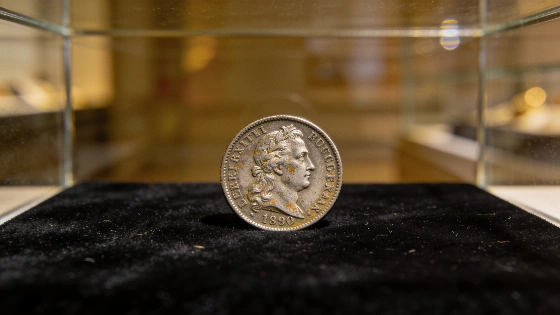
The highest-graded 1792 Half Disme is heading to auction, but its famous Rittenhouse family history is now in doubt. This twist turns a million-dollar rarity into a lesson in how numismatic history gets rewritten.
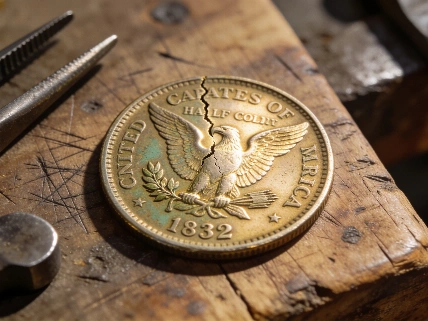
Collectors have watched the 1792 Half Disme graded PCGS MS68 for years. It's the best-known example of America's first federal silver coin. Now, it's coming back to auction. But this time, the coin's supposed link to David Rittenhouse is under a cloud. Heritage Auctions plans to offer it as Lot 3414 in October 2026. The firm has dropped the old claim that the coin came straight from the Rittenhouse family. For decades, that story was taken as fact. Now, it's up for debate. There's a catch: no independent record confirms this specific lot for October 2026. The only Heritage Auctions listing for that period is for a different coin, as shown by Heritage Auctions on Sixbid. The details remain murky.
For years, the story was simple. The MS68 Half Disme was said to trace straight back to Rittenhouse, the first U.S. Mint Director. Auction catalogs and grading services repeated this chain of ownership. It gave the coin a sense of unbroken history. Heritage's new research changed that. The firm compared old descriptions and photos. They found the evidence for a Rittenhouse link just isn't there. The 1919 Henry Chapman sale first made the claim, but there's no photo from that auction. No one can prove the connection. The coin's physical state is unmatched, but its story is now less certain. No official statements from Heritage Auctions, PCGS, or the Rittenhouse family have been independently confirmed about this change.
Origins of America's first federal coin
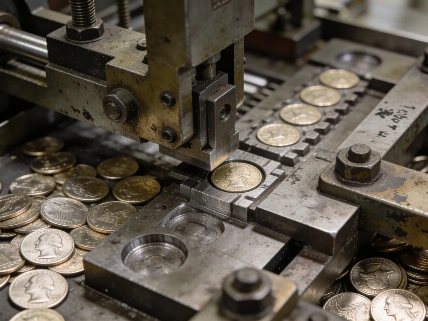
The 1792 Half Disme stands out in U.S. coin history. These coins were struck before the Philadelphia Mint building was finished. They were made at John Harper's sawmaker shop, using equipment overseen by Rittenhouse and Henry Voigt. The Mint Act of April 2, 1792, had just set up the U.S. Mint and a decimal system. President George Washington picked Rittenhouse as Director. The law was in place, but the Mint itself was not ready.
On July 11, 1792, Thomas Jefferson brought $75 to the Mint for coinage. Two days later, he got 1,500 half dismes-five-cent silver coins. These were the first circulating silver coins under the new federal system. Jefferson's account book shows he paid 30 cents to servants at an inn in Chester, Pennsylvania, that night. He likely used six of the new coins. As he traveled south, Jefferson kept spending the half dismes in small payments. His records prove these coins entered daily use, not just as patterns or prototypes. Still, no official publication from the U.S. Mint or National Archives has been found to confirm the details of the July 1792 striking and delivery.
The classic mintage figure is 1,500. But modern die-state analysis hints that 200 to 500 more coins may have been struck later in 1792, after the Mint's presses arrived. That would put the total between 1,700 and 2,000. PCGS still lists 1,500 as the official number. Only about 275 are thought to survive in all grades. Just 35 are Mint State. Only seven grade MS65 or higher. Early federal coins like this are rare. The Federal Reserve's role in keeping coinage and currency stable has shaped the market since 1913. The Fed's control over interest rates and inflation still affects how rare coins are valued and traded.
Separating fact from legend
The 1792 Half Disme has inspired plenty of myths. Some say George Washington supplied the silver. Others claim Martha Washington's tableware was melted down, or that Martha posed as Liberty. None of these stories are backed by records from the time. Most come from memories written down decades later. Jefferson's account book is the only solid proof for the July coinage. The coin's design is easy to spot. Liberty faces left on the front, with "LIB. PAR. OF SCIENCE & INDUSTRY" around her. The back shows a small flying eagle and the words "HALF DISME." The coins are about 89.2% silver and 10.8% copper, weigh roughly 1.35 grams, and measure 17.5 mm across.
The Rittenhouse pedigree, once taken for granted, is now shaky. Heritage reviewed 48 confirmed AU and Mint State examples. Seven coins share some traits with Chapman's 1919 description, but none match for sure. The MS68 coin's secure history starts in 1988, when it was sold as "Property of a New England Museum." Since then, it's passed through top collections and set a record price of $1,985,000 in 2018. The coin has been shown at major conventions and museums, including the ANA Money Museum in Colorado Springs from 2018 to 2024. No verified data on starting price, auction estimate, or final hammer price for the next sale is public. This shows how hard it is to get full transparency in the rare coin market.
Physical evidence and market impact
This coin stands out for its grade and its condition. MS68 is almost unheard of for a silver coin from 1792. Heritage calls it the finest certified example. The coin's surfaces shine with mint luster. Colors shift under light. There are barely any contact marks. Planchet marks and other features act as "fingerprints" for future research. These details could help solve the provenance puzzle one day.
Losing a famous pedigree might seem like a setback. But the coin's importance hasn't faded. It's the first circulating silver coin under the U.S. Constitution. Its state of preservation is unmatched. Its modern ownership is well documented. The open questions about its early history only add to its appeal. The coin is no longer just an artifact. It's a live research subject. This isn't unique to the Half Disme. As reported earlier, rare U.S. coins often reveal new facts as research moves forward. The market for these coins is shaped by big-picture economics. U.S. Treasury yields and the dollar's strength, tracked by the Federal Reserve and the International Monetary Fund (IMF), play a role. When inflation or currency swings hit, demand for tangible assets like rare coins can jump. The FOMC meeting minutes show how closely these trends are watched.
Heritage's census shows the 1792 Half Disme gets rare fast at the top. Only seven coins are MS65 or better. The MS68 stands alone. Competition for the best is fierce. Auction prices have topped $1 million in recent years. Public displays draw crowds of collectors and historians. The coin is a magnet for attention.
How numismatic history evolves
The 1792 Half Disme shows how numismatic history is built and rebuilt. New research methods-like die-state analysis and provenance checks-can shake up old stories. The Martha Washington portrait myth fell apart. The Washington silver tale is now doubted. The Rittenhouse link is no longer certain. Great coins don't lose value when questioned. They become more interesting. Their stories get deeper. This is true in monetary policy, too. Central banks like the European Central Bank (ECB) and the Bank of England (BoE) keep re-examining old data and policies to keep up with changing economies.
For anyone tracking American coinage, the 1792 Half Disme is a touchstone. It moved from experimental coin to real money, from Jefferson's ledger to today's auction rooms. Its provenance went from legend to open question. That's the challenge-and the reward-of serious numismatic research. The coin keeps its secrets. That's not a flaw. It's what keeps collectors and historians coming back.
Knowing the difference between mintage, survival rate, and provenance matters in numismatics. Mintage is how many coins were made. Survival rate is how many are left, in any condition. Provenance is the chain of ownership. It can affect both value and historical weight. When provenance is unclear, as with the MS68 1792 Half Disme, the coin's physical traits and documented appearances matter even more. This mix of hard evidence and historical story is what makes numismatic research tough-and worth it.