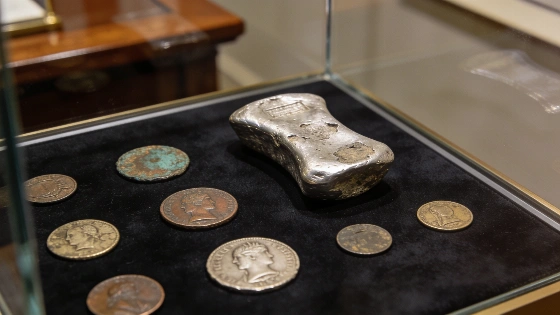
A four-day auction in Santa Rosa will see over 3,400 rare coins and banknotes cross the block, including a Mughal rupee with only four known examples and a 50-tael Chinese sycee. Collectors and investors are watching for record bids.
This September, a Mughal silver rupee with only four known examples will go up for auction in Santa Rosa, California. Stephen Album Rare Coins is offering 3,450 lots, drawing attention from collectors and dealers worldwide. While the IAPN auction calendar lists increased numismatic activity for September 2026, independent sources have not confirmed the full lot count or estimates for this sale.
The standout item is a 1753 Mughal Empire rupee from Allahabad, attributed to Akbar Adil Shah. Only four are known, and just two have ever been sold publicly. The estimate is $10,000 to $15,000, reflecting both its rarity and the demand for coins with clear provenance. The Mughal rupee traces its roots to Sher Shah Suri's reforms, which standardized the silver rupee at 178 grains and introduced a tri-metallic system-silver rupee, gold mohur, and copper dam. Later Mughal emperors adopted and expanded this system, shaping currency in the region for centuries (see Sher Shah Suri: Sur Empire and the Reserve Bank of India's historical notes).
Global rarities and high-stakes bidding
The auction also features a 691-693 Arab-Sasanian drachm from Dimashq, the first Islamic coin to show a Hijri date in Arabic. It could reach $15,000. The Hijri calendar for September 2026 places this coin in the early Islamic period. Another highlight is a Wajihid gold dinar from Oman, likely unique and previously unpublished, with a similar estimate. These coins mark moments when political and religious changes left their mark on currency. While Sasanian drachms are well documented, the rarity of this Dimashq issue has yet to be independently catalogued.
Chinese coins are also in focus, with the Dr. Dirk Löer and Bernd Löer collections offering a 1912 Wuchang AR dollar featuring Li Yuanhong and a large 50-tael sycee trade ingot from the late Qing dynasty. The sycee, weighing nearly two kilograms, is a piece of China's old bullion economy and could bring up to $7,500. Other notable lots include a 1923 South African proof set (one of 655 issued) and a 1918/7-S Standing Liberty quarter from the United States, both graded and certified. The Federal Reserve and the People's Bank of China have both noted that demand for physical currency among collectors remains strong, even as digital payments become more common.
Market data and collector trends
Over the past decade, rare coin prices have generally risen, especially for top Mughal and early Islamic pieces, which often exceed their estimates. Auction records show that the only other Akbar Adil Shah rupee to appear recently was sold in 2016. The 1918/7-S Standing Liberty quarter is a key date for US collectors, with certified examples up more than 30% since 2020. The 50-tael sycee has also become more popular as collectors look beyond Western coins. These trends point to a growing interest in global numismatics, with buyers seeking both history and scarcity. The European Central Bank and the International Monetary Fund have both noted that tangible assets like rare coins can serve as alternative stores of value during times of currency volatility and low bond yields.
For collectors, the appeal goes beyond investment. Many coins in this sale, such as the 952-961 Wajihid dinar and the 1976 Pakistan Conservation Series set, are unique or exist in very small numbers. The South African proof set, with its original case and matched grades, shows that even 20th-century coins can command high prices when condition and provenance are right. As reported earlier, digital grading and online bidding have made competition for rare coins even fiercer, raising prices and attracting more international buyers. Central banks, including the Bank of England, have discussed how physical collectibles and digital authentication are starting to overlap.
Consignments and the future of physical currency
Stephen Album Rare Coins is already taking consignments for its next major sale in January 2027, a sign that demand for physical currency-especially at the high end-remains strong despite the rise of digital payments and virtual assets. The firm's focus on coins with solid documentation and historical context sets it apart in a market where authenticity and provenance matter. The Bank for International Settlements has noted that, even as central bank digital currencies advance, the market for physical currency artifacts remains active among both institutional and private investors.
This auction stands out not just for its size or range, but for coins that push the boundaries of what collectors can hope to find. When a coin with only four known examples appears, or a gold dinar surfaces with no published record, the market has to rethink what rarity means. Even as digital tokens and AI grading change the field, the appeal of physical coins-grounded in history, scarcity, and the weight of metal-remains strong for those who value true rarity.
Coins and ingots like those in this auction are more than collectibles. They are artifacts from monetary systems that existed before modern banking and digital finance. A sycee, for example, was a silver ingot used for large transactions and official payments in imperial China. Its value depended on both its silver content and the reputation of the assayer or issuing bank. These objects show how, before standardized coinage and central banks, trust in money was built on physical verification and local authority, not national law or digital code.