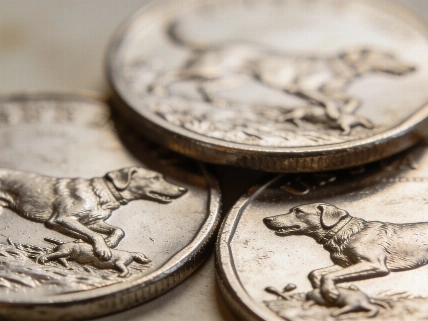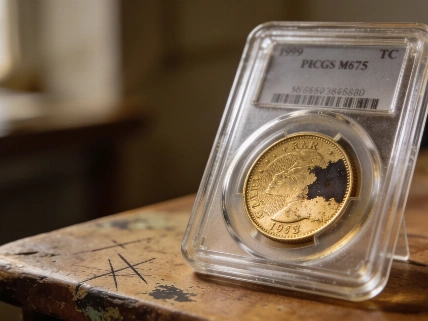
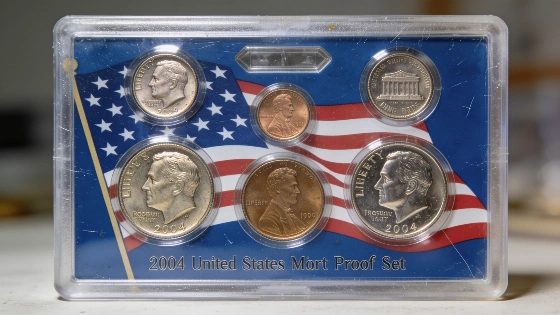
A 2004-S Proof Roosevelt dime with a dramatic 25 percent obverse indent has been found sealed in its original US Mint Proof Set after 22 years, challenging assumptions about modern mint quality control
For over twenty years, a single Roosevelt dime sat untouched in its original US Mint Proof Set. No one noticed the flaw. The coin, a 2004-S Proof, carries a deep 25 percent indent on its obverse. This kind of error almost never leaves the San Francisco Mint. The "S" mint mark stands for proof coins made under strict rules. Mistakes like this are almost unheard of in modern coin collecting. The Mint's quality checks are tough, especially for proof sets. Still, this dime slipped through. U.S. Mint records confirm the high standards.
Collectors and error experts have long said big mistakes do not escape the Mint's modern packaging. This dime proves them wrong. It stayed locked in its hard plastic lens for more than two decades. Now it has surfaced as a true outlier. Its discovery points to a rare breakdown in production. It also raises doubts about how foolproof even the best inspection systems really are. The Federal Reserve keeps pushing for better quality and security in currency, as seen in recent policy statements and reviews. But no system is perfect.
The error that should not exist
Mike Byers, a mint error specialist, got the set after a dealer spotted it at the 2026 American Numismatic Association World's Fair of Money in Pittsburgh. Byers says this is the only major mint error he has ever seen sealed in a government-issued US Mint Proof Set. He checked auction records and spoke with other experts. No one found another like it. The error-a 25 percent obverse indent-happened when two planchets overlapped in the press. This left a deep, rounded dent on the coin's face. According to CONECA and NGC, indents like this occur when two blanks enter the striking chamber together. One blocks the die, leaving a clear mark on the coin.
This case stands out not just for the error, but for its survival. Proof coins from the San Francisco Mint in 2004 went through a careful process. Dies were polished. Coins were struck more than once for sharp detail. Each coin was checked and packed by hand. Big errors usually get caught and pulled before reaching collectors. Not this time. This dime made it through every step, got sealed in its six-coin lens, and shipped out in the annual Proof Set. That's rare. The oversight here matches the kind of multi-stage checks used by central banks like the European Central Bank. The ECB statistical bulletins detail similar layers of verification for euro banknotes.
Packaging and Proof Set context
The 2004 United States Mint Proof Set came out on June 3, 2004. It held eleven coins, including two special Westward Journey nickels for the Louisiana Purchase and the Lewis and Clark expedition. The error dime sits in the lens with the Lincoln cent, both nickels, the Kennedy half dollar, and the Sacagawea Golden Dollar. The packaging uses a blue flag-themed insert and a Statue of Liberty design on the box. A Certificate of Authenticity comes with it. The official US Mint catalog lists both clad and silver versions for 2004. This error dime comes from the standard clad set. U.S. Mint records confirm this.
It matters which version you have. The standard clad 2004-S Proof Roosevelt dime, the source of this error, had a mintage of 1,789,488 according to PCGS CoinFacts. The silver version had 1,175,934. Nearly 1.8 million clad Proof dimes were made that year. Yet no other major indent error, still sealed in its original packaging, has been reported.
How the error escaped detection
Modern Proof coins are made to be flawless. The Mint uses machines and people to check each one at several points. After striking, coins are handled one by one and checked before being sealed in hard plastic lenses. This method started in 1968, replacing old cellophane packs. The 2004 set kept this system. That makes it even stranger that such a visible error got through. Central banks worldwide, like the Bank of England and the Bank of Japan, use similar multi-layered checks to keep their money safe and trusted.
Photos of the set show scratches on the plastic, not the coin. Byers confirmed this. The error coin sits untouched in its sealed lens. This proves it left the Mint as a regular collector product. It was not tampered with after production.
Facts and figures
The 2004-S Proof Roosevelt dime is a copper-nickel clad coin. Its outer layers are 75 percent copper and 25 percent nickel, bonded to a pure copper core. It weighs 2.268 grams and measures 17.91 mm across. The edge has 118 reeds. John R. Sinnock designed the coin. It was struck at the San Francisco Mint. The error is a 25 percent obverse indent, caused by a second planchet entering the press. The coin remains sealed in its original six-coin lens from the 2004 United States Mint Proof Set.
Uniqueness and collector impact
Claims of "only known" status in coins need caution. But the facts here are strong. Byers and other experts found no record of another major Proof error sealed in a US Mint Proof Set. CoinWeek's review also found nothing like it. For now, this dime stands alone.
Major mint errors do happen. Proof errors show up from time to time. But a dramatic indent, still in Mint packaging, is unheard of for a modern US Proof Set. The sealed holder does more than protect the coin. It proves a rare miss in the Mint's quality control. Collectors get a real piece of minting history. On the secondary market, rare proof error coins are valued for the type of error, how well they are preserved, and if they have original government packaging. Third-party grading and certification by groups like NGC or PCGS can boost collector interest. NGC and PCGS are the main authorities.
Anyone interested in minting technology and error coins will see echoes of this case in past investigations into how private and official coinage sometimes take unexpected turns.
The error coin market keeps changing. The survival of this dime in its original packaging challenges the idea that modern minting is foolproof. It also shows why packaging matters for a coin's history, especially when proving a major error is real. The Federal Reserve and other central banks often stress the need for traceability and documentation in currency. That principle matters just as much in coin collecting.
This 2004-S Proof Roosevelt dime tells a simple story. Even the best systems can fail. The coin's path-from a press mishap to a sealed Proof Set, then to public view after more than twenty years-shows why vigilance and documentation matter in numismatics. For collectors, the lesson is simple. Sometimes the rarest finds are hiding in plain sight, sealed by the very systems meant to catch them.
Proof coins are made with special dies and meant to show off the Mint's best work. They are not like regular coins made for daily use. Proof coins get struck more than once for extra detail and finish. Since 1968, hard plastic lenses have protected Proof Sets and proved their origin. When a big error survives this process, it becomes a true rarity. It also gives a window into the complex and sometimes fragile world of modern minting.