
The Pound to US Dollar rate remains steady as softer US economic data and fading expectations of another Federal Reserve rate hike shape the outlook for both currencies, with market attention turning to upcoming US retail sales and sentiment figures
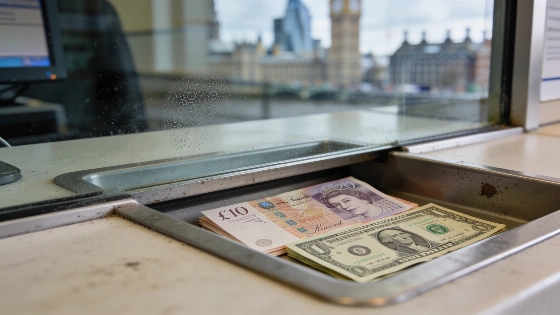
The Pound sterling has maintained a narrow trading range against the US Dollar, with the GBP/USD pair hovering just below the $1.35 mark. This stability comes as investors weigh recent economic data from both the United Kingdom and the United States, and as expectations for further interest rate increases by the Federal Reserve continue to diminish.
On Thursday, the Pound traded with limited direction following the release of UK gross domestic product (GDP) figures for the second quarter. The UK economy expanded by 0.4% in Q2, a slowdown from the 0.6% growth seen in the previous quarter. While the result met market expectations, much of the growth was attributed to temporary factors such as the World Cup and unusually warm summer weather. Economists have cautioned that persistent inflation and ongoing geopolitical tensions, particularly in the Middle East, could weigh on UK growth in the coming months, limiting the Pound's ability to gain ground.
US Data Shifts Dollar Outlook
The US Dollar initially found support as concerns over the US-Iran conflict increased demand for safe-haven assets. However, this support faded after the latest US producer price index showed factory gate inflation stalled in July, rather than rising as anticipated. The lack of upward pressure on producer prices added to evidence that US inflation may be less severe than previously feared, reducing the likelihood of another Federal Reserve rate hike in the near term.
At the time of writing, the GBP/USD exchange rate was quoted at 1.3498, little changed from the day's opening levels. Other major currency pairs also saw modest moves, with the Euro to US Dollar (EUR/USD) at 1.15327 and the US Dollar to Japanese Yen (USD/JPY) at 159.50. These figures reflect a broader environment of cautious trading as markets await further signals on the direction of monetary policy and global risk appetite.
Key Data Ahead: Retail Sales and Sentiment
Looking ahead, market participants are focused on two upcoming US economic releases that could influence the Dollar's trajectory. The July retail sales report is expected to show a slowdown in consumer spending, with growth forecast to ease from 0.2% in June to just 0.1%. Weaker retail sales would reinforce concerns about the resilience of US consumers and could further dampen expectations for tighter monetary policy.
In addition, the University of Michigan's preliminary consumer sentiment index for August is due, with markets anticipating a decline in confidence. A deterioration in sentiment would add to the headwinds facing the US Dollar, potentially allowing the Pound to move back above the $1.35 threshold if risk appetite improves. However, ongoing geopolitical risks, particularly in the Middle East, may continue to support demand for the Dollar as a safe-haven currency and limit Sterling's upside.
Recent trends in other major currencies highlight how shifts in global risk appetite and capital flows can drive exchange rates. For example, the South Korean won's recovery after index-driven outflows subsided in July, as reported in a recent analysis of the won's rebound, underscores the importance of both domestic and international factors in currency markets.
Exchange Rate Movements and Market Context
According to live market data, the Pound to US Dollar (GBP/USD) exchange rate stood at 1.348601 on Thursday, representing a marginal decline of 0.09% on the day. The Euro to US Dollar (EUR/USD) edged up by 0.03% to 1.15327, while the US Dollar to Japanese Yen (USD/JPY) rose by 0.11% to 159.50006. These modest changes reflect a period of relative calm in major currency pairs, with traders awaiting clearer signals from upcoming economic releases and central bank communications.
While the current GBP/USD rate is close to the psychologically significant $1.35 level, the outlook remains sensitive to shifts in US economic data, Federal Reserve policy expectations, and global risk sentiment. Any significant surprises in retail sales or consumer confidence could prompt renewed volatility in the currency pair.
Central banks play a critical role in shaping currency values through their policy decisions and communications. The Federal Reserve's approach to interest rates, in particular, has a direct impact on the US Dollar's attractiveness to investors. When the Fed signals a pause or end to its rate-hiking cycle, as current data suggests, the Dollar often loses some of its support, allowing other currencies such as the Pound to stabilize or appreciate. However, the interplay between economic data, market expectations, and geopolitical risks means that currency movements rarely follow a single narrative, and periods of stability can quickly give way to renewed volatility.