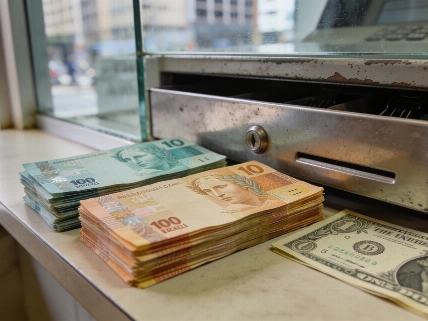
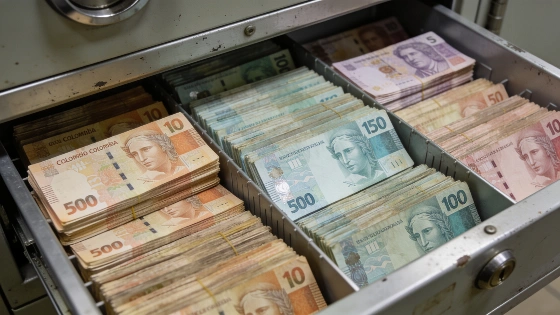
High-yielding currencies like the Colombian peso, Brazilian real, and Mexican peso continue to attract international capital through carry trades, even as underlying economic fundamentals remain mixed and policy risks persist
Latin America's most lucrative currencies are pulling in global capital at a pace that defies their underlying economic signals. The Colombian peso, Brazilian real, and Mexican peso have become magnets for investors seeking high returns, even as questions linger about the sustainability of these gains.
Carry trades-where investors borrow in low-yielding currencies such as the US dollar and invest in higher-yielding ones-have become especially profitable in the region. According to JPMorgan Private Bank, a year-to-date carry strategy involving borrowing dollars and investing at Colombia's overnight rate would have delivered a return of approximately 27%. This figure more than doubles the S&P 500's performance over the same period, underscoring the scale of the opportunity for those willing to accept the risks.
Carry Trade Mechanics and Market Drivers
The recent weakening of the US dollar, triggered in part by moves to support the US Treasury bond market, has amplified the appeal of Latin American currencies. As the dollar slipped, the yield gap widened, making the region's currencies even more attractive for carry trades. Investors have been quick to exploit this dynamic, despite the fact that the rally in these currencies has not been matched by a corresponding improvement in economic fundamentals.
JPMorgan's analysis highlights that the Colombian peso, Brazilian real, and Mexican peso are among the world's largest high-yielding currencies. The overnight policy rate in Brazil, for example, remains close to 14%, creating a powerful incentive for capital inflows. Yet, these returns come with significant caveats: Brazil's fiscal position is under pressure, and the cost of servicing public debt at such high rates is a persistent concern for policymakers and investors alike.
Regional Winners and Policy Risks
Chile stands out as a relative bright spot, with JPMorgan identifying it as offering the best mix of earnings growth, valuations, and macroeconomic stability. The Chilean economy has remained relatively stable, and the central bank has completed its easing cycle, while rising copper prices have improved the country's terms of trade. However, the prospect of a more hawkish stance from the central bank later in the year could alter the risk-reward balance for investors.
Despite the uncertainty, Brazil remains JPMorgan's most "out of consensus" pick in Latin America, based on current valuations. The country's high overnight rate continues to attract capital, but the sustainability of this strategy depends on the government's ability to manage fiscal risks without triggering a loss of confidence in the real.
For context, the Colombian peso (COP) appreciated against the US dollar (USD) by over 10% in the first half of the year, while the Mexican peso (MXN) and Brazilian real (BRL) also posted strong gains. These moves have outpaced the region's economic growth rates and inflation improvements, highlighting the extent to which financial flows-rather than domestic fundamentals-are driving currency performance.
Global Context and Competitive Dynamics
Latin America's proximity to the United States and its abundance of natural resources have positioned the region to benefit from shifting global trade patterns and the ongoing rivalry between Washington and Beijing. As capital seeks yield and diversification, Latin American currencies have become a favored destination, even as other regions face their own currency pressures. For example, as reported earlier, some analysts are now favoring Asian and European currencies as the US dollar faces headwinds from weakening real yields and reduced foreign investment.
Yet, the durability of Latin America's carry trade appeal is far from guaranteed. Any sharp reversal in US monetary policy, a sudden bout of risk aversion, or a deterioration in local fiscal conditions could trigger rapid outflows and currency volatility. Investors are acutely aware that the current environment is shaped as much by global liquidity as by local policy choices.
What is clear is that Latin American currencies are not simply riding a wave of domestic economic strength. Instead, they are at the center of a global hunt for yield, with carry trades amplifying both the rewards and the risks. Policymakers in the region face a delicate balancing act: maintaining attractive rates to support their currencies while managing the fiscal and economic vulnerabilities that such strategies can expose. The next phase will test whether these currencies can hold their ground if global conditions shift, or whether the tide of capital will prove as fickle as it is fast-moving.
Carry trades are a strategy in which investors borrow in a currency with a low interest rate and invest in one with a higher rate, profiting from the difference. While this can generate substantial returns during periods of currency stability, the approach carries significant risk if exchange rates move sharply or if policy changes erode the yield advantage. In emerging markets like those in Latin America, carry trades can drive large and rapid capital flows, sometimes amplifying volatility when market sentiment turns. Policymakers must weigh the benefits of attracting foreign capital against the potential for sudden reversals that can destabilize local economies.