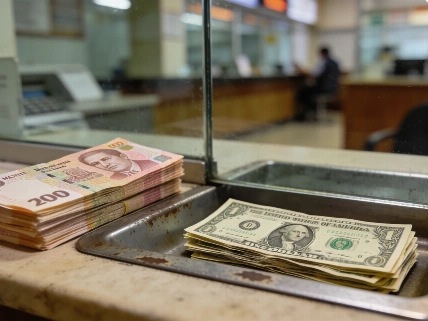
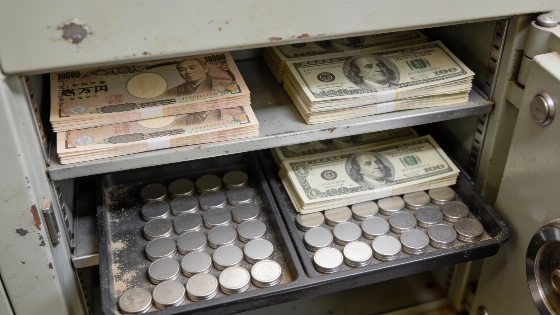
Japan and the United States have jointly intervened in currency markets to strengthen the yen, aiming to push the USD/JPY rate below 155. The move highlights the scale and complexity of coordinated interventions and their impact on global reserves
Coordinated currency intervention is a rare but powerful tool used by governments to influence exchange rates when a currency comes under significant pressure. In late July, Japan and the United States acted together to support the Japanese yen, aiming to drive the USD/JPY exchange rate below the 155 mark-a level that had become a psychological barrier after previous solo interventions by Japan failed to achieve a lasting effect. According to BofA Global Research, such joint action signals to markets that multiple authorities are willing to commit substantial reserves, increasing the perceived firepower behind the intervention.
Mechanics of Joint Currency Intervention
When two or more countries coordinate intervention, they simultaneously buy the targeted currency-in this case, the yen-on the open market. This increases demand and can help reverse or slow a currency's decline. Japan typically funds these operations from its foreign-exchange reserves, which stood at $1.3 trillion at the end of June. These reserves included $162 billion in deposits and $929 billion in securities, much of which is believed to be held in U.S. Treasuries. Notably, around $283 billion of these securities are expected to mature within a year, providing a source of liquidity without immediate asset sales. However, the scale of the recent intervention-estimated to have exceeded ¥10 trillion (about $65 billion) over three trading days-suggests that Japan's Ministry of Finance may have needed to sell securities or borrow against its Treasury holdings using the Federal Reserve's FIMA repo facility.
The FIMA (Foreign and International Monetary Authorities) repo facility allows foreign central banks to temporarily exchange U.S. Treasury securities for dollars, reducing the need for outright sales that could disrupt bond markets. Japan faces a $60 billion counterparty limit on this facility, and its relatively high cost may limit its use for large-scale interventions. Meanwhile, the U.S. Treasury can draw on its Exchange Stabilization Fund, which holds dollars, Special Drawing Rights, and foreign currencies, to participate in interventions. During the July operation, reports indicate that Washington sold euros rather than dollars to purchase yen, a strategy that may need to shift if euro reserves become insufficient for further action.
Market Impact and Reserve Dynamics
The immediate goal of the intervention was to push the USD/JPY rate below 155, a level that had become entrenched after earlier Japanese efforts. Following the coordinated action, analysts revised their year-end USD/JPY forecasts downward, with some now expecting the pair to end the year at 149 instead of 152. The intervention also signals to markets that further measures-such as faster Bank of Japan rate increases or fiscal adjustments-could follow if pressure on the yen persists. For context, the USD/JPY rate had hovered above 155 for several weeks before the intervention, reflecting persistent yen weakness against the U.S. dollar.
Japan's ability to intervene is closely tied to the structure and liquidity of its reserves. With roughly $27 billion in monthly liquidity potentially available from maturing securities and interest income, Japan can fund moderate interventions without selling assets. However, large-scale or prolonged operations may require asset sales or increased use of the FIMA facility, both of which carry risks and costs. The U.S. role in the intervention expands the perceived resources available and demonstrates a willingness to act jointly, which can have a powerful signaling effect on currency markets. This approach is not unique to the yen; similar dynamics have played out in other major currency pairs, as seen when the British pound faced pressure from a strong U.S. dollar, a situation discussed in detail in this analysis of sterling's resilience.
Understanding the Limits and Trade-Offs
While coordinated intervention can temporarily stabilize a currency, its effectiveness depends on the scale of market pressures, the credibility of the authorities involved, and the underlying economic fundamentals. If market participants believe that intervention is not backed by sustainable policy changes-such as interest rate adjustments or fiscal reforms-the impact may be short-lived. Additionally, large interventions can deplete reserves or disrupt bond markets if not carefully managed. The cost and availability of facilities like FIMA, as well as the composition of reserves, play a critical role in determining how long and how forcefully a country can intervene.
For July 2026, Japan's foreign-exchange reserves remain among the largest globally, but the scale of recent interventions highlights the potential constraints even for major economies. The U.S. Treasury's involvement, while expanding available resources, also introduces coordination challenges and may require shifting strategies if reserve compositions change. As global currency markets remain sensitive to policy signals and reserve dynamics, the effectiveness of future interventions will depend on both market conditions and the willingness of authorities to sustain joint action.
Coordinated currency intervention is distinct from routine central-bank operations or verbal guidance. It involves direct, large-scale transactions in the foreign-exchange market, often announced or confirmed by the participating authorities. The FIMA repo facility, introduced by the Federal Reserve in 2020, was designed to provide foreign central banks with a temporary liquidity backstop without forcing them to sell U.S. Treasuries outright. This mechanism helps stabilize both currency and bond markets during periods of stress. However, the facility's cost and counterparty limits mean it is best suited for short-term liquidity needs rather than prolonged intervention campaigns. Ultimately, the credibility and coordination of the authorities involved, as well as the underlying economic context, determine whether such interventions can achieve lasting results.