Half dimes, minted in silver from 1794 to 1873, reveal how the United States transitioned from foreign coins to a national decimal system and adapted to changing economic realities, including the rise of nickel coins
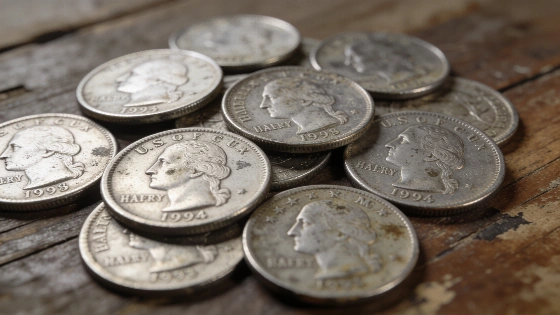
For nearly eighty years, the half dime played a pivotal role in the evolution of U.S. coinage. Minted in silver from 1794 until 1873, these 5-cent coins predated the introduction of the nickel and reflected the United States' gradual shift from foreign currency reliance to a uniquely American monetary system. Unlike later 5-cent coins, which were made from a copper-nickel alloy, half dimes contained no nickel and were always specified to weigh exactly half as much as the corresponding dime of their era.
The half dime's journey mirrors the broader adoption of decimal currency in the United States. Before the late 18th century, most North Americans and Europeans used non-decimal systems for both coinage and accounting, with Spanish colonial coins dominating daily transactions. The U.S. Mint's early experiments, including the 1792 half dismes (now considered patterns rather than circulating coins), signaled the start of a new approach, but widespread acceptance took decades. By the 1830s, demand for U.S.-minted half dimes had grown as merchants and the public increasingly adopted the decimal system.
Design Evolution and Technical Changes
The half dime underwent nine major design changes during its production. The earliest, known as the Flowing Hair type, was issued in 1794 and 1795, though all 1794-dated coins were actually struck in 1795. Production paused between 1806 and 1828, largely because Spanish half-real and quarter-real coins were still widely used and met most small-change needs. The next significant designs, the Draped Bust with Small Eagle and Heraldic Eagle reverses, appeared in 1796 and 1797, with the eagle motifs reflecting the young nation's aspirations and the adoption of the Great Seal.
After a long hiatus, the Capped Bust half dime was introduced in 1829, following similar designs on other silver denominations. Initially, these coins were struck in an alloy of 89.243% silver and 10.757% copper, but the Mint Act of 1837 standardized the composition to 90% silver and 10% copper. The Liberty Seated series, introduced in 1837, brought further changes, including the addition of stars, drapery, and eventually a new wreath and the relocation of the UNITED STATES OF AMERICA legend to the obverse. The Mint Act of 1853 reduced the authorized weight of half dimes to 19.2 grains, a change marked by the addition of arrows to the coin's design.
Obsolescence and Policy Shifts
The Coinage Act of 1873 marked the end of the half dime, abolishing the denomination as part of a broader overhaul of U.S. coinage. By this time, the introduction of 3-cent and 5-cent nickels-both made from a copper-nickel alloy-had diminished the half dime's role. These new coins were cheaper to produce, as they contained no silver, and reflected changing attitudes toward intrinsic value. Before the Civil War, coins without precious metal content were viewed with suspicion, but by the 1860s, Americans were more willing to accept coins whose metal value was less than their face value.
Monetary policy changes in the mid-19th century further encouraged the circulation of coins with lower intrinsic value. The Coinage Act of 1853 had already set the precedent by reducing the silver content of coins under one dollar, making it less profitable to hoard them. The discovery of gold in California in 1849 disrupted the gold-silver price ratio, leading to silver coins being hoarded or exported. In response, the U.S. Mint introduced new denominations and compositions to keep small change in circulation. The half dime ultimately became obsolete as the public embraced nickel coins for everyday transactions.
Facts and Figures: Half Dime Production and Composition
Half dimes were produced intermittently from 1794 to 1873, with notable gaps such as 1806-1828. Early issues were struck in an alloy of 89.243% silver and 10.757% copper, shifting to 90% silver and 10% copper after 1837. The authorized weight was reduced from 20.8 grains to 19.2 grains in 1853. The final half dimes were minted in 1873, after which the denomination was discontinued in favor of the nickel 5-cent coin.
The transition from silver to nickel coinage in the United States was not unique to the half dime. Other denominations, such as the $5 Liberty Head Half Eagle, also underwent significant changes in composition and issuance. For example, the 1887 Liberty Head Half Eagle stands out as the only $5 gold coin in U.S. history struck exclusively in Proof format, reflecting the evolving priorities of the U.S. Mint and monetary authorities. More details on this rare coin and its context can be found in this feature on the 1887 Liberty Head Half Eagle.
Understanding the Shift from Intrinsic to Token Value
The disappearance of the half dime illustrates a fundamental shift in how Americans viewed money. For much of the 19th century, the public expected coins to contain precious metals worth close to their face value. However, as the U.S. economy grew and the costs of producing silver coins rose, policymakers and the public gradually accepted coins whose value was based on government guarantee rather than metal content. This transition paved the way for modern token coinage, where the material value of coins is far less than their denominated worth, and trust in the issuing authority is paramount.