

Government bond yields in Europe and Japan paused after weeks of volatility, as investors await new US sanctions on Iran and signals from central banks. The risk of further disruption to energy flows and inflation remains a key concern for markets
Government bond markets across Europe and Asia entered a holding pattern on Monday, as traders paused after a period of heavy selling and braced for a new phase in the US-Iran standoff. The US government signaled it would introduce what it called "the greatest financial offensive ever marshalled" against Iran, with new sanctions targeting not only Iranian entities but also foreign countries and companies that continue to trade with Tehran. This escalation has left sovereign debt desks cautious, with investors watching for both immediate policy announcements and longer-term inflation risks.
Yields on key European government bonds remained steady. Germany's two-year Schatz yield was unchanged at 2.838%, while the 10-year Bund held at 3.256% and the 30-year at 3.762%. France's 10-year OAT yield stayed at 4.128%, and Italy's 10-year BTP hovered near 4.092%. In Japan, the 10-year JGB yield stabilized at 2.881% after a volatile week driven by speculation about a possible Bank of Japan rate hike. These figures reflect a market that is wary of both geopolitical shocks and central bank policy shifts.
US Sanctions Threat and Market Response
The immediate focus for bond investors is a scheduled press conference by US Treasury Secretary Scott Bessent, who is expected to detail the new sanctions regime. According to Investing.com, the US intends to penalize not only Iranian entities but also any foreign nation or company that continues to do business with Iran. In response, Iranian officials have threatened to halt all energy exports from the Persian Gulf if the pressure continues. This standoff has kept commercial shipping through the Strait of Hormuz restricted, sustaining concerns about global energy supply and cost-push inflation.
Despite a 1.5% drop in Brent crude futures to around $91.80 per barrel on Monday, bond investors remain skeptical that energy risks have eased. The ongoing restrictions in the Gulf mean that fixed-income markets continue to demand a higher term premium-an extra yield to compensate for persistent inflation uncertainty. This dynamic has kept long-term borrowing costs elevated, even as central banks and governments attempt to reassure markets.
Buyback Skepticism and Debt Supply Pressures
Recent efforts by the US Treasury to stabilize bond markets have met with limited success. Last week, Secretary Bessent suggested that the government could expand its Treasury buyback operations beyond the current $4 billion per issue ceiling. However, investors have largely dismissed these interventions, noting that buybacks funded by short-term debt do not reduce the overall supply of government bonds-they simply change the maturity profile. With US national debt surpassing $40 trillion and primary dealer balance sheets stretched by ongoing federal borrowing and heavy corporate issuance, investors are demanding more fundamental fiscal consolidation before lowering long-term rates.
This skepticism is not unique to the US. As seen in other recent episodes, such as when US Treasury yields remained steady despite Gulf supply risks, markets often require more than verbal intervention to shift expectations. For example, a recent analysis of US Treasury yields during Gulf tensions highlighted how persistent geopolitical risks can keep inflation expectations and bond yields elevated, even when economic data points to softer growth.
Central Bank Signals Awaited
With technical interventions largely priced in, attention is now turning to central bank leadership for clearer direction. The upcoming keynote address by Federal Reserve Chair Kevin Warsh at the Jackson Hole Economic Policy Symposium is expected to be a pivotal moment. Markets are looking for clues on whether the Federal Reserve will keep interest rates unchanged in September, following a divided 9-3 vote at the last Federal Open Market Committee meeting, or whether ongoing energy-driven inflation will prompt further rate hikes before year-end.
For the week ending Monday, government bond yields in major economies showed little movement after a period of volatility. The German 10-year Bund yield closed at 3.256%, the French 10-year OAT at 4.128%, and the Japanese 10-year JGB at 2.881%. Brent crude futures fell by 1.5% to $91.80 per barrel, but the risk premium in bond markets remained elevated due to ongoing geopolitical and fiscal concerns.
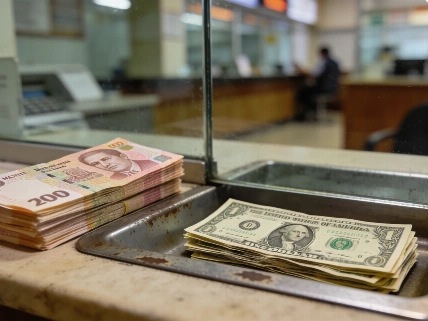
Sanctions and currency controls are powerful tools in international finance, but their effectiveness depends on both the breadth of enforcement and the willingness of other countries to comply. When the US imposes secondary sanctions-penalties on third parties that do business with a targeted country-it can disrupt global payment systems, trade flows, and access to the US dollar. However, such measures also carry risks, including retaliation, the development of alternative payment networks, and unintended consequences for global markets. For investors and businesses, understanding the mechanics of sanctions and their impact on currency flows is essential for managing risk in an increasingly interconnected world.